- 158 infested watercraft intercepted at inspection and roadside stations (summitdaily.com)
- No new veligers detected in Colorado River upstream reaches this season (summitdaily.com)
- Six water bodies remain officially infested, requiring five clean years for delisting (summitdaily.com)
Reid DeWalt, Colorado Parks and Wildlife’s deputy director, told a sportspersons group on Nov. 19 that the agency “found 158 mussel-infected watercraft through our (aquatic nuisance species) inspection stations and roadside check stations.”
The increase came despite an 11% drop in overall boat inspections, which DeWalt attributed to drought-driven declines in boating activity.
Matt Nicholl, the agency’s assistant director of aquatic wildlife, told the Colorado Water Conservation Board on Nov. 18 that the numbers show the detection system is functioning. “Even though there were fewer inspections, we found more mussel-infested boats, so the system is working, but it’s a lot of effort and a lot of work as we continue to try to protect the state,” Nicholl said.
River sampling finds no new larvae upstream
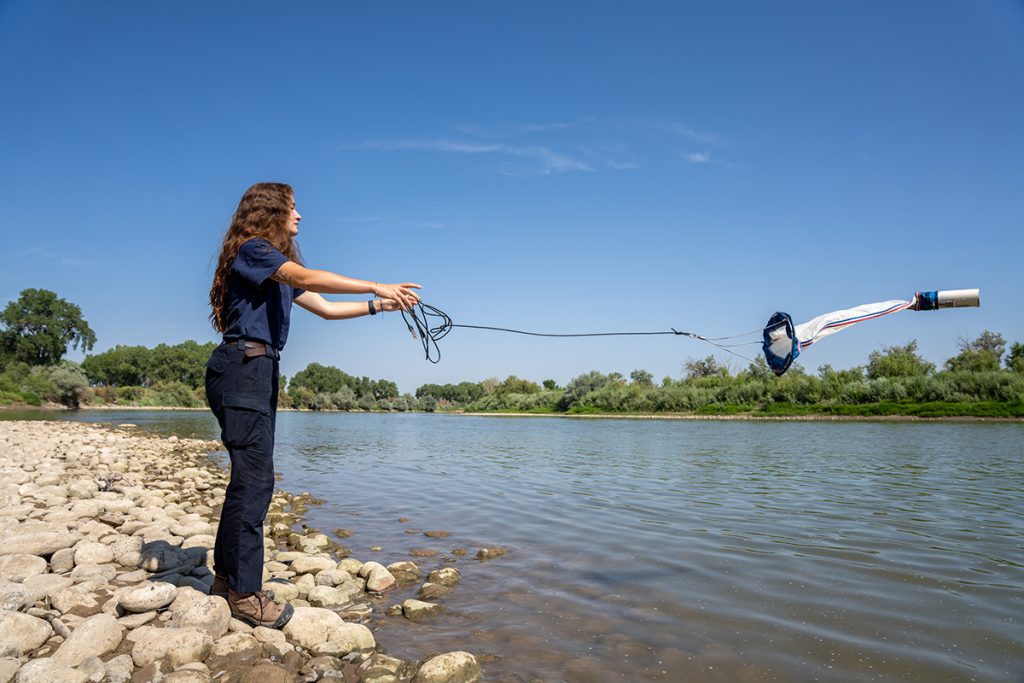
Between May and October, crews ran weekly plankton tows and shoreline surveys from the Colorado River’s headwaters near Granby to the Utah border, plus the Gunnison, Roaring Fork and Eagle rivers. Nicholl said the effort included more than 2,600 plankton tows, 2,200 shoreline surveys across 300-plus water bodies, and over 500 environmental-DNA samples.
“I’m happy to say that we have not detected additional veligers in the Colorado River this year. So that’s good news. Certainly they’re there and present downstream, but we haven’t detected them in the river upstream,” Nicholl said.
Robert Walters, the agency’s invasive species program manager, cautioned in August that absence of evidence is not evidence of absence in a flowing river.
“Locating a veliger in a moving body of water largely depends on being at the right place at the right time, since the water is constantly flowing,” Walters said. “This doesn’t mean that veligers are absent, but during the times when sampling crews have visited designated locations, none have been found.”
Six waters stay on infested list
Eradication attempts at Highline Lake, including molluscide treatments and a drawdown, have not eliminated the mussels. The agency also tracks New Zealand mudsnails in over 40 waters, rusty crawfish in Granby, Stagecoach and Catamount reservoirs and the Yampa River, and Eurasian watermilfoil in about 70 water bodies.
Agency scaled up detection after 2022 discovery
Since zebra mussels were first found in Colorado at Highline Lake north of Fruita in 2022, Parks and Wildlife has increased staffing, technology and testing for its aquatic nuisance species programs, officials said.
Infested boat detections rose 16.8% this summer
Reid DeWalt, the agency’s deputy director, told a sportspersons group on Nov. 19 that Parks and Wildlife recorded a 16.8% increase in mussel-infested watercraft compared with last summer.
Nicholl said the higher catch rate with fewer inspections shows the detection system is functioning. “Even though there were fewer inspections, we found more mussel-infested boats, so the system is working, but it’s a lot of effort and a lot of work as we continue to try to protect the state,” he told the Water Conservation Board on Nov. 18.
Roadside authority expanded under 2021 law
A 2021 House Bill authorized mandatory roadside inspections at four ports of entry — Loma, Trinidad, Fort Morgan and Limon — supplementing the ramp-side checks at state parks and other CPW-managed waters. Any vessel found with mussels or other aquatic nuisance species must complete mandatory decontamination before launching.
“We continue to try to protect the state,” Nicholl told the Water Conservation Board on Nov. 18.
Related reading

Great Christmas Tree Giveaway Offers 100 Trees to Families
100 fresh trees from Dzen Tree Farm in South Windsor, Connecticut 87 trees via online entry; 13 through...

Virginia, Oregon AGs Sue Musk Firms Over Grok AI Abuse Images
Virginia Attorney General Jay Jones and Oregon Attorney General Dan Rayfield filed separate lawsuits Monday against Elon Musk's...

Rev. Jordan Bishop, Episcopal Priest in Lander and Laramie, Dies at 36
Reverend Jordan Lee Murphy Bishop, an Episcopal priest who served parishes in Lander and Laramie, died November 15...

Huntsville Center Redesigns Navy Women’s Health Clinic via Phased Renovation to Reclaim Exam Space
A Navy women's health clinic will reclaim examination space lost to administrative sprawl through a phased renovation that...