
The Colorado Transportation Commission voted unanimously on Nov. 19 to allow private vendors to install and remove tire chains for commercial trucks at designated chain stations on Interstate 70 and other mountain highways, KUNC reported.
The commission’s approval clears the way for the Colorado Department of Transportation to issue the first permits by early 2027, likely after the holiday season, according to Jori Ernst, a program manager in CDOT’s Office of Emergency Management.
Reducing backups at chain stations
The program targets a persistent bottleneck: trucks that stop at chain stations but cannot proceed because the driver lacks chains or the skill to install them.
“Many times truckers will pull into our chain stations, plug them up — and then they either don’t have chains or they won’t know how to install them,” Ernst told KUNC. “So they just sit there, which causes safety concerns with all the other truckers out there that are trying to do the right thing: chain up and move on.”
Recent enforcement found roughly 90% of semitrailers complied with the must-carry rule, Ernst said, but carrying chains is not the same as knowing how to use them.
“The fact is, I would say very few actually know how,” Ernst said. “When we pull up on a truck that spun out on our highway, lots of times these guys are getting out with shorts and flip flops on. They should not be out on the road. They’re not going to put chains on. They’re just going to sit there and wait.”
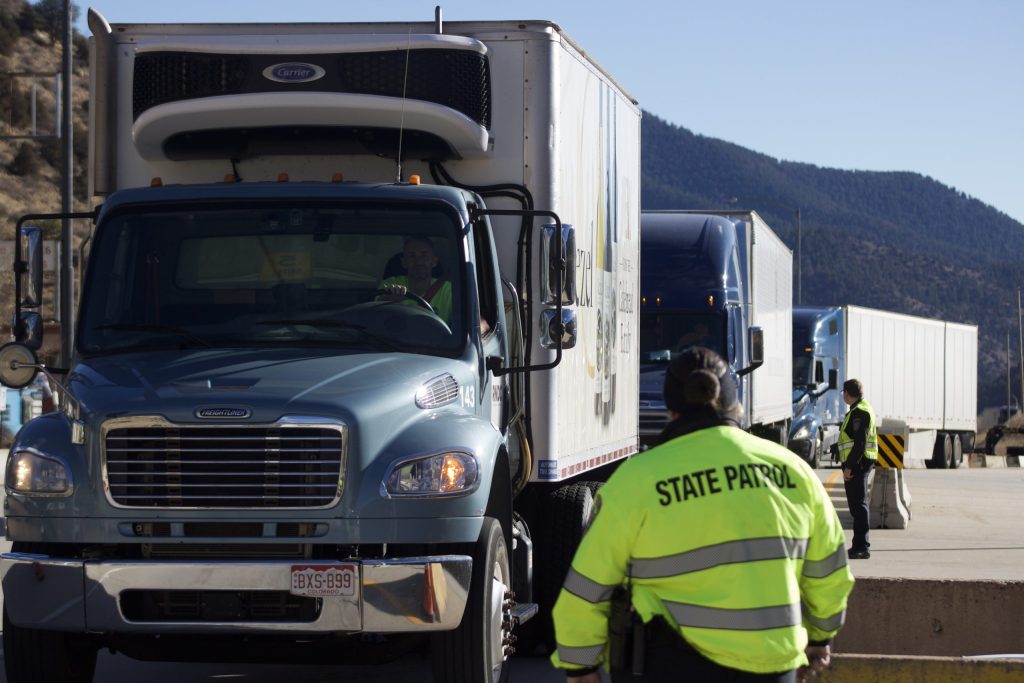
Someone proficient can chain up in 30 to 45 minutes, Ernst said, while an inexperienced driver may spend three or four hours and still install them incorrectly, damaging the truck, throwing chains onto the travel lane and creating hazards for other vehicles.
How the permit system will work
Tow companies are expected to be the primary vendors, staffing each site with a few employees to direct traffic and install chains, Ernst said.
High-demand locations — such as the stations approaching the Eisenhower–Johnson Memorial Tunnels and at Vail Pass — will likely rotate permits among multiple vendors. Rural stations with less traffic may be harder to staff, though Ernst said he hopes local tow companies will participate.
The program stems from Senate Bill 69, signed by Gov. Jared Polis in 2025 and sponsored by Sens. Dylan Roberts and Marc Catlin and Reps. Meghan Lukens and Elizabeth Velasco, KUNC reported. The legislation funded one full-time employee to manage the program and directed CDOT to prevent monopolies at any single location.
CDOT finalizes chain pricing rules
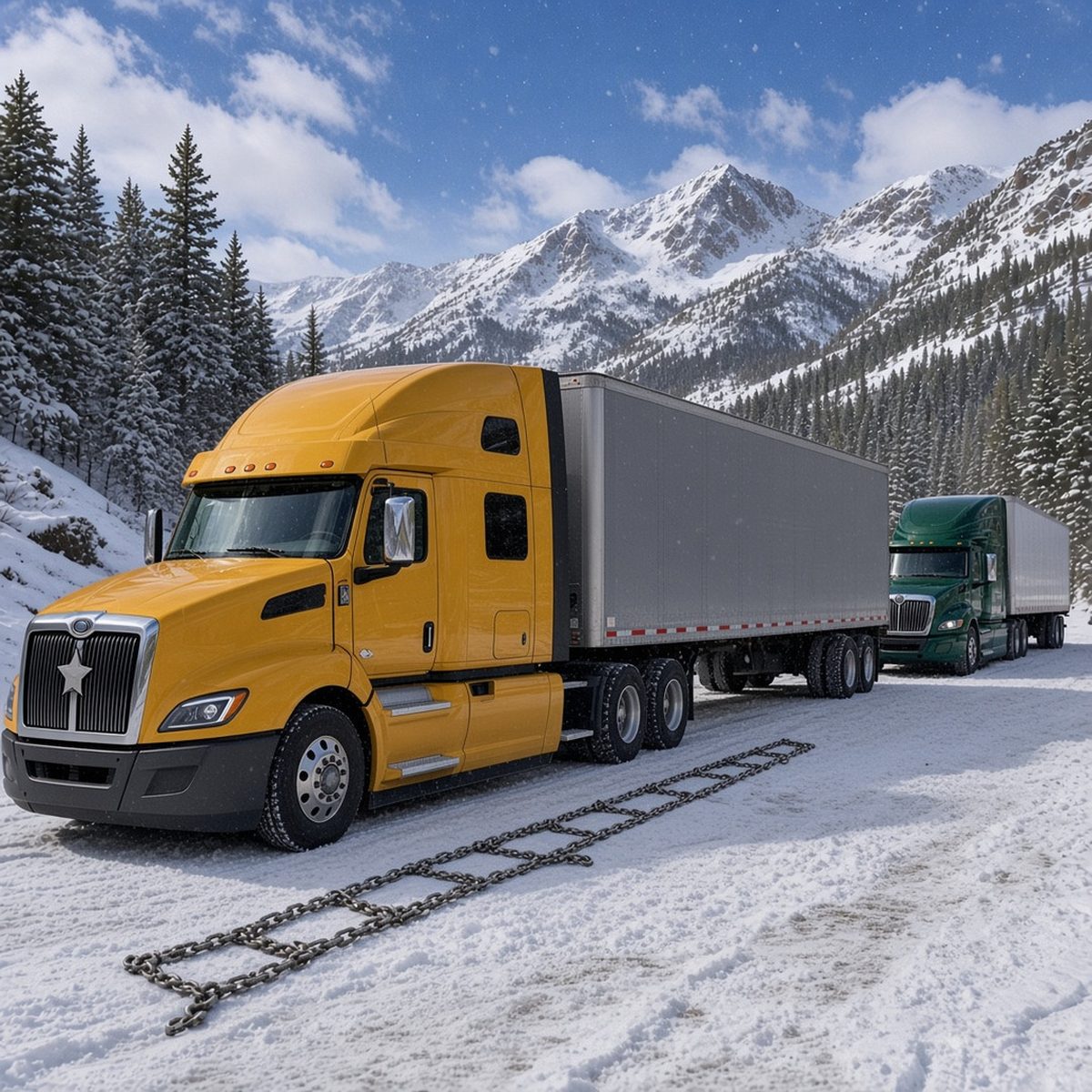
CDOT is working with the Colorado Motor Carriers Association to finalize rules on what vendors can charge for chains and installation. The department is using Washington state — the only other state with a similar program — as a pricing benchmark.
“What we’re trying to avoid is all that price gouging,” Ernst said. “We don’t want a monopoly out there where one company is going to come in and sell a set of chains that cost them $400 and sell them for $1,600 or some astronomical number. That’s part of our challenge.”
Existing chain-law penalties remain in effect. Commercial vehicles that violate the must-carry requirement face a fine of up to $500 plus a $79 surcharge, or up to $1,000 plus a $157 surcharge if the vehicle blocks a travel lane, according to the Colorado State Patrol.
Bill requires vendor rotation at stations
Senate Bill 69 directed CDOT to prevent monopolies at any single chain station location, KUNC reported. The department will permit one company at a time to operate at each station, with high-demand sites near the Eisenhower–Johnson Memorial Tunnels and Vail Pass likely rotating permits among multiple vendors, Ernst said.
CDOT is working with the Colorado Motor Carriers Association to finalize rules on what vendors can charge for chains and installation, using Washington state — the only other state with a similar program — as a pricing benchmark.
The Colorado Transportation Commission adopted updated chain law regulations on Nov. 19 after an Oct. 22 public hearing, The Trucker reported. A timeline for the launch of services, initial locations and pricing has not been confirmed.
Worth a look
Stick to the Script! Returns to ATA for Limited Run Starting Dec. 1
The award-winning backstage comedy “Stick to the Script!” returns to the American Theatre of Actors for a seven-performance...

St. Paul Leads Minnesota in Copper-Theft Convictions, Yet 4,000 Streetlights Stay Dark
St. Paul has secured more copper-theft convictions than any Minnesota city, yet roughly 4,000 of its streetlights remain...
Commodore Barry Bridge Closed Through Nov 28 After Storm Damages Work Platforms
The Commodore Barry Bridge is closed in both directions through Saturday, November 28, after powerful winds from a...

Analyses Find Old Assembly Map Would Have Protected WI Republicans, Two Analyses Found
Democrats won 53 of 99 Assembly seats this month, but under the 2022 map the same votes would...