
Concord, Massachusetts, offers a historic and scenic alternative to the typical New England coastal getaway.
Located roughly 20 miles west of Boston, this town provides a blend of Revolutionary War history and literary significance alongside an extensive network of outdoor trails.
While many travelers gravitate toward the Atlantic shoreline, Concord serves as a hub for both history buffs and outdoor enthusiasts. According to Yahoo Travel, the town is home to more than 40 trails, making it a primary destination for those looking to explore the Massachusetts interior.
Revolutionary history meets literary landmarks
The town’s historical importance is anchored by its role in the American Revolution. On April 19, 1775, the “shot heard around the world” occurred at North Bridge, where colonial militia returned fire against British troops during the opening battles of the conflict. This site is a central component of the Minute Man National Historical Park.
Beyond military history, Concord is deeply tied to 19th-century American literature. The area served as a home and inspiration for figures such as Henry David Thoreau, Louisa May Alcott, Ralph Waldo Emerson, and Nathaniel Hawthorne. Visitors can explore Orchard House, the family home of Alcott where Little Women was written, or The Old Manse, a Georgian-style house that once served as a gathering place for the Transcendentalists.

For those interested in the specific mechanics of the revolution, the Wright Tavern offers a glimpse into the era. Dating back to 1747, the red tavern was a site where colonial militia gathered before their confrontation at North Bridge. The building is open from 11 a.m. to 4 p.m., Friday through Sunday.
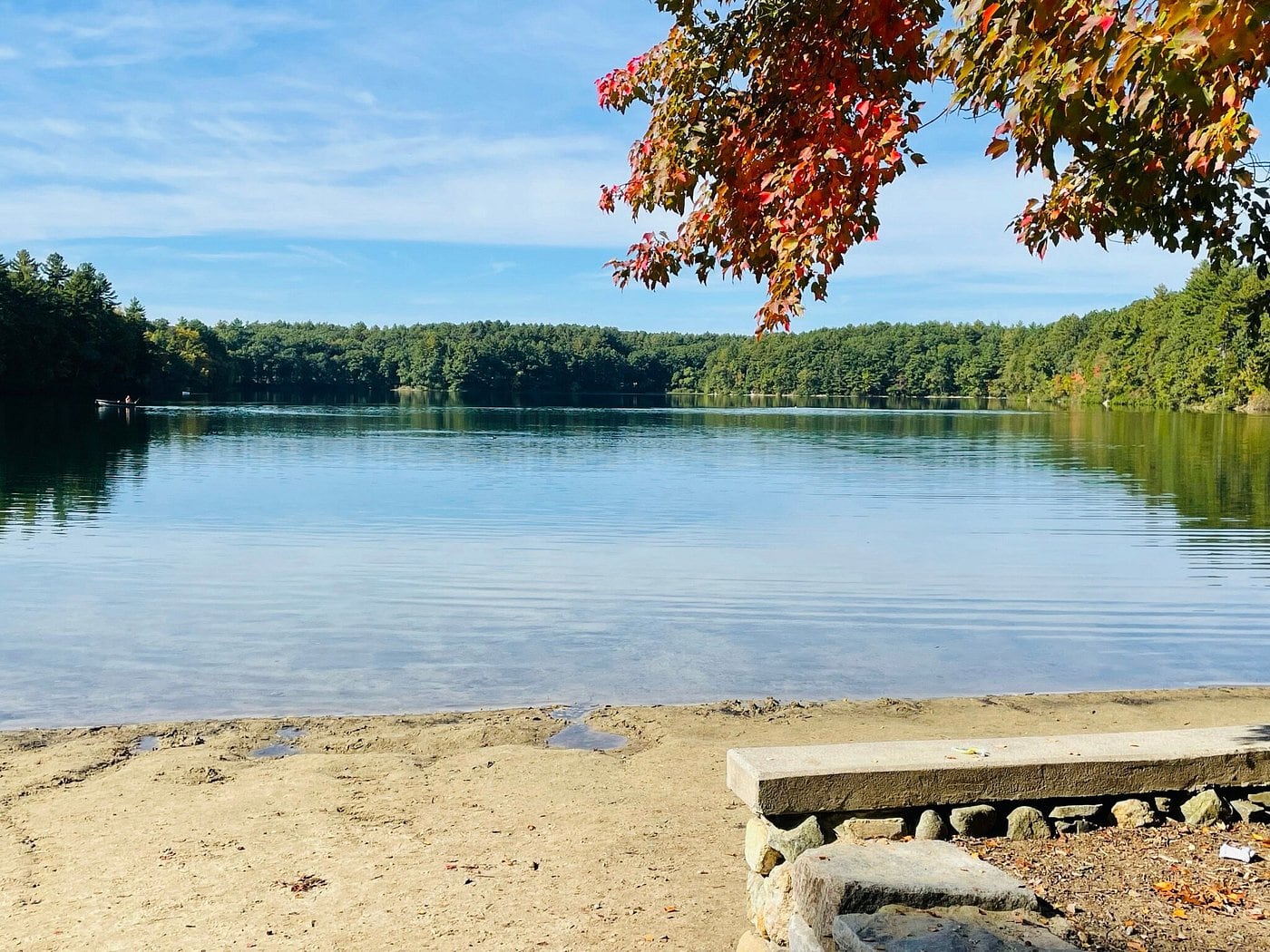
The literary connection extends to the landscape itself. Thoreau famously built a cabin next to Walden Pond in 1845, living there for over two years to observe the environment. This period of isolation provided the foundation for his seminal work, Walden.
Trails and swimming spots for outdoor recreation
The natural landscape provides significant opportunities for hiking, biking, and swimming. Walden Pond State Reservation is a central location for these activities, featuring a 62-acre expanse of water that is approximately 100 feet deep. The Walden Pond State Reservation offers several ways to experience the area, including the 1.8-mile shaded Pond Path that loops around the water.
For more intensive hiking, the 5.7-mile Fairhaven Trail Loop runs through forested areas and alongside the Sudbury River. Cyclists can utilize the Bruce Freeman Rail Trail, which connects Lowell to Sudbury and passes directly through Concord. The Minuteman Bike Share program provides seasonal rentals for $2 per hour, with stations located at the Concord Visitor Center and the West Concord entrance.
Swimming options vary by location and season. Walden Pond is a popular site for fishing and nonmotorized boating, while White Pond offers a beach and picnic area during its summer operating season. Accessing these locations involves different cost structures for visitors:
| Location/Service | Cost/Detail |
|---|---|
| Walden Pond Parking (MA Residents) | $8 |
| Walden Pond Parking (Out-of-state) | $30 |
| White Pond Day Pass (Ages 3+) | $15 |
| Minuteman Bike Share Rental | $2 per hour |
While the town is highly accessible via Route 2, it is also served by the MBTA Fitchburg commuter rail line. This provides an alternative to driving, allowing travelers to view the New England foliage or woodland scenery from the train.
The local economy and tourism are further supported by guided experiences, such as the Concord Visitor Center walking tours. These 75-minute tours run daily at 1 p.m. from April through November. For those seeking a different atmosphere, the Colonial Inn provides historic accommodations and dining, with one of its buildings having served as a storage site for arms and provisions during the Revolutionary War.

North Charleston Police Find No Weapon at Lowcountry Acceleration Academy
North Charleston police found no weapon on Wednesday morning after responding to a report of a firearm at...

Merrimack and Providence Face Off in Key Hockey East Series
Providence and Merrimack face off in a high-stakes Hockey East home-and-home series this weekend to determine which of...

Oregon National Guard Soldiers Lead Veterans Day Fitness Training
Three Oregon Army National Guard Soldiers led students through Army-style physical training at Crossler Middle School on Nov....

Ohio Leaders Honor 19 New Inductees into Ohio Veterans Hall of Fame
“The Ohio Veterans Hall of Fame gives us an opportunity to recognize the veterans whose service to Ohio...