
Connecticut has collected $25 million for local municipalities through a 5-cent surcharge on miniature liquor bottles, according to data released this week by the Wine and Spirit Wholesalers of CT. The “Nickel-per-Nip Environmental Fee” program, which began five years ago, targets the specific litter problem caused by 50 mL “nips” that are too small to be effectively recycled and cannot be redeemed for refunds.
In the most recent six-month distribution, officials disbursed $2.56 million to 162 towns. This latest payout reflects the sale of more than 51 million miniature bottles across the state. Since the program’s inception, at least 500 million nips have been sold in Connecticut, creating a steady stream of revenue dedicated to cleaning up the very product that generates it.
Urban centers drive the highest payouts
The distribution of funds follows the volume of sales, meaning the state’s most densely populated cities are seeing the largest windfalls. New Haven led the most recent payout cycle, receiving $118,115 from the sale of 2.36 million bottles. Hartford followed with $93,469, while Bridgeport and Waterbury received $84,854 and $83,176, respectively.
The disparity between urban and rural payouts is stark. While New Haven manages six-figure sums, smaller towns received amounts that barely cover a few hours of labor. Woodstock received the lowest payment of any town that sold nips, totaling just $49. Other small payouts included Warren at $254 and Weston at $300.
Some towns received nothing at all. Records show that Colebrook, Eastford, Easton, Hartland, Lyme, and Union sold no nips in the last six months because they lack liquor stores that sell wine or spirits. Bridgewater, known as Connecticut’s last “dry town,” also received no payment as alcohol cannot be sold within its borders.
| City/Town | Nip Count | Environmental Fee |
|---|---|---|
| New Haven | 2,362,305 | $118,115.25 |
| Hartford | 1,869,389 | $93,469.45 |
| Bridgeport | 1,697,084 | $84,854.20 |
| Waterbury | 1,663,523 | $83,176.15 |
| New Britain | 1,389,440 | $69,472.00 |
Cities use bottle fees to fund litter eradication
The money isn’t a general slush fund; state rules require cities and towns to use the fees for environmental purposes. Because nips are frequently discarded on sidewalks and roadsides, the funding is intended for litter eradication. Municipalities have reported using the money to purchase street sweepers, fund community cleanups via nonprofits, hire recycling personnel, and implement food composting programs.
“The program is giving communities meaningful resources to tackle litter and keep public spaces clean,” said Larry Cafero, executive director and general counsel of the Wine and Spirit Wholesalers of CT.
However, there is a significant lack of oversight regarding the actual impact of these funds. Despite the requirement that the money be used for environmental needs, Larry Cafero admitted that there is currently no system in place to track exactly how the money is being spent by the various municipalities.
Some lawmakers have pushed for more aggressive measures, including a mandatory bottle deposit or an outright ban on the sale of miniature bottles. These proposals have faced pushback from other legislators who argue that banning nips would be an extreme measure and a violation of consumer freedom.
The logic of the 5-cent surcharge
The program was born from a flaw in the Connecticut bottle bill. While larger bottles are returned for a deposit, the 50 mL nips are often ignored by recycling systems due to their size. By shifting the cost of cleanup to the point of sale, the state created a mechanism to fund the removal of non-recyclable waste without banning the product entirely.
The first payouts under this updated framework were made in April 2022. Since then, the program has functioned as a volume-based tax that rewards towns with high sales volumes with the resources to handle the resulting trash. For the consumer, the cost is a negligible 5 cents per bottle, but for the state, it has scaled into a $25 million environmental fund.
Whether this “pay-to-pollute” model is sufficient remains a point of contention. While the Wine and Spirit Wholesalers of CT view the program as a success, the absence of a tracking system means the state cannot yet prove if the $25 million has actually reduced the number of bottles on the street or simply padded municipal budgets.
Worth a look

Pat McAfee says he hates University of Utah after ‘College GameDay’ video – LA Times
Pat McAfee Puts University of Utah in His Crosshairs After Social Media Video In a tense fallout that...

Franklin Web Printing Empowers The Contributor for Nearly Two Decades
For nearly two decades, a partnership has turned the act of printing a newspaper into a vehicle for...
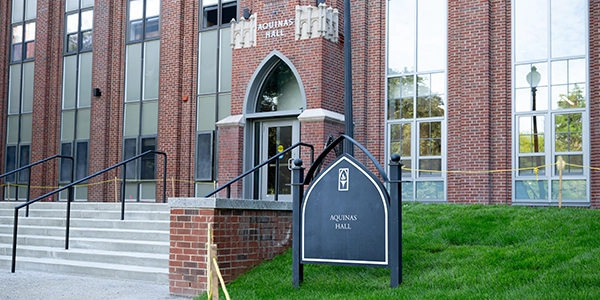
Aquinas Hall Undergoes Major Renovation at Providence College
Built in 1933 as Providence College's first residence hall and just the second building on campus, Aquinas Hall...

Green Bay Packers missed passing opportunities defined Week 7 game
A handful of missed passing opportunities defined the Green Bay Packers' Week 7 performance against the Detroit Lions,...