Connecticut retailers must display unit prices in consistent measurements starting Jan. 1, 2027, under regulations approved Tuesday by a legislative committee.
The rules require grocery stores and online food sellers to label dry bulk items and aerosol products by the pound and most liquids by the pint, quart or gallon — not the liter — so shoppers can compare costs without converting units. Unit prices must appear “boldly, clearly, and conspicuously” in contrasting colors with lettering at least half the size of the selling price, the Department of Consumer Protection said.
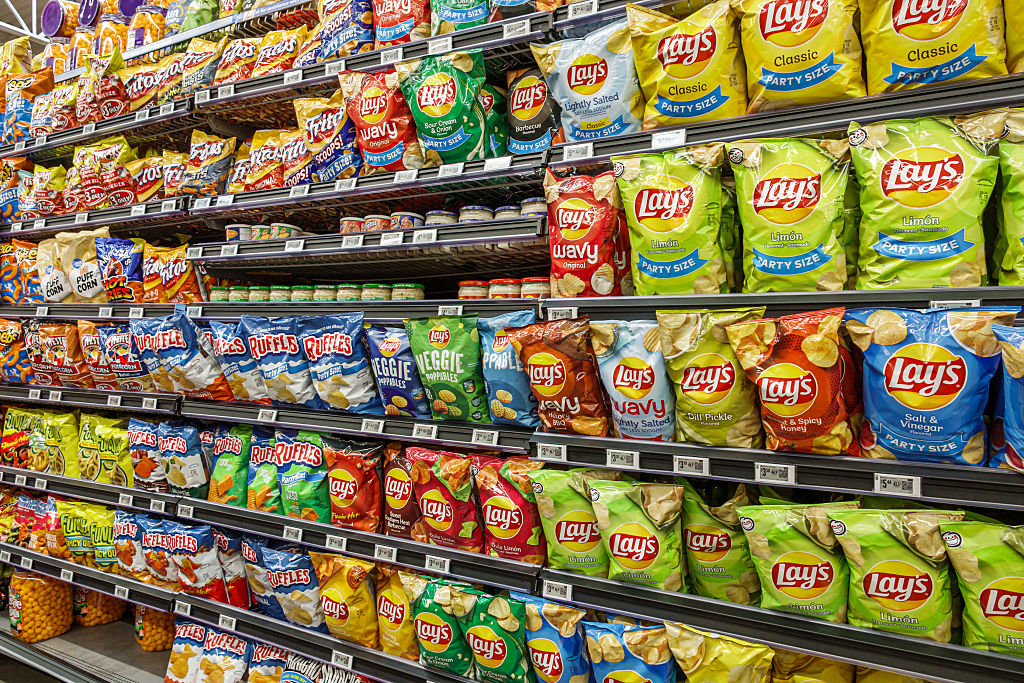
“No one wants to pay more for a bag of chips filled with air or a half-empty cereal box,” Attorney General William Tong said in a statement Tuesday. “Connecticut families deserve accurate, consistent information on what they are getting for their money.”
DCP Commissioner Bryan Cafferelli said the agency takes pride in ensuring consumers receive exactly what they pay for. “Consumers should not have to do mental math to determine the best value at the grocery store,” he said.
The regulations follow a 2025 bill Tong proposed that would have required manufacturers and distributors to disclose size reductions for at least a year. That measure advanced from the General Law Committee on party lines — Democrats in support, Republicans opposed — but never reached a floor vote after food-industry opposition, the Hearst Connecticut Media reported.
Instead, DCP and the attorney general’s office crafted the narrower labeling rules approved this week. The requirements apply to both brick-and-mortar and online retailers, though small family-run stores are exempt, according to Connecticut Express.

Attorney General William Tong introduced legislation in early 2025 that would have required manufacturers, distributors, suppliers, packagers and wholesalers to provide “clear and conspicuous notice” for at least a year when reducing a product’s size without lowering its price, Hearst Connecticut Media reported.
Tong said at the time, “We need people to know, and they need to have disclosure, about what’s happening to their packaging when they had an expectation about that package.”
Tong has spoken about the issue frequently in recent years, the outlet noted.
Studies have consistently found small but notable impacts of this “shrinkflation,” particularly when it comes to items such as cereal and paper towels.
Related reading

Kevin Green Takes Over as Lan-Oak Park District Senior Superintendent
Kevin Green took over as senior superintendent of the Lan-Oak Park District in November, succeeding Michelle Havran, who...

Turn90 Combines Therapy, Job Training to Cut Recidivism in North Charleston
Amy Barch, founder and executive director of Turn90 in North Charleston, argues that intensive therapeutic services combined with...

No. 2 Virginia Favored Over Xavier in Battle 4 Atlantis Semifinal
No. 2 Virginia (8-0) is a 7.5-point favorite against Xavier (6-1) in Friday's Battle 4 Atlantis semifinal at...

Austin Retailers Expect Strong Holiday Sales Despite Online Competition
Austin retailers expect strong holiday sales despite online competition, Austin American-Statesman reported. The National Retail Federation forecasts U.S....