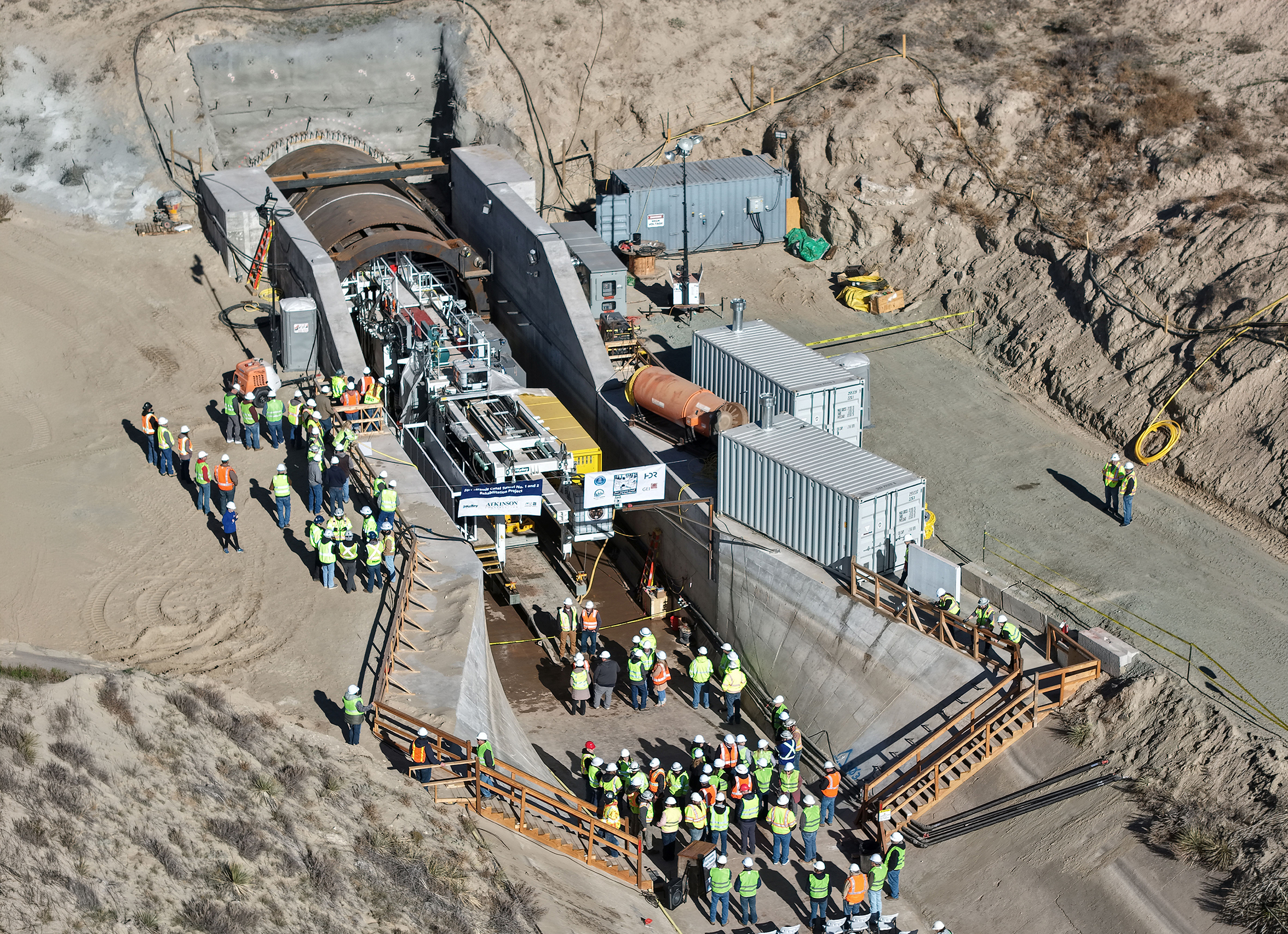
Construction crews officially broke ground on Wednesday, Nov. 18, to replace Tunnel No. 2 along the Goshen/Gering-Fort Laramie irrigation canal.
The project marks a critical turning point for agricultural producers in western Nebraska and eastern Wyoming, arriving more than seven years after a catastrophic collapse and breach crippled the region’s water delivery system.
The scale of the operation reflects the urgency of the situation. On Tuesday, Nov. 17, the irrigation districts and Guy F. Atkinson Construction, LLC, hosted an open house to showcase the specialized equipment tasked with the job. More than 100 people attended the event, including local growers and congressional representatives who have watched the infrastructure struggle since the 2019 breach.
The technical demands of the project require constant movement. Two crews are currently operating on a 24/7 schedule, rotating through 20-day shifts to maintain continuous momentum. As reported by Chadron Radio, the strategy involves using a specialized digger shield to excavate five feet of the old tunnel at a time, followed by the installation of structural segments.
Each of these five-piece sections weighs between 2,000 and 6,000 pounds, requiring precision bolting and sealing before a final layer of grout is pumped into the surrounding void for stability.
For the farmers who rely on this water, the stakes are measured in crop yields and economic viability. The canal serves as the lifeblood for thousands of acres of farmland.
When the system fails, the impact ripples through local economies, making the completion of this replacement—currently targeted for May 1, 2027—a primary concern for the agricultural sector. According to TSLN, officials used the launch event to detail exactly how the new infrastructure will be hardened against the failures that plagued the previous, aging system.
The work on Tunnel No. 2 is only the first phase of a broader effort to secure the canal’s future. While the current excavation continues, crews are already prepping the inlet and outlet areas of Tunnel No. 1. That project is slated for a fall 2027 start, with completion expected by the spring of 2028.
Critics of large-scale water infrastructure projects often point to the high cost of maintenance and the potential for environmental disruption during construction. However, in this case, the alternative—a recurring failure of the main water supply—is viewed by the irrigation districts as an existential threat to the region’s farming communities.
The reliance on a 24-hour construction cycle underscores the pressure to finish the work before the next major irrigation season hits its peak demand.
The logistical complexity of hauling excavated material through the tunnel inlet while simultaneously delivering massive steel and concrete segments to the front of the shield creates a tight, high-stakes environment for the contractors. The project is designed not just to replace what was lost, but to provide a stable foundation for the next several decades of water delivery.
As the crews settle into their 20-day rotation, the focus remains entirely on the tunnel lining. By the time the final section is sealed and the grout cures in the spring of 2027, the regional focus will shift almost immediately to the remaining work on Tunnel No. 1.
Keep reading
LensCrafters Offers Vision Care in Delaware Cities
LensCrafters serves Wilmington, Newark, and Dover across Delaware, offering comprehensive vision care in 2026. The availability of expert...

DeSantis Announces Florida’s New Federal Education Freedom Tax Credit Program
Governor Ron DeSantis announced on Friday that Florida has officially designated three organizations—Step Up, Step Further, and AAA—to...
Virginia Beach Police Department Adopts Dead Air CT5P Patrol Suppressor Agency-Wide
The Virginia Beach Police Department has selected the Dead Air Defense CT5P Patrol 1/2-28 Direct Thread Black suppressor...

Weddings at the Wylie Inn in Beverly, Massachusetts
One campus on the North Shore now holds a ceremony, a plated dinner for 190, and 91 guest...