
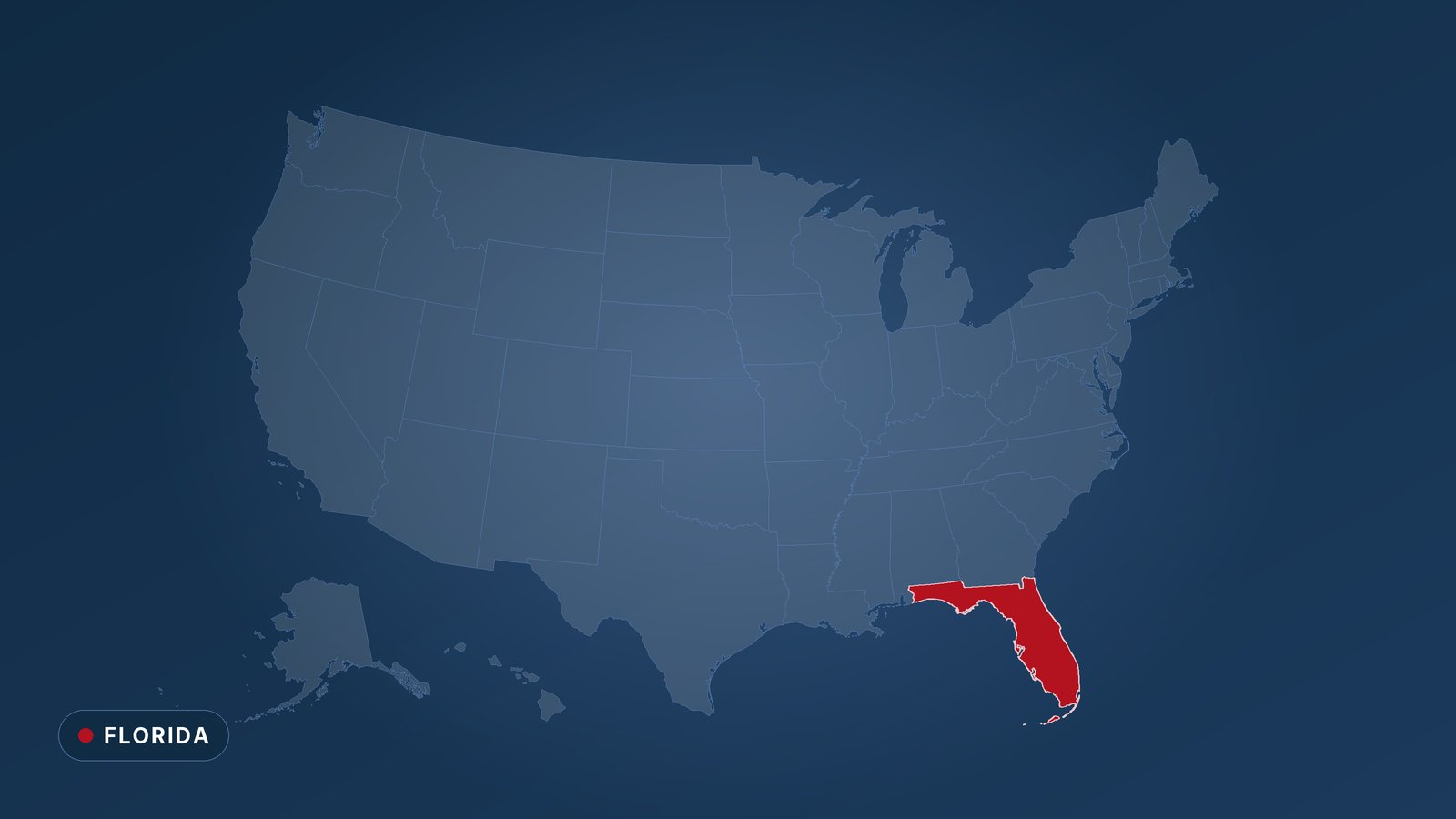
Governor Ron DeSantis announced on Friday that Florida has officially designated three organizations—Step Up, Step Further, and AAA—to serve as Scholarship Granting Organizations under the new federal Education Freedom Tax Credit Scholarship Program.
This move opens a fresh pathway for private individuals to direct funds toward K-12 student expenses, with the program officially launching on January 1, 2027, according to the governor’s office.
The program allows eligible individuals to claim a federal tax credit of up to $1,700 for qualified contributions made to these designated organizations. For married couples filing jointly, that credit potential doubles to $3,400, Yahoo reported. These funds are earmarked for a variety of educational needs, including tutoring, instructional materials, books, and special education services.
This initiative builds upon the state’s 2023 move toward universal school choice. Speaking at Gulf Highlands Elementary School in Pasco County, Governor DeSantis said that since those earlier reforms, nearly half of all K-12 students in Florida have transitioned into private or charter school settings, Florida’s Voice reported.

“I think you’re going to see a lot of our kids in school districts be able to use this and their families in ways that are very innovative and very creative,” said Governor Ron DeSantis.
Partnerships and Private Funding Goals
To jumpstart the program, the state has formed a partnership between Step Up, Step Further and the Florida Chamber Foundation’s Florida Prosperity Initiative. This collaboration aims to engage employers across the state to secure at least $250 million in commitments for the federal tax credit program throughout 2027. Additionally, Step Up, Step Further has already secured $5 million in private donations to assist with the implementation phase, the United States Tribune reported.
The primary focus of this outreach effort is supporting low-income students, particularly those who qualify for free or reduced-price lunch programs. Mark Wilson, president and CEO of the Florida Chamber of Commerce and Foundation, framed the initiative as a way for taxpayers to keep their educational investments local.
“You can continue to send your first $1,700 to the IRS if that’s what you want to do. Or you can decide to send it to a fund that’s going to help K-12 students in Florida right here in your own county instead,” Wilson told Florida’s Voice.
Educational Resource Allocation
The following table outlines the financial mechanics of the program as described by the state’s partnership announcement:
| Contribution Metric | Financial Impact |
|---|---|
| Individual Tax Credit Limit | Up to $1,700 |
| Joint Filing Tax Credit Limit | Up to $3,400 |
| Impact of 30,000 Taxpayers | $50 million annually |
Florida Education Commissioner Dr. Henry Mack emphasized that the program is designed to supplement, rather than replace, existing educational paths. By covering expenses like tutoring and specialized learning tools, the program seeks to assist students regardless of whether they are enrolled in traditional district schools or choice options. The Florida Department of Education has directed families to FLDOE.org for guidance on how to navigate these new resources.
While the program is set to begin in the new year, questions remain regarding the long-term federal fiscal impact of the tax credits. The governor’s office did not release specific projections on the total cost to the federal government, nor did it detail the exact selection criteria the Scholarship Granting Organizations will use to distribute the awards, according to the United States Tribune.
“We will be on standby, ready to execute and to continue, frankly, to deliver on the governor’s legacy of empowering parents, empowering students, transforming lives,” said Henry Mack, Florida Education Commissioner. Henry Mack, Florida Education Commissioner.
Related reading

50-foot Christmas Tree Illuminated at Jacobson Plaza on Nov. 20, says Wisevoter
Sioux Falls residents gathered at Jacobson Plaza on Friday, Nov. 20, marking a change in the city’s holiday...

Ervin, Pearl Power Furman To 100-52 Win Over Charleston Southern
Furman routed Charleston Southern 100-52 on Friday at Timmons Arena, pushing the Paladins to 3-3 while the Buccaneers...

Anthropic Mathematician Claims Riemann Proof Using AI After Reported IPO
Anthropic went public on Thursday at a $1.5 trillion valuation, and by Friday one of its staff mathematicians...

MN House DFL Sets 8 New Committees and Divisions for 2027 Session
The Minnesota House of Representatives is preparing an internal reorganization for the 2027 legislative session. With the DFL...