
A compulsory housing order for poultry and captive birds took effect in England this month, requiring keepers to confine flocks indoors or in fully netted enclosures to limit contact with wild birds carrying avian influenza, Yahoo reported. The measure follows confirmed outbreaks in northern and eastern England and mirrors a parallel order issued Monday in Ireland after a commercial farm in County Tyrone lost 24,000 birds.
Housing order expands across England
The English order, declared by the Department for Environment, Food and Rural Affairs, applies to all poultry and captive birds regardless of flock size. Keepers must house birds or keep them in fully enclosed areas away from wild birds, disinfect footwear and equipment, keep feed and water inaccessible to wild birds, control vermin and maintain required records, Yahoo reported.
UK chief veterinary officer Christine Middlemiss urged keepers to comply with the housing measures and exercise strong biosecurity, remaining alert for any signs of disease and reporting suspected cases immediately to the Animal and Plant Health Agency.
“Having avian influenza confirmed in your flock can be devastating,” Middlemiss said. “I understand the impact this disease can have on the poultry sector and am extremely grateful for the continued cooperation of the industry.”
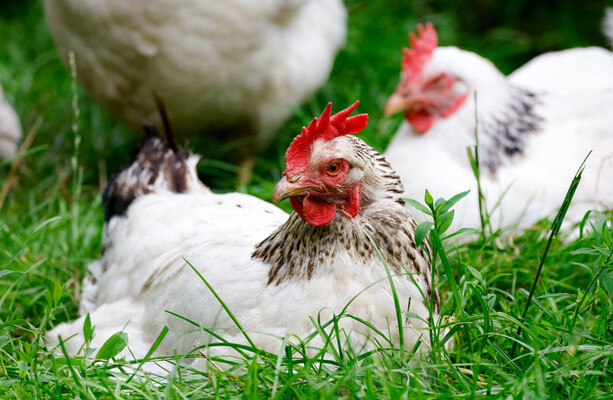
Cornwall free-range producer describes ‘constant anxiety’
Jenny Olds, who runs Cornhill Farm near Camborne with her husband Pete, said the disease is “an absolute constant anxiety” that would be “a massive cost for our business” if a case were confirmed. The farm manages 17,000 free-range hens across five fields, producing, packing and delivering eggs countywide. “We have never had an outbreak here on this farm, but it has come close and we’ve had five or six housing orders over the last six years,” Olds told Yahoo News. “As the migrating birds come over from eastern Europe, you start to see these little circles pop up on the government’s avian flu map. It’s heartbreaking for the producers up in the north. Then, as you see those circles showing the outbreaks gradually move down to the south west, as they’ve done in previous years, it’s really worrying.”
Olds said the farm was pleased the government brought in the housing order “earlier” this year but remains “very nervous” on a “high-risk” site where staff walk between fields and “clean and dip” their footwear as they go. “It is not an easy site to be 100% biosecure,” she said. “There have been some really big flocks up country with 100,000 birds and they’ve come down with it because one starling might have perhaps dropped an infected poo through an air vent and that’s taken out the whole flock. So it is partly you do your absolute best to keep your biosecurity measures as high as possible, and I think it’s partly luck as well.”
The farm has met with Animal and Plant Health Agency vets to plan for a potential outbreak.
Turkey farm braces for Christmas orders
At Banbury’s Turkeys near Padstow, Claire and Richard Banbury are nearing the end of rearing about 3,500 turkeys for Christmas. Richard Banbury said “it hardly bears thinking about” if they had an outbreak. “We need to get the turkeys through the next few weeks safely so people don’t miss out on their Christmas dinner,” he told Yahoo News. He recalled that public perception of bird flu in 2022 meant some customers “took cover with other meats as they felt nervous.”
He added he was holding out hope for “agreement” on a vaccine. “There has been farmers not so fortunate to get through and they took a few years to recover and, by then, the market can disappear, so it’s important to keep that market serviced. We are learning to live with it a bit like Covid. We take all the measures we can and hopefully we can come through.”
Zoos and wildlife parks tighten measures
Paradise Park near Hayle, which holds more than 130 species of birds, has installed footbaths and wash stations in aviaries, moved flamingos to a netted cage and closed some areas to visitors. “It’s like a creeping disease that’s getting closer to us and it is very difficulty and very worrying for us,” director Nick Reynolds told Yahoo News.
Vaccine trials under way but not yet deployable
The industry is awaiting the outcome of a vaccine trial tested on turkeys. Defra said “further work is needed” and a taskforce was due to publish a follow-up report in “due course.” Olds said she hopes the government keeps investigating the vaccine and rolls it out across poultry flocks.
“If nothing else, obviously we need it to protect the hens and the farming businesses, but also for our national food security. We don’t want to be importing eggs, we need to be producing as much food as we can in England.”
The Department for Environment, Food and Rural Affairs declared the English housing order this month, exercising its authority as the ministerial department responsible for animal health and welfare policy in England.
Its executive agency, the Animal and Plant Health Agency, operates as the delivery arm for disease control, receiving immediate reports of suspected avian influenza and conducting veterinary investigations on the ground. Defra’s Chief Veterinary Officer, Christine Middlemiss, issued the compliance urging and biosecurity mandates that accompany the legal restriction, framing the measures around protecting the poultry sector and national food security.
Ireland imposes parallel housing order
In Ireland, Minister for Agriculture Martin Heydon announced a compulsory housing order effective Monday, November 23, requiring all poultry and captive birds to be housed or confined so they do not have access to other poultry, captive birds or wild birds, The Journal reported. The move follows an outbreak of highly pathogenic avian influenza at a commercial farm in County Tyrone that triggered a culling order for all 24,000 birds on site.
Heydon said the risk is increasing due to recent poor weather, dropping temperatures and the “evolving epidemiological situation” on the island. “Biosecurity remains the single most effective way to prevent the virus spreading from wild birds into poultry, or between poultry flocks,” Heydon said. His department is coordinating closely with Northern Ireland’s Department of Agriculture on the issue.
Worth a look

Global Fund Delivers First Generic Lenacapavir to Zambia, Uganda, Zimbabwe for HIV Prevention
Generic lenacapavir, a twice‑yearly injectable that prevents HIV with near‑100% efficacy, has reached Zambia — the first low‑...

Ghaziabad Wife Arrested for Slow-Poisoning Husband, Son, Nephew Over Assets
A Ghaziabad businessman discovered he was being slowly poisoned with lead after a blood test revealed chronic poisoning,...

Data Centers to Drive 20.7% of ASEAN Power Demand Growth to 2030, ACE Projects
Data centers will drive roughly one-fifth of Southeast Asia's electricity demand growth through 2030, the ASEAN Centre for...
King Tides, Storm Surge Prompt Orange Flood Warning for Metro Vancouver, Evacuation Alerts on Vancouver Island
Coastal B.C. is bracing for the highest water levels in four years as king tides collide with the...