The U.S. Army detonated the nation’s entire stockpile of degraded lead azide at the Iowa Army Ammunition Plant in Middletown on Wednesday, eliminating what officials called a growing risk of spontaneous explosion as winter temperatures dropped.
The controlled blast occurred around 9 a.m. local time, sending two white plumes into the air that dissipated quickly, according to journalists and bystanders on site. An Associated Press reporter watching from less than a mile upwind described hearing two loud booms and seeing “a pair of wispy white plumes” that rose high and then faded. The Guardian noted the blast took place at about 10.00 a.m.
Why the Army acted now
The stockpile — 5 tons, or roughly 9,700 pounds (4,400 kg), stored in 68 barrels — had been consolidated at the plant in 2009 after being brought from bases around the country, according to Robert Cekada, director of the Bureau of Alcohol, Tobacco, Firearms and Explosives, as reported by CNBC and AP.
During a routine inspection in March, plant staff discovered the decades-old material had partially crystallized, making it increasingly sensitive to friction, shock and cold temperatures.
“Inaction is no longer an option,” said Maj. Gen. Eric Shirley, the Army’s leader of the operation, according to CNBC and AP. The Army determined that alternative disposal methods, such as thermal treatment or chemical neutralization, were not as safe as a controlled detonation.
There is obviously more testing to do that will provide certainty over time, but for now, federal officials have reported that lead dispersal should be limited, Iowans are safe, and damage to property is limited. I’m grateful to the experts on the ground who did all they could to…
Army encases bunkers in concrete barriers
To contain the lead dust, the Army encased the two bunkers in concrete and sand barriers two stories high, surrounded by earth berms and sand-filled blocks. Ballistic gels and foams were positioned to absorb particulates, and more than 100,000 gallons of water were prepared to tamp down any plume, CNBC and AP reported.
Acting Secretary of the Army Adam Telle said the public should not panic. “The threat of an uncontrolled spontaneous detonation has been eliminated,” he said in a statement cited by The Guardian.
“I am so proud of our SOLDIERS for their courage, training, mitigation and precision!”
Lee Zeldin, head of the U.S. Environmental Protection Agency, said early data showed the blast “caved inward perfectly.”
The EPA said that real-time air monitors around the region reported “ZERO detection of airborne lead throughout the region” and that monitors “never stopped collecting data throughout the event,” according to The Guardian. The agency launched a public website for live air-quality readings along the projected plume route.
Officials urge evacuation within five miles
Officials urged residents within 5 miles (8 kilometers) of the plant to evacuate, warning that lead — unsafe at any level and especially dangerous to children and pregnant women — could travel on the wind. The forecast called for a gentle southwest breeze toward Missouri and away from Burlington, a city of just under 25,000 along the Mississippi River, though hundreds of homes and farms remained in the potential path, CNBC and AP reported. Schools not already closed for the Thanksgiving holiday canceled classes.
A gas station near the site posted a note saying it would reopen once safe. Some residents sealed windows and doors; others drove to the roadside to watch. Burlington resident Tim Brandt told the Associated Press he had hoped to feel the ground shake but found the blast underwhelming.
“It was nothing,” he said. Lucy Giehl, who lives in nearby West Burlington, told CNBC: “I don’t think lead danger goes away any time soon. It seems someone might have thought about all of this a little sooner before it came to this.”
Court allows detonation after EPA safeguards
Environmental groups sued to halt the plan, but a federal appeals court ruled Monday that the EPA had incorporated adequate safeguards to minimize lead dispersal, allowing the detonation to proceed, CNBC and AP reported. The blast had been postponed three times from its original Friday date due to public backlash and weather.
President Donald Trump posted on Truth Social that “early reports from Iowa are that the Army’s mitigation efforts have far exceeded expectations,” according to The Guardian and AP. Telle thanked Trump and his administration “for mobilizing an unprecedented whole of government approach to fix this problem once and for all for the great people of Iowa.”
More on Iowa Army Ammunition Plant

Denise Michelle Porter, Trenton School Bus Driver, Dies at 67
Denise Michelle Porter, known as Michelle and Niecy, died November 21 in Trenton, N.J., at 67, according to...

DA Announces No Criminal Charges in APSU Shoelace Noose Case; Students Protest
No criminal prosecution warranted under Tennessee law, Nash announced Nov. 25. Student responsible came forward to campus police...

UAlbany Defeats Union 96-68 Behind Roman’s 32 Points
UAlbany defeated Union 96-68 Wednesday at Broadview Center in Albany, N.Y., breaking the game open with a 25-point...
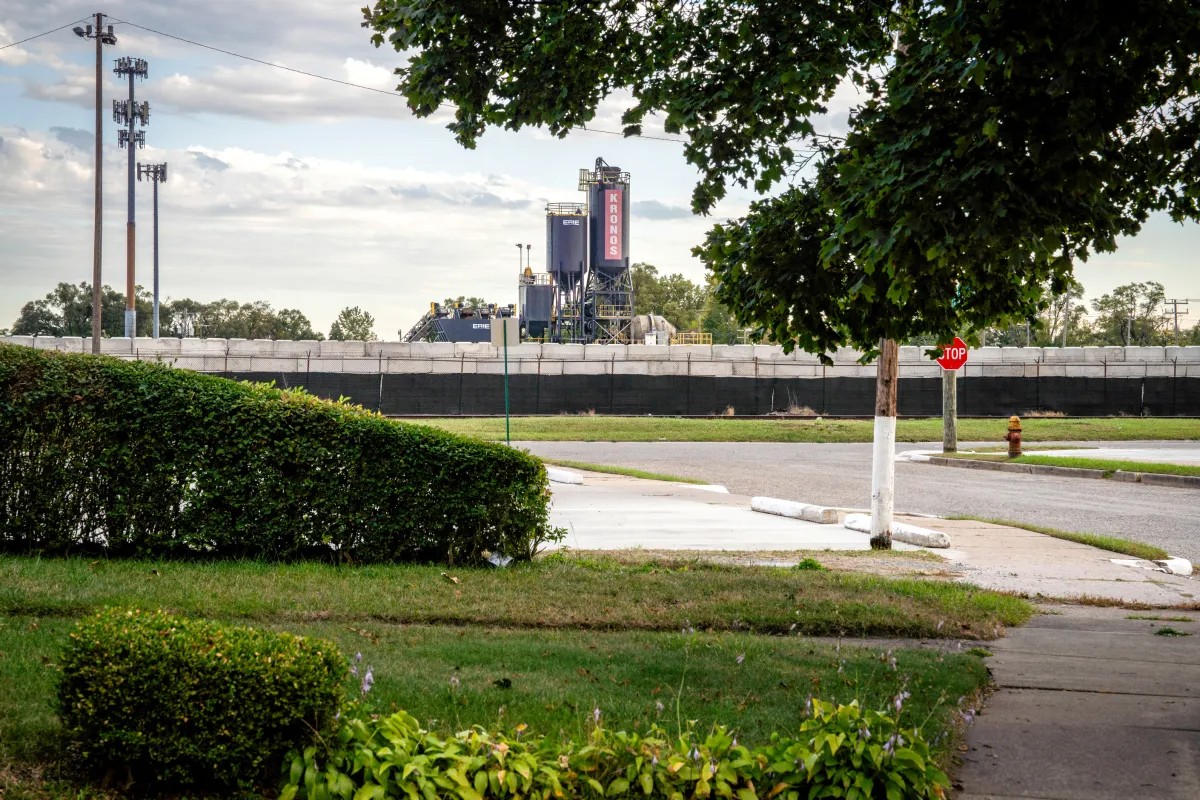
Detroit City Council Approves Rezoning to Prevent Kronos Expansion
“I believe that this is a question of fairness and integrity,” Matthew Moroun, owner of Crown Enterprises, told...