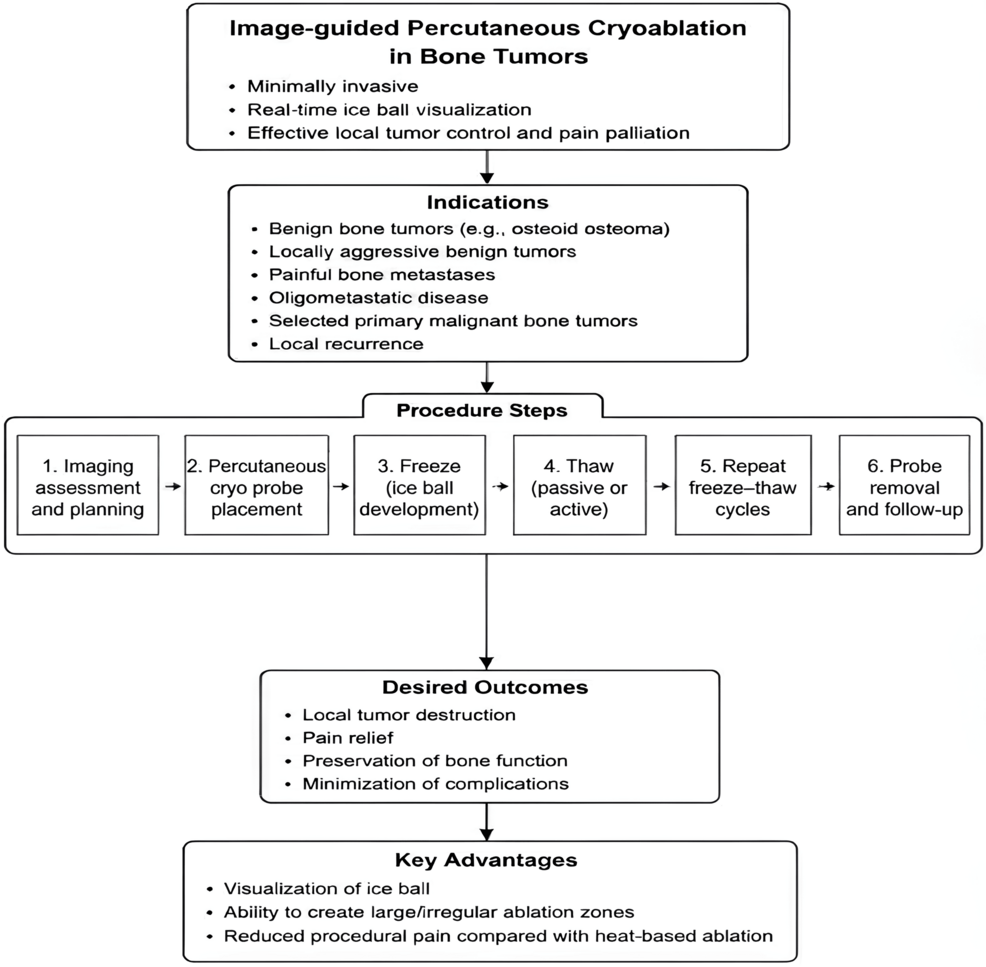
Cryoablation is expanding from benign lesions and painful metastases toward oligometastatic disease and selected primary bone tumors, Cureus reported.
- A review in Cureus maps current evidence for percutaneous cryoablation across benign, metastatic and primary malignant bone tumors.
- Ice-ball visualization on CT or MRI allows real-time monitoring, but the visible edge does not match the lethal isotherm.
- Multidisciplinary selection is recommended; biopsy before ablation is advised when diagnosis is uncertain.
- Technical standards — probe spacing, freeze-thaw cycles, 5–8 mm margins — remain adapted to each system and lesion rather than universal.
Cryoprobes using argon-gas expansion reach temperatures below −100 °C, producing intracellular and extracellular ice crystals, osmotic shock, membrane rupture and microvascular thrombosis, the review states. Temperatures below approximately −40 °C are generally associated with reliable tissue destruction, yet the peripheral region of the ice ball may experience less complete cellular injury.
The visible ice ball on CT or MRI therefore should not be interpreted as a uniformly lethal treatment zone, and an adequate safety margin beyond the tumor boundary is necessary, particularly when pursuing curative local control, according to the Cureus review.
Appropriate patient selection is fundamental, beginning with comprehensive assessment of clinical condition, tumor histology, previous treatments, lesion dimensions, anatomical relationships and therapeutic objectives, the review states. Cryoablation may be considered for osteoid osteoma, osteoblastoma, selected locally aggressive benign tumors, painful osseous metastases, oligometastatic bone disease, desmoid-type fibromatosis, and locally recurrent or unresectable bone and soft-tissue tumors.
Ablation without an established diagnosis may compromise subsequent oncological management and should generally be avoided, the review states. Protection of adjacent structures — peripheral nerves, spinal cord, skin, cartilage, major blood vessels and hollow organs — remains one of the most important aspects of bone cryoablation. Careful procedural planning and active tissue protection are essential, especially for lesions in the spine, pelvis and periarticular regions.
Worth a look

UDA Ousts Veteran South Belfast Commander Jackie McDonald Over Alleged Inappropriate Relationship
Jackie McDonald has been ousted as South Belfast Ulster Defence Association commander following allegations of an inappropriate relationship....

Indonesian Minister: Javan Rhino Relocation Plan Dates to 1990s, Not Hashim’s Idea
Key developments in the Javan rhino second-habitat debate Date Development Source 1986 Proposal for second population formally raised...
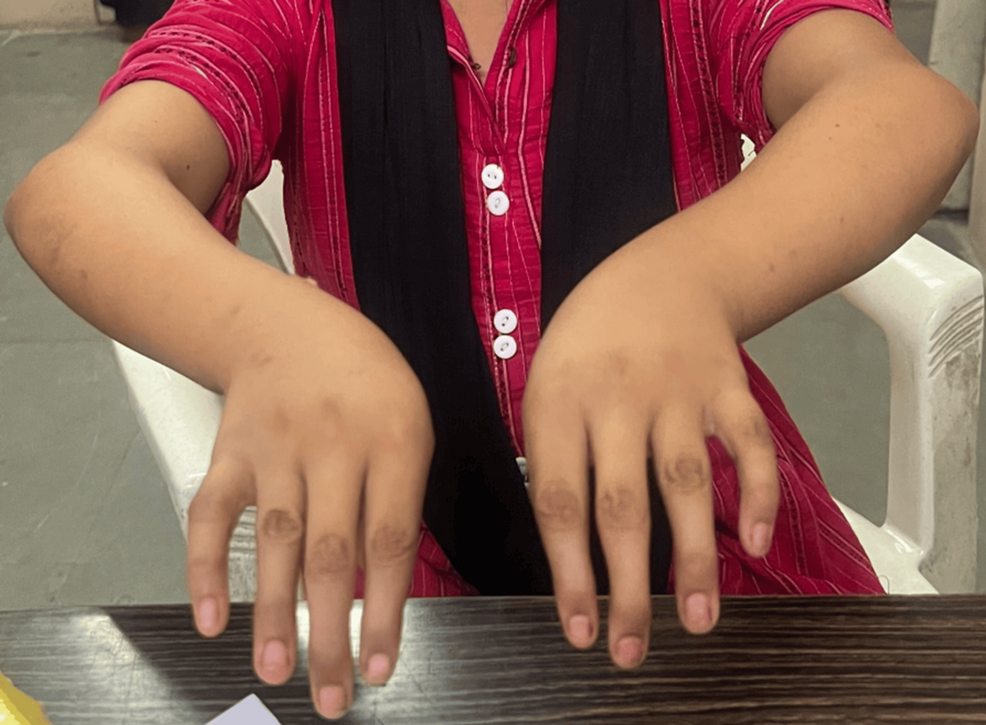
Provisional Diagnosis of Pseudopseudohypoparathyroidism in a 14-Year-Old Girl With Albright Hereditary Osteodystrophy
Bilateral cubitus varus and poor height gain brought a 14-year-old girl to an outpatient clinic, leading to a...

ASEAN Member States Signed Digital Economy Framework Agreement
ASEAN member states signed the Digital Economy Framework Agreement. The pact establishes common rules across cross-border data flows,...