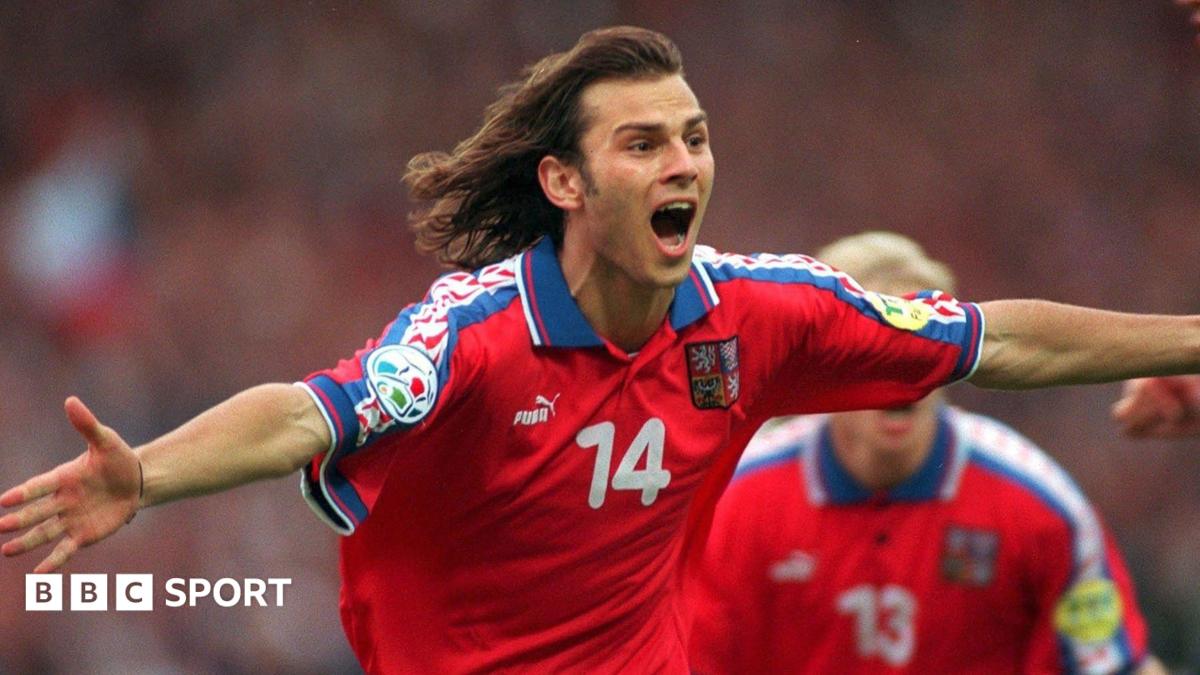
The Czech Republic national football team is returning to north London for a Nations League Group A3 fixture against England at Wembley.
Czech Republic Prepares for Wembley Clash Amid Euro ’96 Anniversary
Thirty years ago, the Czech squad arrived in England as major outsiders following the separation of Czechoslovakia. Most players remained based in their domestic league, and several had booked holidays immediately following the group stage. Midfielder Vladimir Smicer had even scheduled his wedding during the tournament break.
Recalling the low expectations of opponents, midfielder Patrik Berger noted that his Borussia Dortmund teammate and German defender Jürgen Kohler was unaware the Czechs had even qualified for the competition. He was asking me what my plans were for the summer,
Berger told the BBC Sporting Witness podcast. I said ‘I’m going to the Euros’ and he said ‘to watch games?’ I said ‘no, we’re playing you guys the first game of the group stages and then we will play in the final’ — and he was laughing.
From Group Stage Uncertainty to the Euro ’96 Final
The tournament began with a 2-0 defeat to Germany at Old Trafford, followed by a 2-1 victory against Italy at Anfield. Securing advancement required a dramatic finish in the final group match against Russia, where Smicer scored a late equalizer in a 3-3 draw. Because Italy and Germany drew 0-0 in the concurrent fixture, the Czechs advanced, though the players initially remained unaware of the final standings.
We knew we were still in it, but we didn’t know what the other result is,
Berger recalled. One minute we’re not qualifying, the next it was we qualified, so we didn’t really know. After the final whistle it took a few minutes before we realised we qualified for the quarter-finals.
In the knockout rounds, Karel Poborský scored a famous lob over goalkeeper Vítor Baía to secure a 1-0 quarter-final win over Portugal at Villa Park. The semi-final against France ended in a scoreless draw at Old Trafford before the Czechs prevailed 6-5 in a penalty shootout, with successful spot-kicks converted by future Ballon d’Or winner Pavel Nedvěd, Berger, and Poborský.
In the final back at Wembley, Berger gave the Czechs a 59th-minute lead by converting a penalty kick, noting that he stepped up because nobody really wanted to take the ball.
Germany’s Oliver Bierhoff equalized 14 minutes later before scoring the first golden goal in a major tournament final to secure the trophy.
Golden Era Legacy and Modern Crossroads
Despite missing out on the title, the silver-medal finish opened international pathways for the squad, with players such as Berger and Smicer subsequently moving to Liverpool, and Poborský joining Manchester United. Upon returning home, 100,000 fans greeted the team in Prague.
As the national team prepares for its current campaign under newly appointed manager Santi Denia—the first foreign boss in team history—analysts point to a reduced presence of players at Europe’s top clubs as a key challenge facing modern Czech football.
More on Czech Republic Returns
Related reading
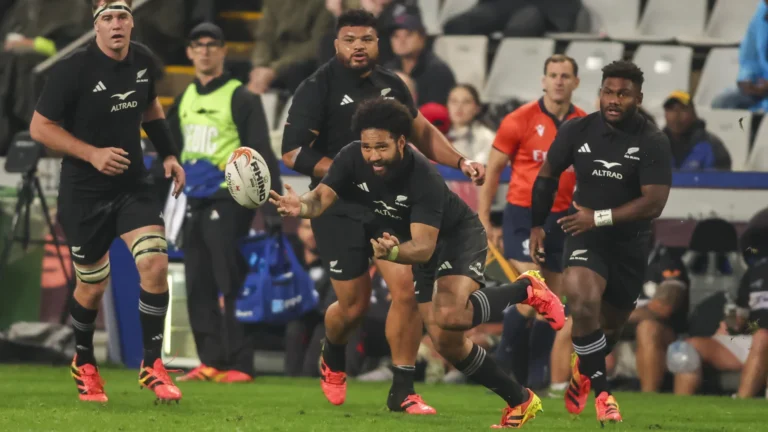
Fehi Fineanganofo Delays Newcastle Move To Stay In NZ Through 2027 World Cup
All Blacks winger Fehi Fineanganofo has secured an agreement with New Zealand Rugby and English club Newcastle Red...

Vikings Trade J.J. McCarthy to Giants for 2027 Fifth-Round Pick
The Minnesota Vikings traded quarterback J.J.
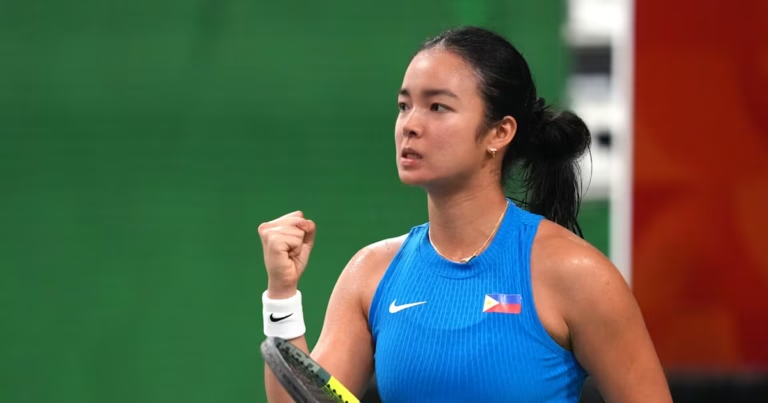
Alexandra Eala Crushes Patcharin Cheapchandej to Reach Asian Games Quarters
Alexandra Eala began her 2026 Asian Games campaign in Aichi-Nagoya with a dominant 6-1, 6-0 victory over Thailand's...
Beauden Barrett and 14 All Blacks Released for Final NPC Regular Season Round
A plethora of All Blacks have been released to their provincial unions for the final regular season round...