
More than 1,300 poll workers staffed 178 voting locations across Davidson County on Tuesday, and when power failed at three of them, battery-powered voting machines kept the lines moving, WSMV reported. The county’s preparation extended far beyond Election Day itself: officials had spent months building redundant systems—including a call center, fail-safe voting sites, and post-election audits—to ensure that every ballot cast in Nashville, whether early, absentee, or in person, would be counted securely and privately.
Davidson County Administrator of Elections John Richardson framed the stakes plainly: all votes count the same regardless of when or how they are cast, and following set processes is what keeps them private and confidential.
The 8:30 p.m. Rule Keeps Results From Swaying Voters
Election workers did not begin counting a single ballot until the last person in line at 7 p.m. had voted—around 8:30 p.m.—ensuring that no voter’s decision could be influenced by early returns. That deliberate delay reflects a procedural safeguard designed to protect the integrity of Election Day participation. Turnout exceeded expectations, with steady lines throughout the day building on already high early-voting numbers.
“Due to the turnout, the unexpected turnout, we’ve actually had people waiting in line today to go vote, which I think is a good thing because folks are choosing to participate in Election Day voting,” Richardson said. “Democracy is working as it should.”
Battery Backups and Blue Boxes: The Mechanics of a Secure Count
When power outages hit three polling locations, staff relied on battery-powered voting machines to prevent interruptions. Election headquarters also maintained a fail-safe voting location for anyone displaced from their assigned site. After polls closed, ballot processing moved to the Election Commission warehouse, where ballots from all 178 sites arrived in blue boxes and were checked in one by one.
Absentee ballots were processed earlier in the day by bipartisan teams—each pair consisting of one Republican and one Democrat—at the Election Commission. Those early and absentee totals were the first numbers released while staff worked through Election Day data. A call center staffed with experienced poll workers fielded questions from across the county, with binders on hand to troubleshoot issues and a protocol to escalate urgent problems immediately.
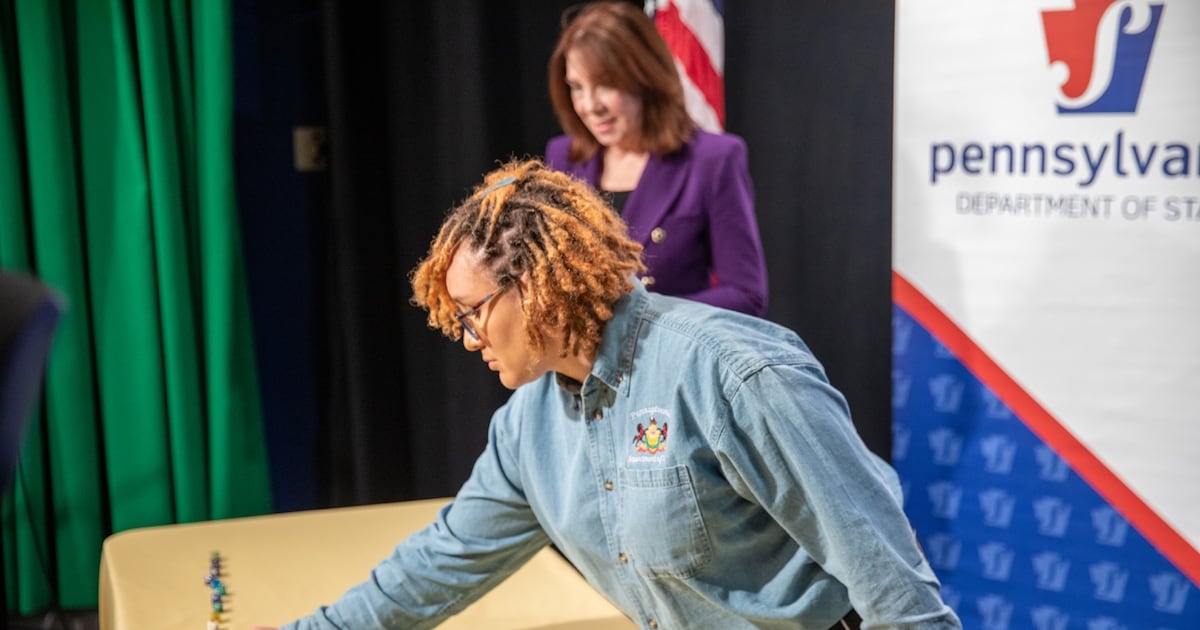
“It takes a village to raise a child; it takes a community to vote,” Richardson said. “When a person goes to vote, they’re not voting alone. They have a team of people both here as well as all across the city of Nashville working with them to make sure that their experience is a good one.”
Audits That Found 100 Percent Accuracy
For every election, officials audit randomly selected polling locations to verify the results recorded by voting machines. The August primary audit found 100 percent accuracy, and Richardson said that is the target again for the general election. Votebeat explains that post-election audits serve as the “flip side” of pre-election testing: while logic and accuracy tests prove voting equipment works before Election Day, post-election audits prove the final counts are correct.
Audit methods vary by state. Traditional audits recount a fixed number of ballots or precincts—Alaska requires one precinct per U.S. House district representing at least 5 percent of ballots cast, while Montana mandates auditing 10 percent of precincts or at least two, whichever is greater. Risk-limiting audits, described as similar to exit polling, recount a random sample sized according to the margin of victory: wider margins require fewer ballots to be checked, while close races trigger larger recounts.
“It is essentially, to my knowledge, unheard of for outcomes to be altered,” said Luke Belant, project manager for elections and redistricting at the National Conference of State Legislatures. “Modern voting systems are highly reliable, so results are routinely affirmed.”
Ben Adida, executive director of VotingWorks, described risk-limiting audits as similar to exit polling: “If you ask enough of them, you get a statistically significant idea of how voters voted.”
Two Weeks Until Certification
The verification process will take a couple of weeks before the election is officially certified. During that window, officials will complete their random audits and reconcile any discrepancies—though small variations can occur when machines interpret marks differently than human counters. What remains constant is the procedural backbone: bipartisan oversight, secure ballot transport, and statistical verification designed to confirm that the tabulated results match the votes cast.
“At the end of the day, we want to make sure that people’s voices are heard. Your vote is your voice,” Richardson said.
Keep reading

Bismarck Voters Receive Wrong Ballots at Liberty Elementary School
"More so, I just want to make sure voters feel like they were treated fairly," Republican Sen. Michelle...
Amy Acton Wins Ohio Governor Race as Democrats Break GOP Supermajority
Ohio Republicans will convene their next General Assembly without the veto-proof supermajority they have wielded for more than...
New York State Election Results: Senate, Assembly, and Local Race Winners
With 216 of 217 districts reporting by 12:24 a.m., incumbent State Senator Lea Webb declared victory in New...
New York State and Southern Tier Election Results: Senate, Assembly, and Local Races
The Southern Tier won't see dramatic upheaval in Albany this cycle, but Tuesday's vote delivered a split verdict...