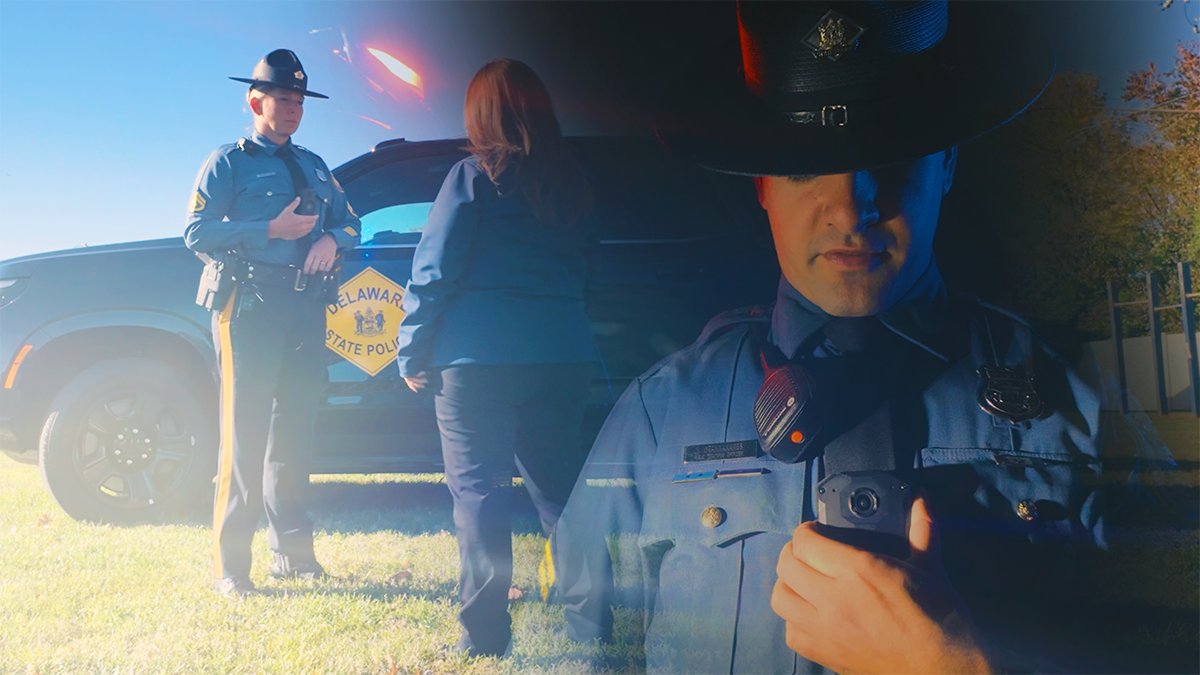
“Everyone deserves to be heard and understood, and this technology helps ensure language is not a barrier to the service and protection they receive,” said Colonel William D. Crotty, Superintendent of the Delaware State Police.
The Delaware State Police launched Axon’s Real-Time Translation technology earlier this week to assist troopers in communicating with community members who speak different languages, according to a news release from the Delaware State Police.
The feature is built directly into the agency’s existing body-worn cameras. It provides two-way audio translation for more than 50 languages, aiming to bridge communication gaps during critical moments such as traffic stops, calls for service, and general community engagement.
For law enforcement officers, the ability to communicate clearly during a roadside interaction or an emergency call can fundamentally change the outcome of an encounter. Language barriers increase the risk of misunderstanding instructions or failing to gather accurate information.
By integrating this software into their hardware, troopers can now engage in real-time dialogue with a diverse range of residents and visitors. The technology is designed to facilitate everyday interactions, ensuring that linguistic differences do not impede the delivery of police services.
The deployment comes at a time when many law enforcement agencies are looking toward technological integration to address complex social and logistical challenges. As community demographics shift, the tools used by first responders must evolve to remain effective and equitable.
“Effective communication builds trust between law enforcement and the communities we serve,” Colonel William D. Crotty, Superintendent of the Delaware State Police, said.
Real-time translation affects both officer safety and public trust. In high-stress environments, a misunderstanding regarding a simple command can escalate a routine encounter into a dangerous situation.
From a civic perspective, the “so what” of this technology lies in its potential to reduce friction in multi-lingual neighborhoods. For residents who may feel alienated by a lack of linguistic access, the presence of a tool that facilitates immediate understanding can serve as a vital component of community policing.
However, the adoption of such tools often invites scrutiny regarding the accuracy of AI-driven translation. Critics of automated translation in high-stakes environments frequently point to the potential for nuance to be lost, which could lead to errors in judgment or documentation. While the technology supports over 50 languages, the precision of real-time audio translation remains a central point of discussion for those monitoring the intersection of technology and civil rights.
The Delaware State Police has said that this move is part of a broader commitment to enhancing the quality of life for all residents and visitors within the state.
Worth a look

Boston University Beats Johnson & Wales by 26 Points
The Terriers utilized a highly efficient offensive performance to secure a 26-point victory over the Wildcats. Boston University...

Vermont Hosts Maine in Hockey East Series at Gutterson Fieldhouse
Vermont men's hockey enters a high-stakes weekend at Gutterson Fieldhouse, hosting Maine in a two-game Hockey East series...

The Kentucky Castle Denies Allegations of Secret Guest Recording
“TKC Hospitality unequivocally rejects the allegations suggesting that guests were secretly recorded while staying at our property,” the...

No. 5 Michigan State Hosts Northern Iowa at Breslin Center
No. 5 Michigan State returns to the Breslin Center on Friday, Nov. 13, to host Northern Iowa at...