
Another morning of toxic air greeted Delhi on November 5, 2026, as pollution levels shot up to a worrying AQI of 510. The national capital stayed in the “very poor” category for a fourth straight day, with much of the city battling “severe” air pollution, with many parts of the city recording hazardous levels.
Capital Air Quality Worsens to Severe
The air quality of the national capital remained in the “very poor” category for the fourth consecutive day, as many parts of the city suffered under “severe” air pollution, according to official data. Severe
level air pollution affects healthy people and seriously impacts those with existing diseases, as per the Central Pollution Control Board (CPCB). On Thursday, many parts of the city, including Alipur, Bawana, ITO, Dwarka, and Jahangirpuri, witnessed “severe” level air pollution. The overall air quality is expected to deteriorate to the “severe” category during Deepavali. The outlook for the subsequent six days is that the air quality is likely to be in the severe to very poor category.
Delhi is gasping for breath as the AQI crosses 400, but while Delhiites struggle to breathe, BJP seems to be busy celebrating. pic.twitter.com/yn3GXF1GtD
The contribution of stubble burning in neighbouring states to PM2.5, a chief pollutant, in Delhi on Thursday is expected to be 15.6%, slightly down from 16.28% on Wednesday, according to the Union Ministry of Earth Sciences data. This is predicted to rise to 19.2% on Friday. Delhi’s air quality index is deteriorating and expected to reach severe levels by Friday. Local emission sources contributed 31% and external sources 69% to overall air pollution in the city, with the contribution of stubble burning spiking to 16.2% against 8.2% Tuesday.
Minister Blames Punjab for Pollution Surge
The political blame game between the BJP and the AAP over the air pollution continued on Thursday. Environment Minister Manjinder Singh Sirsa said that Delhi’s AQI stood at 117 on October 31 but climbed to 377 by November 4. During the same period, Punjab witnessed a significant surge in farm-fire incidents, with 584 fires recorded on November 3 alone. The growing contribution of stubble burning to Delhi’s pollution made Punjab’s failure to control farm fires a matter of serious concern,
Mr. Sirsa said. He added that while the Delhi government is undertaking continuous monitoring, enforcement and on-ground interventions, the Punjab government must also take responsibility for controlling pollution at its source.

Continuing to attack the BJP government over alleged manipulation of AQI data by spraying water at AQI monitoring stations, AAP Delhi president Saurabh Bharadwaj said, The AQI data is completely fabricated. Water is being sprayed on monitoring sensors to fake the readings.
The Commission for Air Quality Management (CAQM) issued show-cause notices over stubble burning to the district commissioners and the SSPs of five districts in Punjab – Barnala, Bathinda, Fazilka, Jalandhar and Faridkot.
Delhi Tests Artificial Rain to Curb Smog
Delhi is exploring artificial rain to tackle post-Diwali pollution, having conducted two cloud-seeding trials in 15 days. However, previous attempts have yielded no rainfall. The city implemented restrictions, including a ban on private construction and entry of non-Delhi-registered BS-IV or below vehicles under GRAP-II. Among the areas that slipped into severe levels were IIT Delhi with an AQI of 455, Jahangirpuri 449, Punjabi Bagh 446, Mundka 439, Vivek Vihar 436, DTU 434, Rohini 432, Narela and Alipur 429, Sonia Vihar 427, Pusa 426, RK Puram 424, Bawana 417, Dr Karni Singh Shooting Range, Siri Fort, North Campus and Patparganj 412, and ITO 411. While transport remains the top local polluter, the spike has been intensified by regional farm fires surging during the last few days, pushing stubble smoke’s contribution to over 8 to 11%.
My formal Complaint Against the Government of Delhi for Large-Scale AQI Data Fraud, Systematic Manipulation of Ambient Air Quality Index (AQI) Data, and Active Connivance of CM @gupta_rekha and Minister @mssirsa Life-Threatening Risks to Vulnerable Populations: Millions of… pic.twitter.com/cowDAjkbc5
Delhi’s pollution crisis cannot be solved by turning city borders into environmental checkpoints. The repeated tightening of vehicle-related controls while expecting dramatically different outcomes only risks turning environmental governance into an exercise in symbolism.
More on Delhi
CM and Minister must face criminal proceedings for this AQI fraud. By committing fraud in AQI, the BJP Government is endangering the lives of elderly, children, and sick Delhi residents. Manipulated AQI readings make all related policy decisions, GRAP measures, and medical… pic.twitter.com/7up2YOI85d
#WATCH | Delhi: The Air Quality Index (AQI) in the area around India Gate and Janpath is at 335, categorised as 'Very Poor', as per the CPCB (Central Pollution Control Board). (Visuals shot at 06:39 am) pic.twitter.com/IKyYMg0TBk

Report: Taking Vitamin D and Omega-3 Together
Taking vitamin D and omega-3 fatty acids together may improve the absorption of the fat-soluble vitamin and offer...

Man Dies in Workplace Accident at Carlow GAA Grounds
A Man in His 50s Dies After Gate Falls at Carlow GAA Grounds A man in his 50s...

Cowboys Launch Huddle 94 Program on Kneeland Death Anniversary
A Year After Tragedy, Dallas Cowboys Honor Marshawn Kneeland with Mental Health Push One year ago, the Dallas...
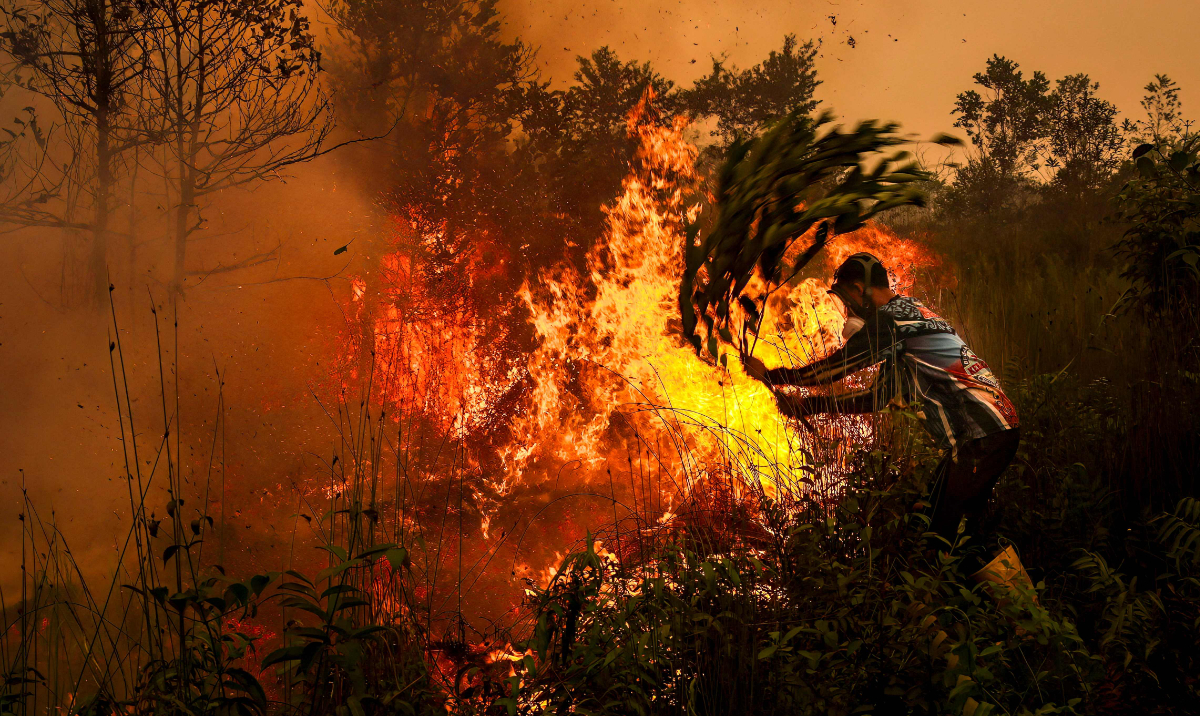
Australia to Join Indonesia’s Wildfire Waterbombing Operations
Australia will join Indonesia’s waterbombing operations to help extinguish fires that have continued for months, a government agency...