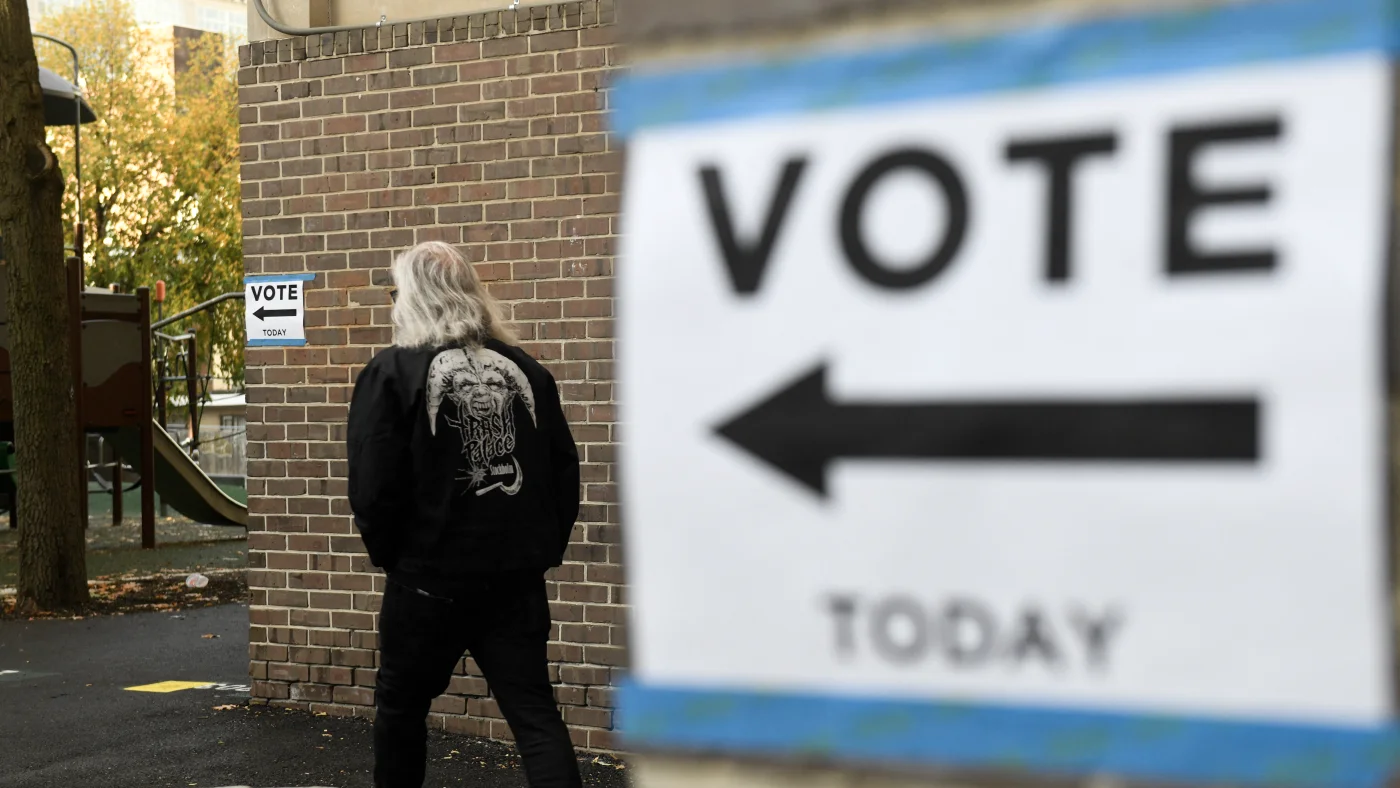
Democrats’ gains in November’s midterm elections could reshape voting rules in states including Arizona, Pennsylvania and Wisconsin as newly elected officials pursue automatic registration, faster mail-ballot counts and state-level voting rights acts, NPR reported.
Since 2020, Republican-led states have enacted restrictions on voter registration and mail voting while access has broadly expanded elsewhere, NPR reported. This year’s midterms gave Democrats trifecta control in Arizona, Pennsylvania and Wisconsin, and legislative majorities in New Hampshire. In Texas, Democrats won the governorship and a state House majority, creating a divided government that allows for negotiation.
Registration changes lead the agenda
Texas and New Hampshire remain among the few states without online voter registration. Barbara Smith Warner, senior policy adviser at the Institute for Responsive Government, said she expects both states to pursue it. “As a former legislator, I will tell you, that sounds like the kind of thing that is ripe for negotiation,” she told NPR.
On the first day Texas lawmakers could pre-file bills for the next session, online registration was among the first introduced, NPR reported, with bipartisan momentum after problems with the state’s registration system this year.
Chris Diaz, director of legislative tracking at the Voting Rights Lab, said states with new Democratic trifectas will likely adopt automatic voter registration or same-day registration to “make the voting process smoother, easier for voters.” Arizona is a top target.
About half the country already offers same-day registration, which Diaz said helps people who move before an election, and roughly half has some form of automatic registration, which experts find more efficient for maintaining voter rolls.
States consider pre-processing mail ballots earlier
Diaz said more states will weigh letting election officials pre-process mail ballots before Election Day — opening envelopes and verifying signatures — to speed results.
“I think especially for Wisconsin and Pennsylvania, we expect to see bills that are going to put officials in a position to get a lot of mail ballots processed before Election Day, and then just lower that workload for officials on Election Day and get results to the public faster,” Diaz told NPR. The Voting Rights Lab also flagged Nevada for similar legislation.

Pennsylvania’s county-by-county variation in ballot curing — the process for voters to fix envelope errors such as missing dates or signatures — could be standardized under a Democratic trifecta. The state has a longstanding issue with ballots rejected over missing or incorrect dates on mail-in envelopes, NPR reported.
Groups push state voting rights acts
Andrew Walchuk, senior policy director and counsel for voting and fair representation at Common Cause, said his group will push more states to pass state-level voting rights acts after the Supreme Court’s Callais decision last year “all but gutted the 1965 Voting Rights Act.”
Common Cause helped enact such laws in New York, Colorado and Maryland in recent years. “Given the years-long attack of the Roberts Court against the federal Voting Rights Act, getting these protections in place … is going to be a really key part of our work over the next two years,” Walchuk told NPR.
Barbara Smith Warner, senior policy adviser at the Institute for Responsive Government, told NPR she expects Texas and New Hampshire to pursue online voter registration this session, noting the issue is “ripe for negotiation” in divided governments.
Her organization’s Making Participation Possible work, detailed in an August 2026 blog post, frames Secure Automatic Voter Registration and Online Voter Registration+ as practical, nonpartisan reforms that expand access while securing voter rolls and improving list accuracy across states.
Democrats also won secretary of state races in Georgia and Ohio. Walchuk said Republican secretaries of state were “key in the administration’s efforts to meddle in how states run their voter rolls” during President Trump’s second term.
“The agenda of interference in elections that we saw from the Trump administration relied in large part on sort of complicity and cooperation from anti-voter politicians in these offices,” Walchuk told NPR. “And losing that cooperation takes away a key tool of this administration’s anti-voter agenda.”
Worth a look

Caregiver Burnout, Basement Boundaries and Therapy Access: Eric Thomas Advises Readers
In a syndicated advice column, Eric Thomas responds to three readers dealing with caregiving strain, household boundaries and...
Americans Turn to Surplus Food Apps as Grocery Prices Rise 33%
Americans facing a 33 percent rise in grocery prices since January 2019 are turning to surplus-food apps such...

Nevada Woman Makes History as First Female Official at High School Football State Championship
Andrea Gutierrez became the first woman to officiate a Nevada high school football state championship when she worked...

Trevecca Wins Arctic Crossover Title, Beats Alaska Fairbanks 81-78 for 6-1 Start
Trevecca Nazarene University men's basketball won the Mt. McKinley Bank Arctic Crossover title Saturday, defeating host Alaska Fairbanks...