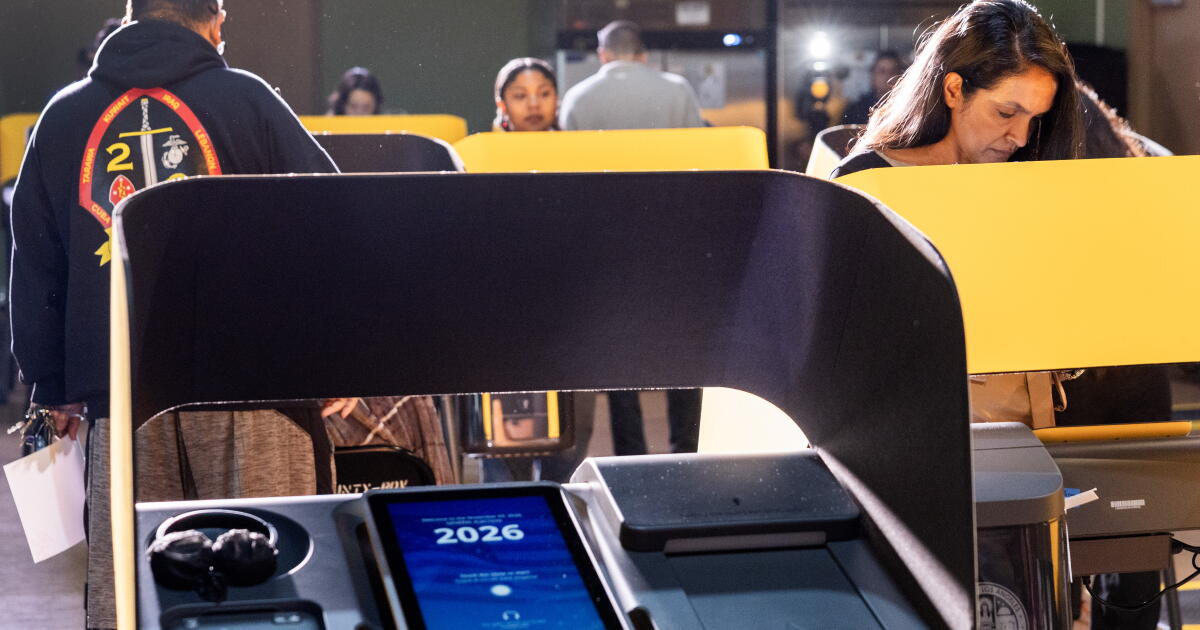
The Justice Department sent a last-minute surge of election monitors into Los Angeles on Tuesday morning, hours after the Supreme Court appeared to hand California a victory in its fight over 20,000 contested ballots, the Los Angeles Times reported.
In a whiplash series of three rulings spanning roughly 12 hours, the U.S. 9th Circuit Court of Appeals ultimately cleared the Trump administration to threaten California election officials with criminal prosecution—a reversal that came on Election Day itself, just as the Justice Department announced it was deploying 1,000 monitors across the country in what it called the largest monitoring effort in department history.
Three Rulings in Twelve Hours
The appellate court’s final decision landed just before noon Tuesday, reinstating a stay that allows federal officials to demand contested ballots be set aside and to warn workers they could face criminal charges for counting them. The bitter 6-5 split fell along ideological lines.

It marked the third time the court had changed course since Monday evening. At 8 p.m. Monday, a three-judge panel issued a 2-1 ruling blocking the Justice Department’s threats against election workers. By 11 p.m., the full court had set that decision aside while it reviewed the case with a larger en banc panel. Then, just before noon Tuesday, the 11-judge panel reversed itself again, reinstating the stay.
“In the span of twelve hours in the middle of an ongoing election and on the literal eve of Election Day, our court issued three conflicting orders,” wrote Judge Roopali Desai, in her dissent. “Reinstating the stay on the morning of Election Day also creates a serious risk of disenfranchisement.”
Desai cautioned that the eleventh-hour stay places election officials in an untenable position: either perform their state-mandated responsibilities and face the threat of federal charges, or follow the federal government’s instructions and breach their obligations under California law. Chief Judge Mary Helen Murguia likewise dissented from the first decision, noting that on the eve of Election Day, the defendants claim they must be permitted to exercise their prosecutorial authority to achieve what they were unable to obtain via their requests for injunctions.
Writing for the majority, Judge Eric D. Miller stated that according to Miller, a district court typically lacks the power to issue an injunction barring the Department of Justice from voicing its opinions on criminal laws, regardless of whether the court finds those opinions mistaken.
1,000 Monitors in Business Casual
The Justice Department announced the deployment alongside the court’s final ruling, sending monitors to Los Angeles, New York, Chicago, Detroit, San Diego, Sacramento and Alameda County under the auspices of the Voting Rights Act of 1965. A department spokesperson said the federal monitors would be at polling locations but that the department was not giving out precinct details.

The monitors were directed to dress in business casual—khakis and polos, no Kevlar—and were forbidden from wearing insignia, carrying firearms or attempting to arrest would-be voters. Come Tuesday morning, the Justice Department had already pulled a number of sworn law enforcement officers from its roster of volunteer election monitors following a review conducted with federal agencies, as stated in a court filing.
“Law enforcement agencies with sworn officers have never before been recruited as poll monitors,” said Donya Khadem of the NAACP Legal Defense Fund, which sued in federal court in Washington, D.C., to block the move. “It’s unlawful and serves the plain purpose of intimidating voters.”
California Pushes Back
State officials responded swiftly to the federal presence. Attorney General Rob Bonta vowed on social media that California would have its own observers on site “keeping an eye on your monitors to ensure the integrity of California’s free, fair, safe, secure, accurate, and reliable elections.” Los Angeles Mayor Karen Bass called the move “an attempt to intimidate voters into staying home,” adding that the Department of Justice was “laying the groundwork to dispute the results if they don’t get the outcome they want.”
The deployment comes amid a months-long battle over ballots the Justice Department claims may have been issued to noncitizens. During the previous week, federal prosecutors issued criminal grand jury subpoenas to Los Angeles election workers demanding extensive volumes of information concerning attempts to meet federal requirements. Unions and voting rights groups sued in federal court, saying the efforts amounted to “a coordinated campaign to intimidate, threaten, and coerce” civil servants into holding back legitimate ballots.
On Friday, following the 9th Circuit’s ruling in California’s favor in the ballot claw-back case, U.S. District Court Judge Trina Thompson in San Francisco handed down a scathing order preventing the Justice Department from threatening election workers with criminal liability or insisting that voters be removed from the rolls, stating that senior DOJ and DHS officials had conducted a campaign to “intimidate, threat, and coerce” those running the ongoing midterm 2026 election.
The Stakes for 20,000 Ballots
At the center of the dispute are 20,000 contested ballots in California. The Supreme Court returned an unsigned decision in California’s favor Monday afternoon, mere minutes after it was asked to consider the question, appearing at least briefly to foreclose further efforts to stop those ballots from being counted. Yet the 9th Circuit’s subsequent rulings allowed the administration to continue demanding the ballots be segregated and threatening prosecution for election workers who process them, while also acknowledging such saber rattling was unlikely to stand up in court.
“They’re not doing this to make sure that there are free and fair elections,” said Eric J. Segall, a law professor at Georgia State University and an expert on the Supreme Court. “They’re doing this for nakedly partisan reasons, and the federal government shouldn’t be allowed do that.”
As polls opened Tuesday morning in the nation’s most populous state, the unanswered question remained whether California’s election workers would count the 20,000 contested ballots under the threat of federal criminal charges.
Worth a look

McDuffey & Medcalf Injury Lawyers Fight for Jefferson City Victims
When a crash on Highway 50 or a fall at a downtown Jefferson City business leaves a Missouri...

TechCrunch Founder Summit 2026: Doors open 9 a.m. ET in Boston, discounted registration ends
Doors open at 9 a.m. ET today at the SoWa Power Station in Boston for TechCrunch Founder Summit...
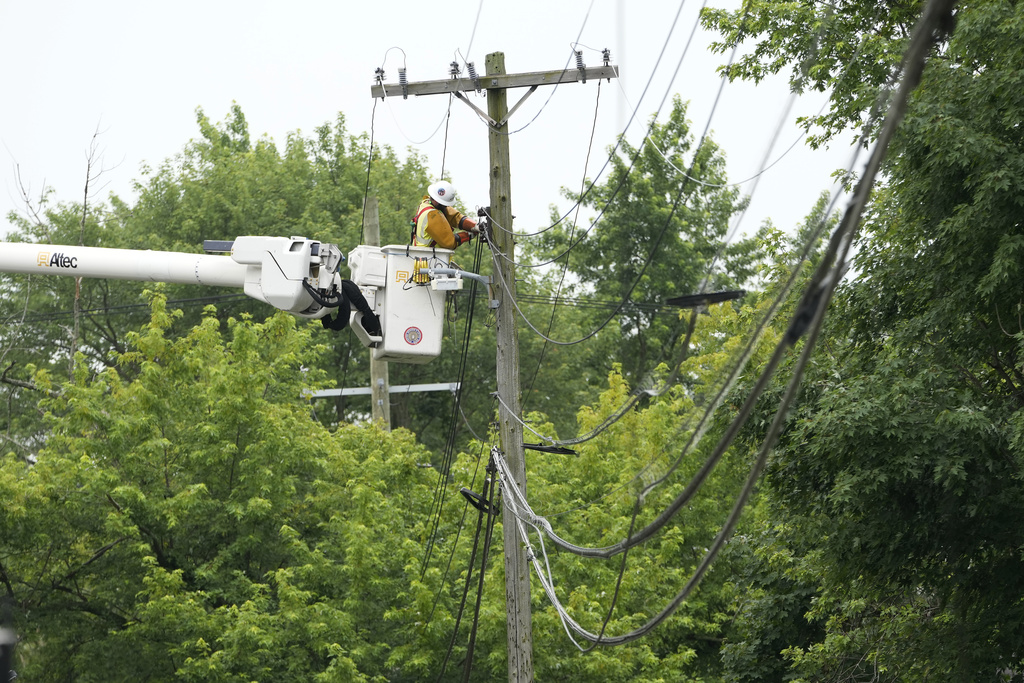
Detroit residents share power outage struggles after storms knock out hundreds of thousands
Summer in Metro Detroit is typically a season of outdoor festivals and open windows, not flashlights and cold...
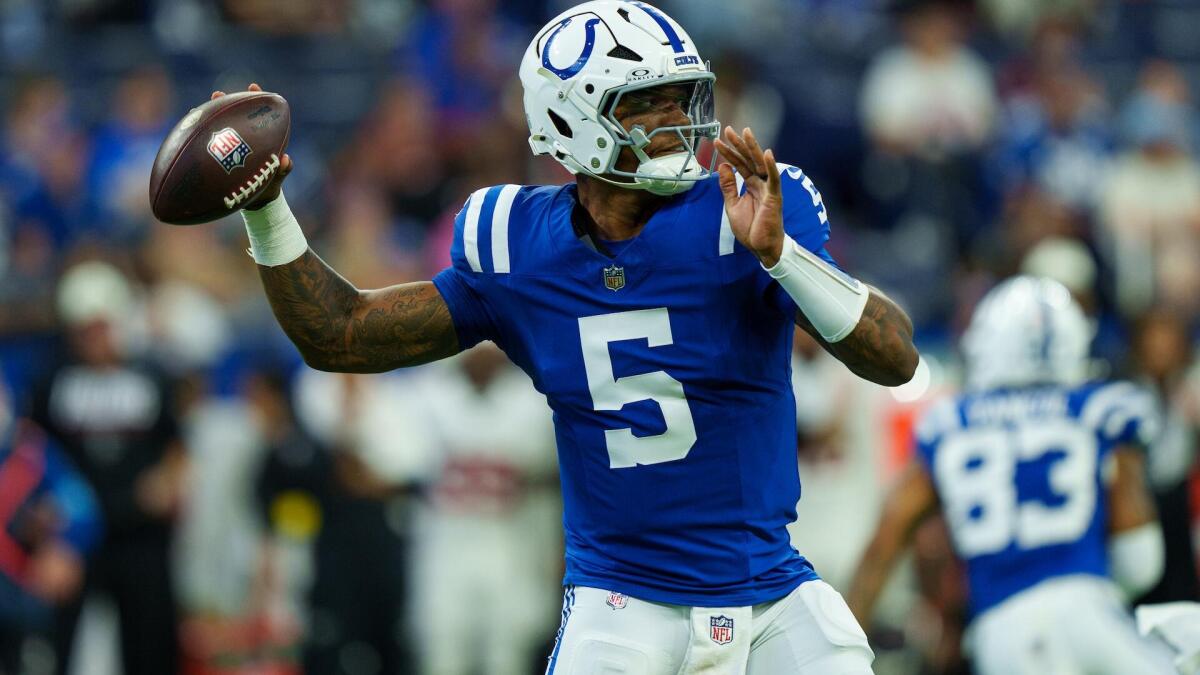
Ravens consider three QBs for trade as Jackson, Huntley sidelined
The Baltimore Ravens are staring down a quarterback emergency that would have seemed unthinkable a month ago. On...