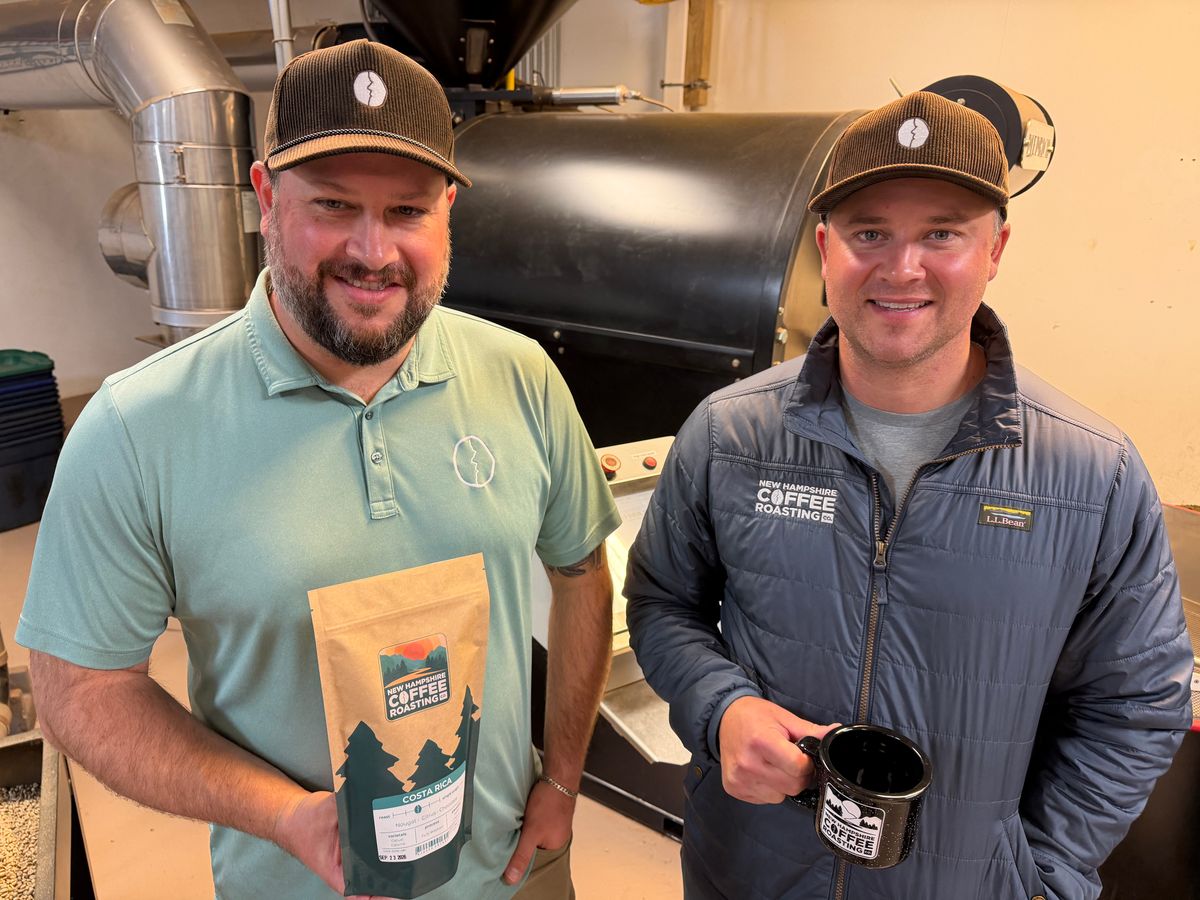
Brothers Nick and Chris Barretto took over Dover’s New Hampshire Coffee Roasting Co. at 7 Sumner Drive in 2020, guiding the retail and wholesale business through the pandemic and carrying forward a Seacoast tradition that began nearly four decades ago.
The company traces its roots back to 1989, when it was founded in an unheated garage. Former owner Bill Coneys ran the operation for 20 years before his death in 2019, which paved the way for the Barretto brothers to step in at the start of 2020.
Nick Barretto initially joined the business in 2015 after searching for a change from restaurant work that would offer more time at home. He answered an entry-level job posting in coffee production that did not even list the company’s name or address on the building.
“I was working in restaurants and I was looking for a little bit more time at home,” Nick said.
His role eventually expanded from deliveries and fixing brewers to roasting, purchasing beans, and managing sales. When the opportunity to purchase the business arose, he easily convinced his brother Chris to join him as a co-owner and operator.
Chris Barretto brought a background in finance and technology, having studied business with a focus on entrepreneurship at the University of New Hampshire. While Nick knew the roasting operation, Chris brought business acumen and a willingness to learn the coffee trade.
Pandemic Shifts and Production
Taking ownership at the start of 2020 brought immediate hurdles as COVID-19 disrupted daily operations. The factory store temporarily closed and employees were sent home, but the brothers kept fulfilling online orders.
“We were pleasantly surprised by how the business continued with people buying for drinking at home,” Nick said.
Today, retail accounts for roughly a third of sales through the company’s website and onsite store at the Dover roasting facility, while wholesale makes up the remaining two-thirds. The company offers over 90 flavors, ranging from classic choices like vanilla and chocolate to seasonal options such as apple crisp and peppermint bark.
Flavored coffees use a standard medium roast blend as a base. Small batches are mixed by hand in 10-pound bags to ensure complete coating, then left to sit for about 24 hours. Larger production runs utilize a machine called a ribbon blender.
From Bean to Cup
Beans are sourced from major coffee-growing regions across Central and South America, Asia, and Africa. Asian islands typically yield fuller-bodied coffees, while African origins offer brighter, lighter-bodied qualities.
Chris said that running a roasting company opened his eyes to the complex international supply chain required to deliver a single cup of coffee.
“Things that people aren’t necessarily thinking about when drinking a cup of coffee is where is this coming from? What does it take to get ultimately to this cup of coffee that I’m having right now?” Chris said.
The roasting process itself relies on a drum that spins inside a machine resembling a front-load dryer with a turkey fryer base heated by a propane burner. The heat cooks out the water content, triggering caramelization and the Maillard reaction to develop flavor as beans transition from green to yellow and finally brown.
For Nick, the most rewarding aspect remains interacting directly with customers after the roasting is finished.
“We get to help them dial in what they like and what their perfect cup is and I take a lot of satisfaction in helping people find good coffee,” Nick said.
Ashling Soares Law Says Connecticut Parenting Plans Must Account for Parent Travel and School Calendar Shifts
Connecticut parenting plans must account for more than just a standard weekly routine, requiring clear provisions for parent...

Indiana Hoosiers Thump Kentucky Basketball: 4 Things to Know and Postgame Mourning
On Friday night, Indiana defeated Kentucky 90-76 inside a reconfigured Lucas Oil Stadium in Indianapolis, handing the Wildcats...
Trump Stated Agreement With Xi Jinping on Super Intelligence Guardrails
President Trump returned to Washington after a trip that saw little agreement on key global issues. The White...
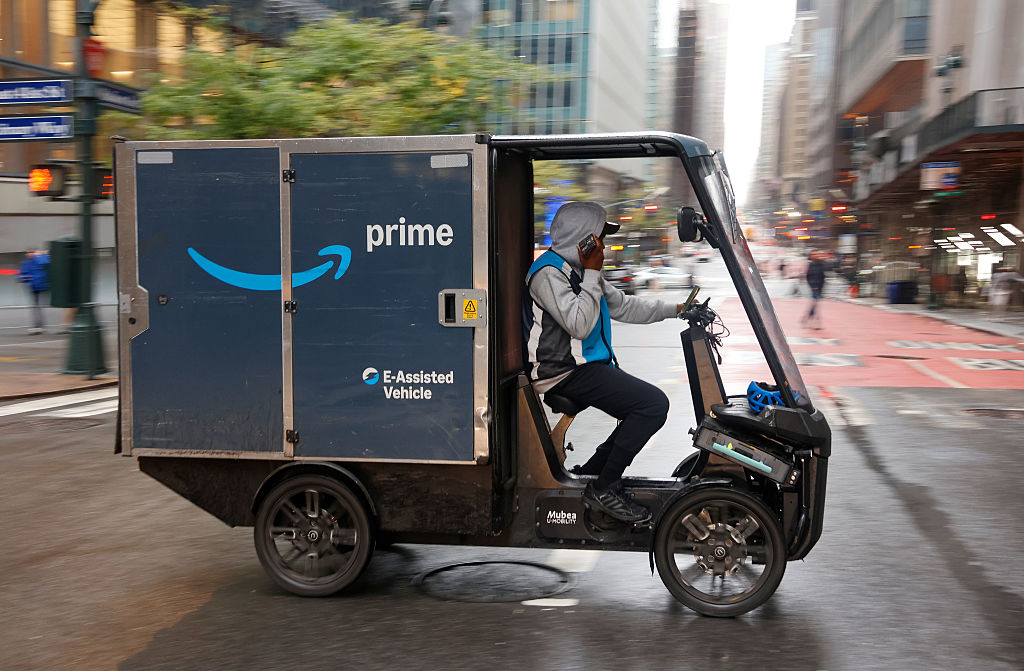
Amazon Campaigns Against NYC Delivery Protection Act, Says Jacobin
New Yorkers opening Amazon's app on Thursday were greeted with a warning that the City Council could add...