
The Democratic Republic of Congo has recorded more than 12,000 confirmed Ebola cases and nearly 5,900 deaths since the outbreak was declared on May 15, making it the country’s deadliest on record and the second-deadliest globally, the World Health Organization said Thursday.
The case fatality ratio stands at 49.1 percent, roughly one in two confirmed patients, according to government data as of November 24. The epidemic is driven by the Bundibugyo virus species, for which no licensed vaccine or treatment exists, unlike the Zaire strain responsible for previous Congolese outbreaks, the WHO and Latin Times reported.
“Six months into this emergency, the Committee remains deeply concerned by continued transmission and the high number of Ebola-related deaths, particularly in a context where insecurity and obstacles to reaching affected communities make every aspect of the response more difficult,” Professor Lucille Blumberg, chair of the WHO Emergency Committee, said in a statement issued November 25 after the committee’s third meeting.
Case counts by province (as of Nov. 17)
| Province | Confirmed cases | Deaths | Health zones affected |
Ituri | 7,911 | 3,738 | 28 of 36 |
| Nord-Kivu | 2,925 | 1,623 | 17 of 34 |
Source: European Centre for Disease Prevention and Control, cited by MLQ.ai
The outbreak has spread across eight of the DRC’s 26 provinces — Ituri, Nord-Kivu, Sud-Kivu, Tshopo, Haut-Uélé, Bas-Uélé, Sud Ubangi and Nord Ubangi — with cases reported in 68 of 178 health zones, according to the European Centre for Disease Prevention and Control (ECDC) figures cited by MLQ.ai. UNICEF data through November 4 counted 2,959 confirmed cases among children, representing 28 percent of the total.
WHO has updated its recommendations for the #Ebola outbreak caused by Bundibugyo virus disease in the Democratic Republic of Congo (#DRC), following a meeting of its Emergency Committee convened by @DrTedros under the International Health Regulations (2005). The Ebola outbreak… pic.twitter.com/dU9rzvMi23
The WHO Director-General, Dr Tedros Adhanom Ghebreyesus, reaffirmed on November 25 that the epidemic remains a Public Health Emergency of International Concern (PHEIC), a designation first invoked on May 17. The agency has verified at least 94 attacks on health care since the PHEIC declaration, the WHO said.
Fighting near Bunia disrupts Ebola vaccine trials
Fighting between Congolese forces and the Convention for the Popular Revolution (CRP) rebel group has intensified near Bunia, the Ituri provincial capital where the Tumaini ring-vaccination trial and the PARTNERS treatment trial are based, the Associated Press reported via Tech Times. Clashes in Iga-Barrière, 25 kilometres north of Bunia, displaced families toward the city and disrupted contact tracing essential for the trials, the AP said.
The WHO temporarily withdrew its Ebola response team from Mongbwalu, a gold-mining town at the centre of the outbreak, on November 24 due to rising insecurity, Nature World News reported. The team relocated to Bunia.

“Insecurity remains a significant obstacle to efforts to contain the outbreak, with direct repercussions on humanitarian access and the protection of patients, health workers, responders, and health facilities,” the WHO said in its updated recommendations.
Anna Halford, who coordinates Médecins Sans Frontières (MSF) Ebola response across the DRC, said physical access to affected areas is severely compromised. “This makes it extremely difficult to transport supplies and establish proper screening and surveillance,” she told Al Jazeera. In some conflict zones, violence prevents health teams from reaching communities, leaving sick people without testing or care and crippling contact tracing.
In parts of the Democratic Republic of Congo, tackling local suspicions is as big a problem as combating the Ebola virus that has plagued it for six months. For example, while health workers insist on safe burials to prevent further infections, some communities are resisting… pic.twitter.com/AkjkpO0R2J
Halford noted that even areas without armed groups are seeing a rise in cases. “Several areas not affected by armed groups are also seeing a rise in cases and struggling with the response,” she told Al Jazeera. Supply routes are hindered by poor infrastructure as well as insecurity; patients travel hours on rough roads to reach treatment centres, and medical supplies often fail to reach remote villages in usable condition.
Health system gaps
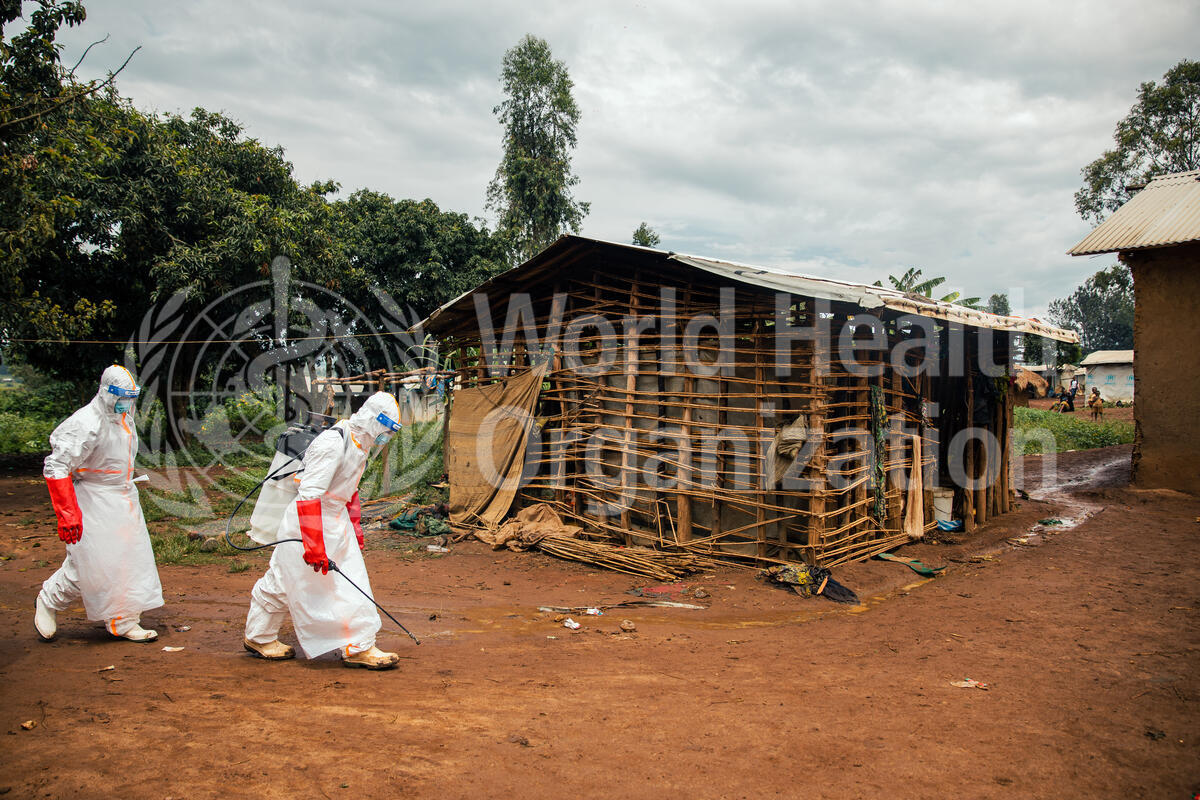
Front-line workers across the DRC lack basic protective equipment. Halford recently encountered a remote clinic where staff were using makeshift COVID-19 protective gear and flip-flops, she told Al Jazeera.
Early symptoms resemble malaria or typhoid, leading to misidentification in understaffed, poorly equipped health centres, Al Jazeera reported. After the official declaration in May, it took months to bring testing capacity to required levels.

Jeremy Konyndyk, who led the U.S. response to the 2014–2016 West African outbreak and now heads Refugees International, argued on the Zeteo media website that the dismantling of USAID contributed to delayed detection. USAID’s Disaster Assistance Response Teams (DART) previously provided early warning; with them gone, the virus circulated undetected from February through May, he said. Cuts also contributed to protective equipment shortages and limited laboratory capacity, Konyndyk said.
Epidemiologist Alain Casseus, head of the infectious diseases division at Partners in Health, said other donors — the United Kingdom, Germany, France and Canada — cut back aid almost simultaneously, leaving the Congolese Ministry of Health and Africa CDC largely on their own initially.
Donors pledge billions but front-line workers remain unpaid
International donors have pledged roughly $2.9 billion since May, with new commitments from G20 foreign ministers in September, Halford told Al Jazeera.
Every order matters in the #Ebola response in #DRC. Deployed to Bunia, Ituri Province, Lucille Kavira coordinates procurement and deliveries to help ensure response teams have the resources they need, when they need them. pic.twitter.com/Ofb5rAmB42
Javid Abdelmoneim, international president of MSF, warned earlier this month that funds have not reached front-line responders. “Despite the vast amounts of money provided for the response, many front-line responders are left trying to contain the outbreak with empty hands and empty pockets,” he said in an MSF statement. “Six months into the response, this situation is simply unacceptable.”
Abdelmoneim cited untrained and unpaid health workers, ambulances without fuel, and phantom surveillance teams existing only on spreadsheets. In Ituri, only nine percent of Ebola patients treated by MSF had previously been identified as contacts by the surveillance system, he said.
Halford said there is a serious lack of oversight of how pledged funds reach operations. “This is not a criticism directed at the DRC government, which itself denounced that lack of transparency,” she told Al Jazeera. “Poor planning and oversight lead to many overlapping aid projects in one area, while others are left neglected.”
Recommendations of the IHR Emergency Committee on Bundibugyovirus https://t.co/XTtcnpNf5Z Biggest concerns: the security situation, delays in case finding and contact tracing, and healthcare associated transmission
Community trust
Distrust fuels resistance to safe burials and stigma against survivors, Dr Alex Bonane Murutsi, a Congolese physician at the MSF Ebola treatment centre in Bunia, told Al Jazeera. Traditional funerals involve touching, dancing around and washing the body — rituals that safe burials prohibit by sealing the body in a bag.
“In the beginning, there was not enough communication. People didn’t always understand why certain measures were necessary,” Murutsi told Al Jazeera. Families sometimes hide deaths or resist safe burials. Survivors face exclusion because communities do not understand they are no longer infectious. Even health workers face hostility from their own families.
Mistrust can turn violent. Murutsi recounted a colleague at a rural health post who was assaulted and forced to flee after voicing suspicion of Ebola in a bleeding patient; the patient’s companions insisted the disease did not exist in their village and accused health workers of bringing it there.
In Bunia, trust is higher because local health workers engage directly with communities, Murutsi said. “People know us and we take the time to explain why certain measures are important. You don’t earn people’s trust by simply telling them what to do; you have to talk to them,” he told Al Jazeera.
Africanews reported similar sentiments from Bulambo-Isale, where livestock farmer Patricien Kambale said authorities imposed the response without understanding local interpretation, and youth council head Roland Vivaya said most people in the area do not believe Ebola exists. The image of “doctors protected by the military scared the community,” Kambale said.
Tumaini and PARTNERS trials rely on disrupted contact tracing
The Tumaini platform trial, which vaccinates contacts of confirmed cases in rings, began in Bunia on October 23 using the licensed Ervebo vaccine as its first candidate, Tech Times reported. The PARTNERS treatment trial also runs in Bunia. Both depend on contact tracing that the WHO says fighting has disrupted.
Research is underway on potential Bundibugyo vaccines, including Ervebo, a University of Oxford vaccine specifically targeting Bundibugyo, and an mRNA-based vaccine from Moderna, Scientific American reported, citing virologist Tom Geisbert of the University of Texas Medical Branch. “There just wasn’t enough effort put on Bundibugyo to be ready for that,” Geisbert said.
The WHO Emergency Committee called for faster clinical trials of candidate vaccines and treatments while maintaining high scientific, ethical and safety standards, and emphasized community engagement for transparent trial information, the WHO said November 25.
“Stopping Ebola will require coordinated and accelerated action to find cases earlier, prevent infections in health-care settings and in the community, provide early supportive care, maintain trust with communities, and ensure responders can safely reach people in need,” Blumberg said.
- VP Duterte Impeachment Trial Resumes Dec. 1-4 With Defense Witnesses Set to Testify
- President Recommends Delimitation Bill for Lok Sabha; DMK Announces Support for Revised Bill
- WHO: Measles Vaccine Prevented 60M Deaths; Wealthy Nations Losing Status (archyde.com)
- Uganda to withdraw troops from DR Congo town amid diplomatic fallout (newsarchyuk.com)

VP Duterte Impeachment Trial Resumes Dec. 1-4 With Defense Witnesses Set to Testify
The impeachment trial of Vice President Sara Duterte will resume with whole-day sessions from December 1 to 4,...

President Recommends Delimitation Bill for Lok Sabha; DMK Announces Support for Revised Bill
President Droupadi Murmu recommended the Delimitation (Second) Bill, 2026, for Lok Sabha consideration on Saturday, clearing the way...
Irish Stroke Admissions Surge 45% Since 2013, Reaching 6,848 in 2025
Stroke admissions in Ireland have surged 45 per cent since 2013, reaching 6,848 last year, the National Office...

Indonesian Authorities Accelerate Aceh Housing Programs Says Report
For the survivors in Aceh, this disaster did not end when the floodwaters receded. Twelve months on, numerous...