
On November 16, 2026, global food expert and human rights advocate Dr. Jason W Clay passed away at Johns Hopkins in Baltimore, Maryland, surrounded by his family after complications from a stem cell transplant.
Clay lived in Arlington, Virginia, and served as Senior Vice President at the World Wildlife Fund alongside his role as Executive Director of the Markets Institute.
Raised among his six siblings in a countryside setting in King City, Missouri, Clay survived on a daily budget of under a dollar, slept on a screened porch, and hunted and fished to supply meals for the household.
When Clay was fifteen, his father died in a tractor accident, and overnight Clay took responsibility for managing the family farm. His life’s work was driven by the resilience and ingenuity he developed from enduring early-life hardship.
Despite struggling with dyslexia in his youth and being advised to avoid public speaking, Clay went on to receive a scholarship to Harvard and graduated at the top of his class. He later attended the London School of Economics and earned his PhD in Anthropology from Cornell University.
Clay’s early work focused on human rights and supporting people without a nation, working with refugees, indigenous populations, famine victims, and ethnic minorities. In 1980, he founded the award-winning Cultural Survival Quarterly, which he edited until 1992. He set up some of the first fair-trade supply chains, coined the phrase rainforest marketing, and created Rainforest Crunch with Ben and Jerry’s.
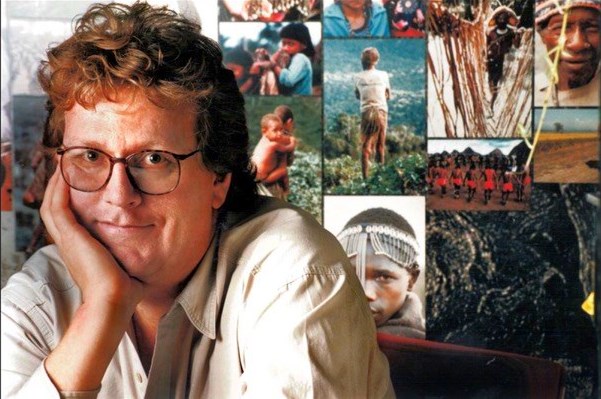
His theories of market transformation influenced the work and priorities of the World Wildlife Fund, other non-governmental organizations, and major global companies. He helped establish global production standards for palm oil, sugar, soy, beef, and 12 aquaculture commodities.
“Yesterday, the world lost Jason, and it is a darker place for it,” a former student and mentee wrote on LinkedIn, noting how Clay encouraged public policy students to look inside corporate supply chains to understand and reshape them.
Throughout his career, Clay authored 18 books, more than 1,000 articles, 500 blogs, and gave more than 2,000 presentations.
Keep reading

EKU Extends Volleyball Coach Johnna Bazzani Through 2030 Season
Eastern Kentucky University has secured the future of its volleyball program by extending the contract of head coach...

Two 11-Year-Old Boys Seriously Injured After Vehicle Hits Dirt Bike in West Phoenix
Two 11-year-old boys were rushed to the hospital with serious injuries on Tuesday evening after a collision involving...

Umno Demands Explanation Over Declassification of Najib Pardon Minutes
Umno has demanded an explanation regarding the declassification of the Federal Territories Pardons Board meeting minutes concerning Datuk...

Fifth $50,000 Bonus Match 5 Winner Sold in Gaithersburg This Month
Another $50,000 Bonus Match 5 winning ticket was sold in Montgomery County on the day of the drawing,...