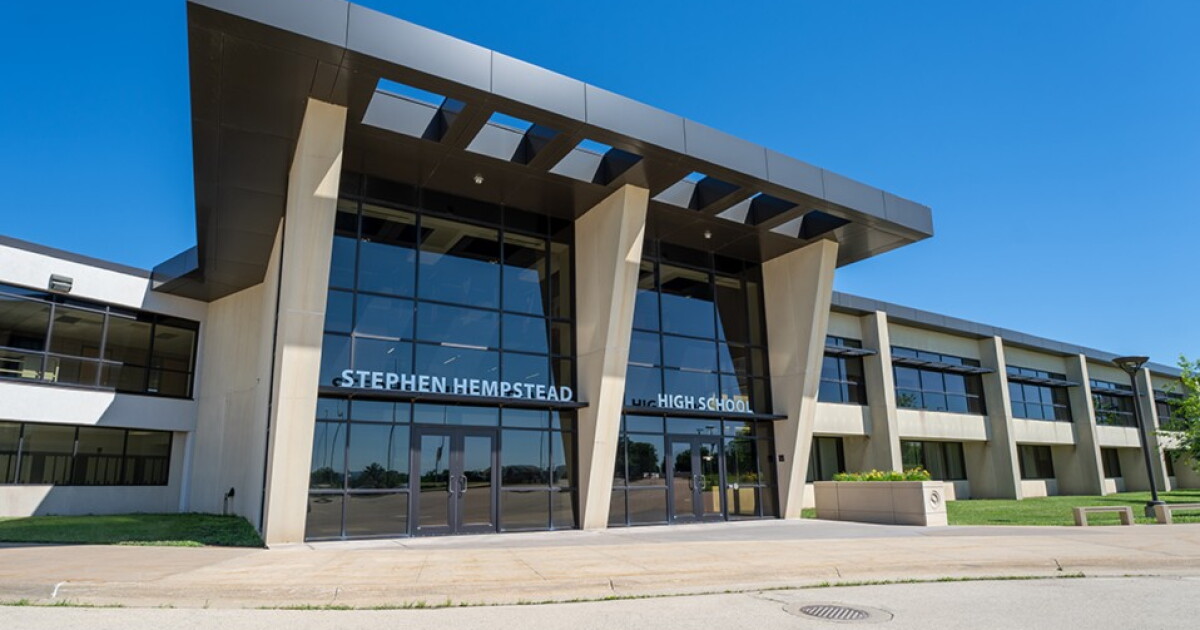
The Dubuque Community School District Board of Education voted 6-1 on Monday to approve a consolidation plan that will close two middle schools and restructure the district’s high schools to address a massive budget shortfall.
According to reporting from Iowa Public Radio, the decision changes the district's physical footprint as officials move to cut $17 million from its $170 million budget by the 2030-2031 fiscal year. The plan, which is set to take effect in the fall of 2028, will see Jefferson and Washington middle schools closed.
Under the new structure, Hempstead High School will serve students in grades 8 through 9, while Senior High School will accommodate grades 10 through 12.
A struggle with declining enrollment
The move comes as the district grapples with a steady erosion of its student population. Projections indicate that by the 2030-2031 school year, enrollment will drop to approximately 8,800 students. That represents a decline of nearly 2,000 students, or 20%, compared to the 2006-2007 school year.
Superintendent Amy Hawkins noted during Monday’s meeting that the district has been seeking efficiencies since 2015 and 2016, but has now reached a point where the physical footprint must change. She highlighted that Dubuque is far from alone in this struggle; 19 of Iowa’s 24 largest school districts are currently facing similar pressures regarding consolidations and closures.
Hawkins attributed much of this pressure to insufficient state funding for public education. While the approved plan is expected to save $4.63 million, it covers only a portion of the total $16.8 million in savings required to stabilize the budget.
The district has attempted to bridge the gap through local support, but voters have not provided the necessary mandate. Two bond measures run over the last three years failed to reach the 60% voter support threshold required for passage.
“We have reached out to our community and said, ‘We need your support to help us with some financial efficiencies,’” Hawkins said. “And both times that did not pass.”
Residents petition to postpone the board decision
Local residents pushed back against the board's decision. A group organized under the name “Before We Decide” led a petition to postpone the vote and reopen the planning process, gathering more than 1,200 signatures. Monday’s meeting lasted over four hours and drew more than 150 people in person.
Critics of the plan expressed frustration that their input during public sessions did not result in meaningful changes to the proposed models. Emily Brannon, a Senior High School alumna and Dubuque resident, spoke during the meeting about the potential loss of community schools.
The plan was selected from three different consolidation scenarios introduced by the district in August. Following a period of public input, two task forces recommended this specific scenario as the optimal choice during a meeting on October 26.
Despite the outcry, board member Nancy Bradley argued that the district’s current financial trajectory is not sustainable. She described the recommendation as well-researched and grounded in equitable learning, warning that delaying the vote would result in a “disastrous setback.”
The economic and social stakes
The fiscal reality facing Dubuque reflects a trend across the Midwest, where shrinking tax bases and shifting demographics often collide with static state funding formulas. When school districts downsize, the impact extends beyond the classroom, often affecting local property values and the vitality of the neighborhoods surrounding closed facilities.
For the families in Dubuque, the transition in 2028 means a fundamental change in how students move through their formative years. The restructuring of the high schools into grade-specific campuses is a drastic departure from the traditional model, intended to maximize the utility of existing buildings as student numbers dwindle.
While some residents look toward the state government for relief, others see the board’s decision as an unavoidable necessity. Brannon noted that while she holds optimism for state-level action following recent elections, the district’s immediate needs cannot wait for political shifts.
Hawkins echoed this sentiment of urgency, suggesting that the time for relying on potential future changes has passed.
“We can’t be [reliant] on hope anymore,” Hawkins said.
The district has acknowledged that this is not the final step in its restructuring. Officials indicated that additional future reductions, including the potential consolidation of elementary schools, may be necessary as enrollment continues to trend downward.
Worth a look

Scott Colom Expresses Confidence in Mississippi Senate Race Lead
Democratic challenger Scott Colom expressed confidence in his chances of winning Mississippi’s U.S. Senate seat on Tuesday as...

Detroit Lions to Play New England Patriots in Munich, Germany
“I don’t see him playing in Germany,” said Kerby Joseph, according to a report from Sports Illustrated. The...

Anne Arundel County to Unveil Quiet Waters Park Plans on Nov 18
Anne Arundel County officials will unveil the completed design for the 19.4-acre Quiet Waters Park Retreat property during...

Downtown Augusta Staycation Raffle Draws 123 Entries in Two Months
Downtown Augusta staycation contest draws 123 entries A local giveaway designed to encourage residents to explore their own...