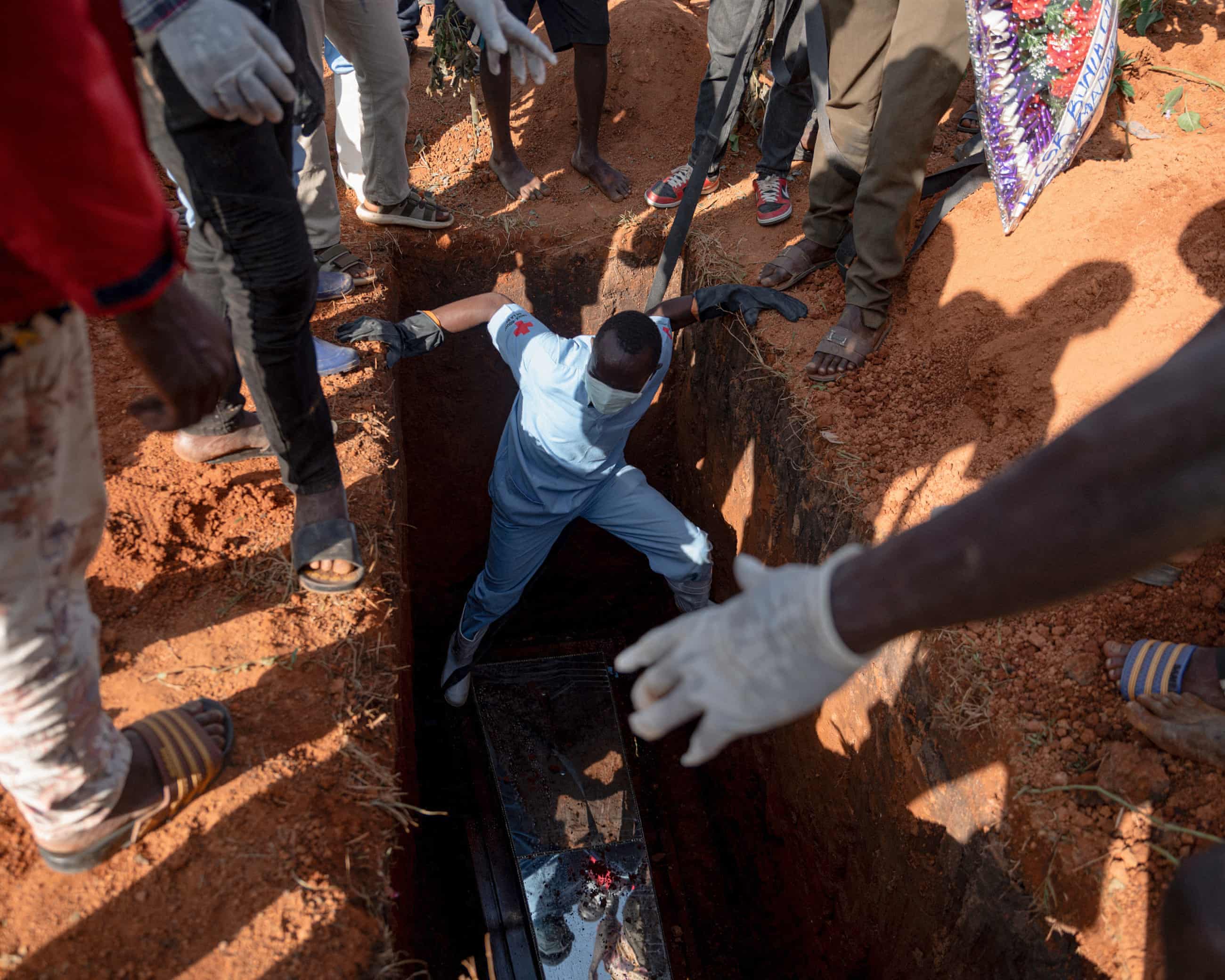
Six months after an Ebola outbreak was declared in the Democratic Republic of the Congo, the virus is still spreading faster than responders can track it, killing nearly 5,400 people and leaving families like Sylvain Kabona Tibasima’s to count the dead by the dozens.
In Bunia, the capital of Ituri province, Tibasima has lost 46 relatives since May, including his sister Sylvie, who died a week after giving birth, and Sylvie’s two-week-old daughter, Birungi, The Guardian reported. The outbreak, driven by the rare Bundibugyo strain, has confirmed more than 11,000 cases across eight of the country’s 26 provinces, with a fatality rate approaching 50 percent and no licensed vaccine or specific treatment yet available.
“When Ebola began spreading, many people in this town and in my extended family believed it was sorcery,” Tibasima told The Guardian. “When someone fell ill, relatives would visit them in hospital or at home. And when people died, it was customary for family members to touch the body before burial. That’s exactly how the virus continued to spread.”
The scale of the crisis is historic. This is already the second-largest and second-deadliest Ebola outbreak on record, trailing only the 2014–2016 West African epidemic that infected more than 28,600 people and killed over 11,000, according to Al Jazeera. Jean Kaseya, director-general of the Africa Centres for Disease Control and Prevention, warned Sunday that “if we don’t stop this outbreak now, it would be the worst Ebola outbreak that the world will have.”

“We are all in agreement today to say that this outbreak is still serious, and is still not under control,”
Containment is collapsing on multiple fronts. More than 80 percent of new cases are emerging outside known contact lists, and over 65 percent of deaths are occurring in the community rather than in health centers, Kaseya said. Between 400 and 500 new infections are still reported each week.
Cases have been reported in East, Central and West Africa, giving it the widest geographic spread of any Ebola outbreak on the continent to date, Africa CDC director Jean Kaseya said.
Community engagement, a key public health intervention in the fight against #Ebola. "Together we can defeat this disease." pic.twitter.com/UQ2cfmO3c8
Distrust fuels the spread. More than 100 armed groups operate across eastern Congo, displacing over one million people into crowded camps around Bunia, according to the International Organization for Migration. That instability has triggered more than 80 attacks on healthcare workers and treatment centers since May, disrupting contact tracing and vaccination efforts. Health workers have repeatedly struck over months of unpaid wages, sometimes leaving confirmed patients without care, AP reported.
“Displacement, insecurity and distrust of authorities are all major obstacles to containing Ebola, as they complicate diagnosis and contact tracing,” said Pascal Cishibanji Cabwine, Welthungerhilfe’s Ebola coordinator and Tibasima’s colleague. “Communities have experienced years of violence and neglect, and many are now suspicious of outsiders, including government actors and international aid organisations.”
Six months into the #Ebola epidemic in the #DRC, we have made significant progress, but the battle is far from over. Ebola is only one of many health threats that affected communities face. We need all hands on deck, not only to end this outbreak, but to strengthen health… pic.twitter.com/QNYhFtUBGU
The financial response is also fracturing. Only $1.3 billion of the $2.9 billion pledged by donors has been released, Kaseya said, and the Africa CDC recently flagged more than $700 million in Ebola aid that remains unaccounted for. “A troubling disconnect between the considerable resources mobilised for the response and what is actually reaching patients, frontline workers, and communities continues,” said Doctors Without Borders, known as MSF.
There are glimmers of progress. Infections have begun to decline in some early epicenters, including Bunia, and the World Health Organization approved clinical trials for two new candidate vaccines this month, with results expected in early 2027. At least 3,000 people have recovered and returned home, WHO Director-General Tedros Adhanom Ghebreyesus wrote on X.
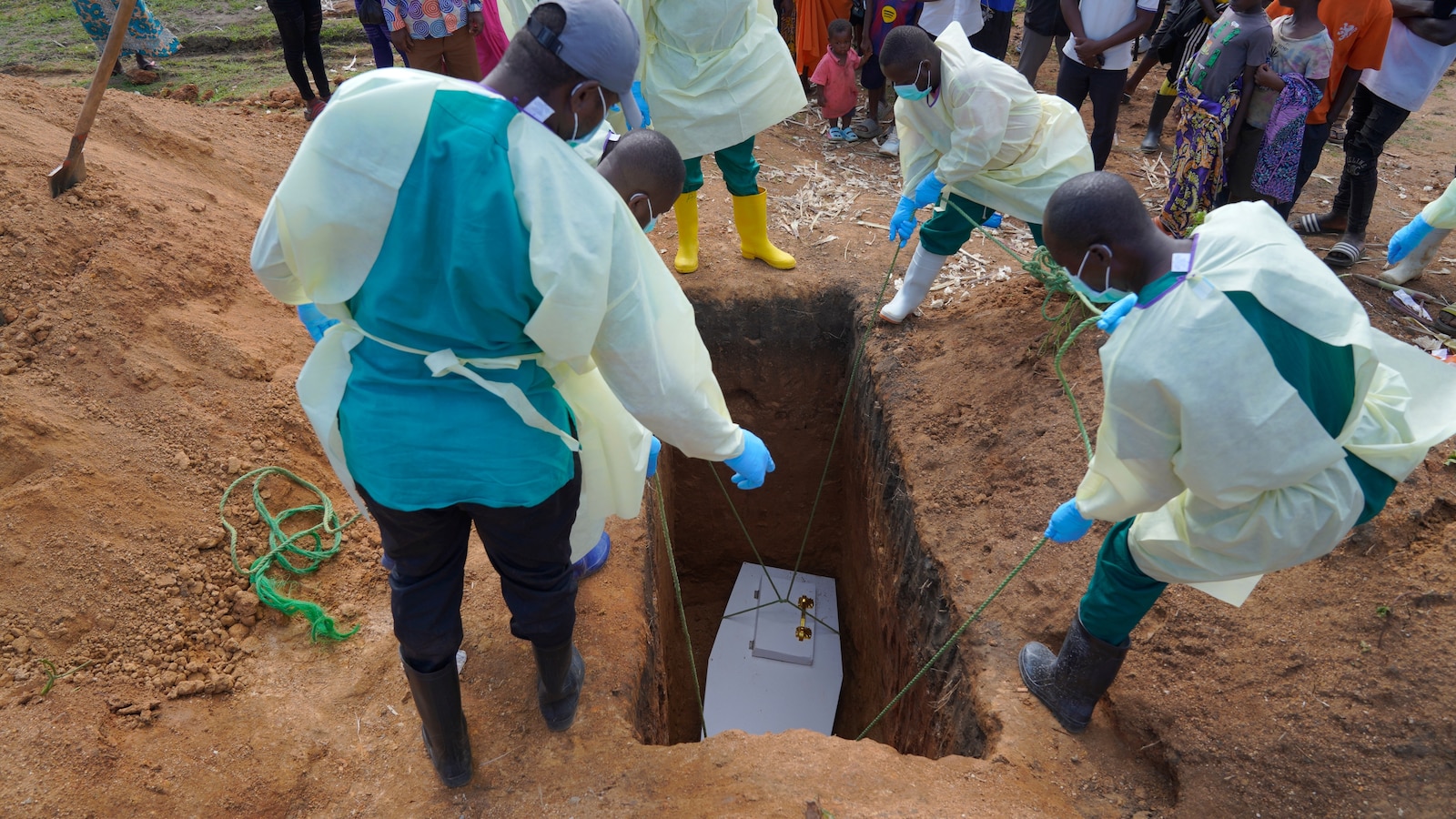
For Tibasima, the stakes are immediate. His 18-year-old daughter Malaika recently fell ill with Ebola-like symptoms. He rushed her to a treatment center; the family isolated at home for days until her test came back negative. Tibasima told The Guardian he keeps warning his relatives about the dangers, explaining how Ebola spreads and detailing the precautions they need to take. “I keep telling them we need to protect ourselves.”
Jean Kaseya, born in 1970 and raised in the Democratic Republic of the Congo, earned his medical degree from the University of Kinshasa in 1997 and a master’s in public health from Henri Poincaré University in France in 2006. He served as senior health advisor to then-president Laurent-Désiré Kabila until 2001, then led USAID’s Sanru III and AXxes projects fighting AIDS, tuberculosis and malaria in DRC.
In 2008, he moved to Geneva to coordinate the WHO Meningitis Vaccine Project, helping develop the $571 million MenAfriVac investment plan, before becoming Senior Director of Programs at GAVI. He spent nine years at UNICEF in senior roles across Ivory Coast, Congo Brazzaville and Namibia, and later headed the African Health Diagnostics Platform for CHAI. In February 2023, African Heads of State elected him the first Director General of Africa CDC.
His children no longer play outside. They stay indoors, hearing about friends and cousins dying.
The #Ebola outbreak in #DRC remains a public health emergency of international concern, following the advice from today’s @WHO Emergency Committee meeting. We call for the cooperation of all governments and all partners to scale up the response further, and raise the resources… pic.twitter.com/d8B0AudYy0

Judge Tells Joshua Allen It Is ‘Decision Time’ on Nine Charges
Joshua Allen was supposed to decide his plea in September. He showed up at Midleton District Court on...

DPWH Orders Inspection After Gandara Bridge Girders Collapse in Samar
Two massive concrete beams crashed to the ground in Samar on Tuesday, November 17, after two girders gave...

Daraxonrasib Plus Chemo Shrinks Tumors in 60.7%, Eliminates in 8.2% in Early Trial
A daily oral medication combined with chemotherapy has caused tumors to shrink and, in some cases, become undetectable...

12 High-Fiber Fall Casseroles for Weight Loss
Fall produce inspires a new collection of lower-calorie dishes designed to support healthy weight loss goals. EatingWell released...