
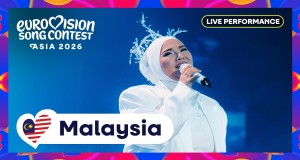
The European Broadcasting Union (EBU) has launched an inquiry after the inaugural Eurovision Song Contest Asia, held in Bangkok this past Saturday, was subject to unauthorized edits during its broadcast in Malaysia.
Organizers expressed they were “surprised and disappointed” upon learning that segments of the grand final, specifically those featuring LGBTQ+ performers and personalities, had been excised from the transmission by local broadcaster TV3.
The controversy centers on reports that the Malaysian broadcast omitted key appearances to align with local content standards. According to footage circulating on social media, the Eurovision logo was used to obscure Filipino television personality Vice Ganda, who is non-binary and gay, during the jury voting sequence.
Additionally, reports from The Guardian indicate that segments featuring Thai drag performers in the opening number were replaced with wide-angle shots captured during rehearsals.
Martin Green, the director of the Eurovision Song Contest, confirmed that the EBU is formalizing its response to the production company, Voxovation.
“We take this matter seriously and will be writing to Voxovation, the producers of the show, to seek clarification and ask them to establish with Malaysian broadcaster TV3 why this happened,” Green told RTÉ Entertainment. He emphasized that the alterations appeared to be isolated to the Malaysian feed, while all other international transmissions remained intact.
This incident mirrors a 2018 diplomatic and creative rupture involving the Eurovision brand and Chinese broadcaster Mango TV. During that competition, the Chinese network removed the performance of Ireland’s Ryan O’Shaughnessy, which depicted a same-sex relationship, and obscured the display of a rainbow flag. The EBU responded by terminating its partnership with the broadcaster, citing that the censorship was incompatible with the contest’s core values of universality and inclusivity.
While the inaugural Asian edition saw the Philippines’ contestant, Carmelle, secure a win with her song “Sobra-Sobra,” the regulatory friction highlights the difficulty of maintaining a unified creative vision across diverse cultural markets. Voxovation stated it is currently working with the broadcaster to establish the circumstances surrounding the edits, though TV3 has not provided a public explanation for the changes.
The EBU has maintained that all broadcasters are expected to respect the values of the competition, which is founded on the principles of inclusion, diversity, and respect. As the organization moves to address these reports, the focus remains on whether partnerships can be salvaged or if the precedent set by the 2018 Mango TV incident will influence the path forward for the contest.

HSE Disputes With Families Over Use of Domestic Cameras in Home Care Settings
For families managing the delicate, often precarious reality of home-based elder care, a simple security camera has become...

Disney Investors Brace For Q4 Earnings Report Amid Growth Expectations
Disney investors are bracing for the company’s fourth-quarter earnings report on Tuesday, with Wall Street projecting adjusted earnings...

Comedians React to Russell Brand’s Sentencing and Prison Statement
Russell Brand faces an urgent Ministry of Justice investigation after sharing a recorded statement from behind bars protesting...
Heidi Gardner’s Boyfriend Ray Tintori Dies at 43
Filmmaker Ray Tintori has died at the age of 43, according to a report from TMZ. The New...