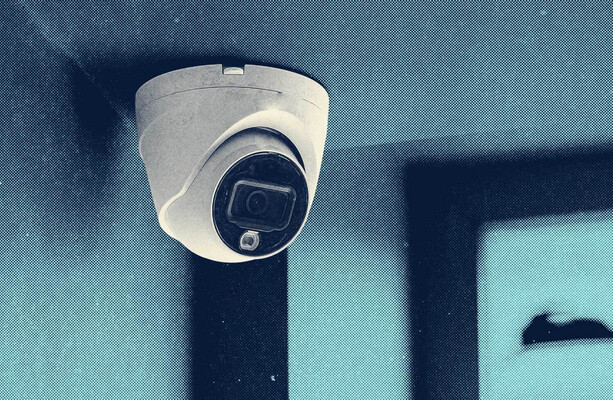
For families managing the delicate, often precarious reality of home-based elder care, a simple security camera has become more than just a piece of hardware.
It has become a flashpoint for a bitter, ongoing dispute between private citizens and the Health Service Executive (HSE). As reported by The Journal, families across Ireland are facing pressure—and in some instances, legal threats—to remove CCTV systems installed to monitor the well-being of vulnerable relatives, despite these devices frequently serving as the only evidence of neglect or abuse by care workers.
The conflict centers on a lack of national policy. While the HSE oversees a vast network providing home support to over 75,000 people annually, it maintains no centralized regulation governing the use of cameras in private residences.
“The operational management of service provision rests with the local Home Support Services” the HSE said, instead of the service delegating operational management to local health regions and leaving families caught in a bureaucratic tug-of-war. For many, the decision to install a camera is a response to trauma: break-ins, unexplained falls, or the wandering tendencies associated with advanced dementia.
“I was pulled from pillar to post,” said Tara, who was told by the HSE to remove a camera she'd installed to protect two vulnerable family members.
“Those cameras were her German Shepherd,” said Patricia, who installed surveillance in her 84-year-old aunt’s home. Her vigilance proved necessary in 2020 when the footage captured an alleged physical assault and verbal abuse by a home carer. Despite the gravity of such findings, the HSE’s stance has remained inconsistent.
In one notable 2018 case, the health authority took a family to the High Court, threatening to withdraw care services if they did not remove cameras installed to protect a mother with dementia. The court ultimately ruled against the HSE, with Justice Peter Kelly describing the legal action as “improperly brought” and noting that high-standard care should not fear being recorded.
Regulatory Gaps and the Path to Oversight
The tension is exacerbated by the historical lack of oversight in the home care sector. Unlike the nursing home industry, which has been under the purview of the Health Information and Quality Authority (HIQA) for nearly two decades, home care has remained largely unregulated.
This is set to change under the Health (Amendment) (Home Support Providers) Act 2026, signed into law this past July. The legislation grants HIQA new powers to register and inspect providers, though the government expects full implementation to take up to 12 months.
Until then, families must manage conflicting advice from privacy advocates and health officials. “There's no legislation specifically that concerns surveillance of elderly people in the home,” Sarah McNulty, a privacy lawyer, said, noting that no specific legislation currently prevents the use of domestic CCTV to ensure the safety of an elderly person, provided it is handled with care.
However, experts like Amanda Phelan, a professor at Dublin City University, warn that surveillance should never be installed without the permission of the elderly person involved.
Hospital Avoidance Models Lack Transparency in Home Care
For the average consumer, this clash highlights the precarious nature of the “hospital avoidance” model favored by modern healthcare systems. By shifting the burden of care from institutional settings to private homes, the HSE relies on a trust-based system that lacks the rigorous, data-driven transparency of a clinical environment.
While the HSE recorded 116 referrals for community-based financial abuse that involved staff between 2021 and 2025, the true scale of the issue remains obscured because HSE data cannot establish how many financial abuse referrals involved paid home carers.
The industry faces a fundamental tension: the need to protect the intellectual property and personal privacy of the individual versus the economic and moral imperative to safeguard the vulnerable.
As seen in the case of Marjorie Gallagher, a home carer convicted in 2020 of stealing €20,000 from an 84-year-old client, domestic cameras are often the only mechanism capable of piercing the veil of private care. For families like the McLaughlins, the camera is not an intrusion—it is an essential safeguard against those who would exploit a position of trust.
As Ireland moves toward a regulated home care environment, the question of who monitors the monitor remains open. The HSE maintains that the decision to install cameras is a matter for the homeowner, yet the reality reported by The Journal suggests that local health offices continue to exert significant pressure on families to dismantle their own security systems.
With the commencement of the 2026 Act expected by next July, the industry awaits clear, national guidance that balances the right to privacy with the undeniable necessity of protection.
Disclaimer: The cultural analyses and financial data presented in this article are based on available public records and industry metrics at the time of publication.
Keep reading

Disney Investors Brace For Q4 Earnings Report Amid Growth Expectations
Disney investors are bracing for the company’s fourth-quarter earnings report on Tuesday, with Wall Street projecting adjusted earnings...

Comedians React to Russell Brand’s Sentencing and Prison Statement
Russell Brand faces an urgent Ministry of Justice investigation after sharing a recorded statement from behind bars protesting...

Heidi Gardner’s Boyfriend Ray Tintori Dies at 43
Filmmaker Ray Tintori has died at the age of 43, according to a report from TMZ. The New...
Mike Mills on R.E.M.’s ‘Reveal’ 25Th Anniversary and No Reunion
R.E.M. are marking the 25th anniversary of their 12th album with an expanded reissue arriving on Friday, November...