The Eighth Circuit has denied review for a Guatemalan lawful permanent resident ordered removed over an Indiana child exploitation conviction, cementing a broad definition of “child abuse” in immigration law that now aligns five federal circuits.
Blanche, issued this week, rejects the petitioner’s argument that her conviction under Indiana Code § 35-42-4-4(b)(1) — photographing and filming nude images of her 16-year-old niece to use as leverage — falls outside the statutory ground for removal at 8 U.S.C. § 1227(a)(2)(E)(i).
The court held that “child abuse” covers any intentional, knowing, reckless, or criminally negligent act that maltreats a child or impairs the child’s well-being, including sexual exploitation.
“We owe no deference to the Board after Loper Bright,” the panel wrote, “but the Board’s reading is the best reading of the statute.” The ruling makes clear that actual injury is not required; placing a child in a situation likely to lead to injury is enough.
The court joined the Fourth, Fifth, Seventh, and Ninth Circuits in adopting that expansive construction, creating a coast-to-coast consensus that leaves little room for a circuit split.
Applying the categorical approach, the panel dismissed the petitioner’s hypotheticals — a journalist documenting abuse, a child sharing images with a parent — as “fanciful,” noting she could not point to an actual case showing a realistic probability of prosecution for such conduct. The court also held that copying pre-existing images independently harms the child by increasing circulation.
The court rejected the petitioner’s hypotheticals as “fanciful” and held that she had to point to an actual case showing a realistic probability of prosecution, which she could not.
The petitioner, a lawful permanent resident from Guatemala, was convicted in Indiana state court for producing and retaining the images. The Board of Immigration Appeals affirmed the removal order, and the Eighth Circuit’s denial of the petition for review makes that order final. The full opinion is available on the court’s docket.
Because the categorical approach looks only at the elements of the statute of conviction, a plea to a broadly written statute can trigger mandatory removal even if the specific conduct seems less egregious to a layperson.
The decision also marks one of the first immigration cases to explicitly invoke Loper Bright Enterprises v. Raimondo to decline Chevron deference to the BIA, while simultaneously endorsing the Board’s interpretation as a matter of statutory construction.
For now, the removal order stands.
Related reading

JPMorgan Chase, Visa, Mastercard Confirm Third-Party Vendor Cyberattack Exposing Customer Data
JPMorgan Chase, Visa and Mastercard confirmed Thursday that a cyberattack on shared third-party vendors may have exposed customer...
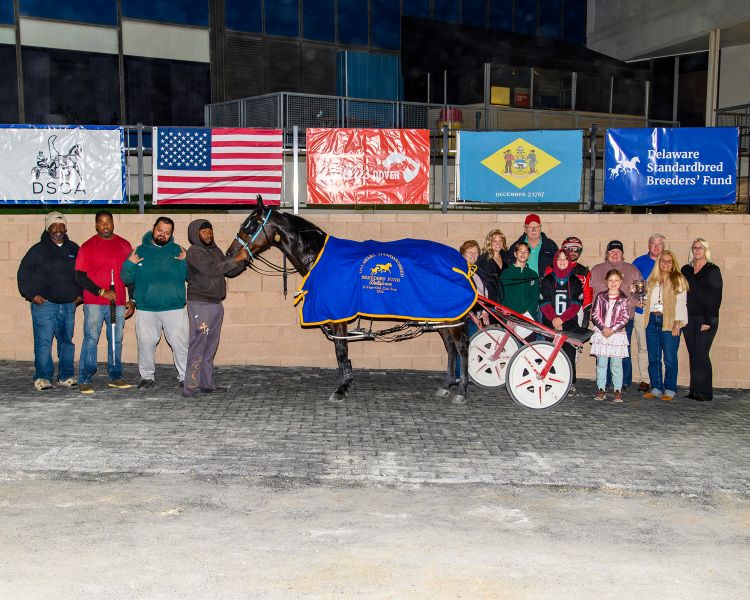
Aeneas Sweeps DSBF Final in Career-Best 1:54 at Bally’s Dover
Aeneas turned a $110,000 Delaware Standardbred Breeders' Fund final into a clinic on pocket patience Thursday night, stalking...

Dr. Seuss’s How the Grinch Stole Christmas! Musical Opens Dec. 11 in Helena; Resale Tickets Start at $1,679
Dr. Seuss's How the Grinch Stole Christmas! The Musical opens a six-performance run at the Helena Civic Center...

Las Vegas Police Swarm GTA Mansion After Swatting Call
Las Vegas police swarmed a Grand Theft Auto-themed mansion Wednesday night after a swatting call interrupted a live...