Lisa Borgen leads Moorhead mayoral race as North Dakota results begin to arrive
Lisa Borgen holds a commanding lead in the Moorhead mayoral contest, securing 3,971 votes and 51.96% of the total as of 9:41 PM on Tuesday, KFGO News reported. With only six of the 13 precincts reporting, Borgen maintains a significant margin over her closest competitor, Del Rae Williams, who has garnered 2,860 votes, or 37.42%. Craig Whoot Whaley sits in third place with 779 votes, representing 10.19% of the current tally.
The local race is unfolding alongside broader shifts across the Red River Valley. In a significant development for North Dakota’s federal representation, the Associated Press announced at 8:56 PM that Republican Julie Fedorchak will win reelection to the U.S. House in North Dakota’s at-large Congressional District.
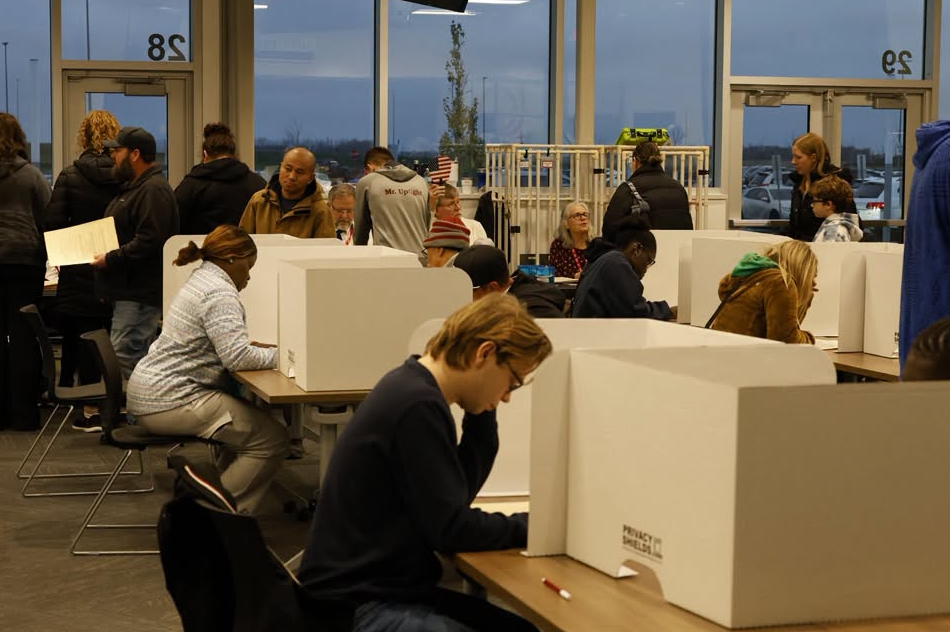
This election night has been characterized by high engagement and heavy foot traffic at polling stations across state lines. While Minnesota voters saw polls close at 8:00 PM, North Dakota voters faced long lines at several locations, including the Ramada by Wyndham Fargo on 13th Avenue South, even as the 7:00 PM closing time approached. Election officials noted that anyone already in line by the deadline was permitted to cast their ballot.
Minnesota sets record for early mail-in participation
While local races in Moorhead and Fargo are still being tallied, the scale of voter participation in Minnesota has reached a new milestone. As of 7:00 AM on Tuesday, local election officials had accepted 983,558 absentee and mail-in ballots, a figure that sets a state record for early participation in a non-presidential election year.
The breakdown of these early votes reveals a heavy reliance on both physical and digital-era voting methods:
- Early in-person ballots: 699,815
- Mail-in ballots: 283,743
Despite this record-setting volume, a significant portion of the electorate remains in the process of finalizing their participation. According to the Minnesota Secretary of State, approximately 170,000 issued ballots had not been returned by the Tuesday morning update. For these votes to be counted, mail-in ballots had to be received by the U.S. Postal Service by 8:00 PM, while in-person drop-offs at local election offices were required by 5:00 PM.
Turnout climbs across North Dakota precincts
The momentum of the election was visible in the steady stream of voters throughout the day. In North Dakota, the Secretary of State’s Office provided several updates tracking the percentage of the electorate that had participated. By 4:00 PM, nearly 195,000 North Dakotans had cast ballots, lifting the statewide turnout to 32%.

Earlier in the day, the numbers showed a consistent upward trajectory. At 1:00 PM, turnout stood at 27% with 162,000 ballots cast, following a midmorning report of 21% turnout, representing 128,000 voters. This steady increase suggests that the combination of early in-person, absentee, and Election Day voting successfully mobilized a significant segment of the population.
Local reporting highlighted the varying densities of these crowds. At the Fargodome, election workers reported higher-than-expected and steady turnout, estimating roughly 2,000 people had voted by mid-afternoon. Conversely, in Casselton, the process appeared more measured; reporter Jake Anderson noted that approximately 800 people had voted at Casselton City Hall by mid-afternoon, matching the total number of early voters from the previous week.
The human element in the voting process
Beyond the raw percentages and the political shifts in the U.S. House, the night has been defined by the logistical reality of the voters themselves. From the growing lines at the Fargo Parks Sports Center in south Fargo to the crowds spanning all ages at the Fargodome, the physical act of voting remained a central focus of the evening.
The tension of the night often centers on the gap between the closing of the polls and the final certification of the results. For the residents of Moorhead, the outcome of the mayoral race remains an evolving story as the remaining seven precincts begin to report their tallies. The stakes for these local contests often outweigh federal ones in terms of immediate civic impact, as municipal leadership dictates the direct management of local infrastructure, parks, and community services.
As the night progresses, the focus shifts from the act of voting to the scrutiny of the counts, a process that began in earnest across the region shortly after 8:00 PM when unofficial results started appearing on the North Dakota Secretary of State’s reporting website.
Melanie Greer Huff, Journalism School Dean of Student Affairs, Dies
Melanie Greer Huff, long-time Columbia Journalism School dean, has died Melanie Greer Huff, a fixture of the Columbia...

Gen. Dan Caine Visits U.S. Naval War College via Quonset Airport
General Dan Caine, the Chairman of the Joint Chiefs of Staff, arrived at Quonset State Airport in North...

Oregon 2026 Election Results: Live Updates on Local and Statewide Races
Polk County voters appear poised to approve a five-year property tax measure that would fund essential operations for...

Oklahoma voters cast ballots for governor and U.S. Senate races
Oklahoma voters head to the polls for high-stakes state and federal races Oklahomans are casting their ballots this...