
Initial EPA tests found no elevated lead levels in air, soil or water after the U.S. Army detonated nearly five tons of degraded lead azide Wednesday at the Iowa Army Ammunition Plant in Middletown.
- The Army detonated 68 drums of unstable lead azide on Nov. 25 after inspectors deemed them a risk for spontaneous explosion.
- EPA deployed 300 personnel and contractors; 30 hours of real-time air monitoring detected zero airborne lead.
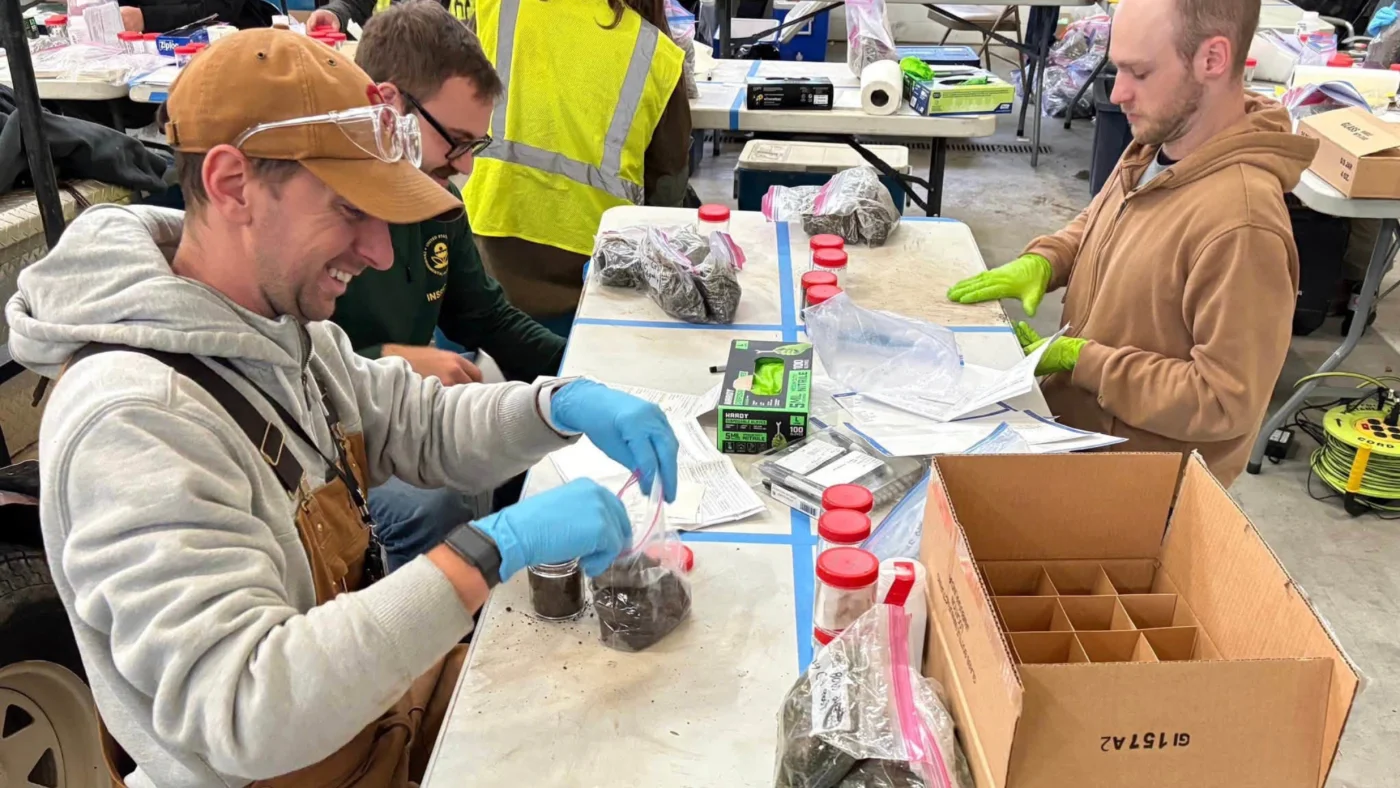
- More than 3,200 samples collected pre- and post-blast are still being validated, EPA said Saturday.
- Iowa Gov.-elect Rob Sand called for an investigation into why the stockpile was allowed to deteriorate.
Detonation ordered after degradation discovered
The Army stopped using lead azide in the 1980s because of health risks, but the Middletown stockpile was maintained for decades. In November, the U.S. Army announced the detonation of nearly five tons of degraded lead azide from an ammunition plant in Middletown, Iowa, after officials said it posed a spontaneous explosion threat, NonDoc reported.
Officials said the degraded munitions ingredient could not be moved or otherwise neutralized safely, prompting the controlled detonation on Wednesday, the day before Thanksgiving.
EPA: no airborne lead detected in real-time monitoring
“One hour after the controlled mitigated detonation … all U.S. Environmental Protection Agency (EPA) real-time air monitors are reporting zero detection of airborne lead throughout the region,” the agency said in a news release Thursday. EPA Administrator Lee Zeldin said the agency pre-positioned 300 employees and contractors and collected 1,200 samples of air, land, dust and water before the blast.
🚨The first lab results have arrived, indicating that @USArmy’s controlled detonation at the Iowa Army Ammunition Plant in Middletown, Iowa, on Wednesday DID NOT result in AN ELEVATION of lead in the water bodies that act as drinking water sources. As of data received Friday…
By Saturday, EPA reported that initial lab results from over 3,200 samples showed no elevation of lead in water sources, NPR reported. The agency said it would continue providing updates as results are validated.
Evacuation orders and community frustration
Residents within five miles of the plant were ordered to evacuate, while others were told to shelter in place. Some opened their properties as sampling locations for EPA workers.
“We didn’t know anything about this until last week,” Sue Dyer, a corn and bean farmer about 18 miles southwest of the blast site, told NPR. “The biggest problem was communication, calling it ‘horrible.'”
Dyer said community members remain divided: “Some people are sure that we’re absolutely fine, and some people think we’re absolutely dead. So put me somewhere in the middle until I have the data to make an opinion.” She plans independent sampling on her farmland in coming days.
Calls for accountability and investigation
Iowa Democratic Gov.-elect Rob Sand called for an investigation into why the lead azide was allowed to reach such a precarious state. “The lead-up to the detonation should never have been so chaotic and unclear,” he said after the blast. “Iowans across the state are understandably alarmed and scared.”
Army officials called the detonation a success, saying mitigation measures — including containment layers and downward-facing explosives designed to drive the blast into the ground — had “exceeded expectations.” EPA monitoring for airborne lead continued for 30 consecutive hours after the explosion.
Lead is a toxic heavy metal that does not degrade over time and is especially dangerous to children and pregnant people; experts say there is no safe level of exposure. Members of the public seeking information can call 1-833-649-9624, the EPA said.
More on Rob Sand
Worth a look

Lincoln Stars Fall 5-4 in Overtime to Sioux Falls Stampede
The Lincoln Stars (6-14-2-0) earned a standings point in a 5-4 overtime loss to the Sioux Falls Stampede...

Pennsylvania Leaders Map Quantum Future at Harrisburg University Forum
Pennsylvania leaders gathered in October to map a quantum future that is already reshaping the state’s economic backbone,...

Concord Monitor: Nuclear Plants Are Giant Teakettles, Waste Dangerous for 300-24,000 Years
Nuclear plants are giant teakettles producing waste dangerous for 300 to 24,000 years. Every nuclear power plant, including...

Georgia Eyes Texas in Final SEC Championship Game
Georgia eyes Texas for final SEC championship. ATHENS — Georgia prepares to face Texas in the SEC championship...