
Convicted triple murderer Erin Patterson has lodged a final bid to overturn her convictions and life-without-parole sentence by applying for special leave to appeal to the High Court of Australia. The application was filed on Friday, November 27, hours before a 28-day deadline expired following the Victorian Court of Appeal’s decision last month to dismiss her conviction appeal and increase her sentence to life imprisonment without parole.
Triple murderer files High Court bid
Patterson, 52, was found guilty by a jury in mid-2025 after an 11-week trial in Morwell, Victoria.
The jury convicted her of three counts of murder and one count of attempted murder for serving beef Wellington laced with death cap mushrooms to four guests at her Leongatha home on July 28, 2023.
The victims were her former parents-in-law, Don and Gail Patterson, and Gail’s sister, Heather Wilkinson. All three died from multiple organ failure caused by amanita mushroom poisoning in early August 2023. Heather’s husband, Ian Wilkinson, a local pastor, survived after spending several weeks in an induced coma and more than two months in hospital, leaving him with ongoing health issues.

Patterson’s estranged husband, Simon Patterson, had been due to attend the lunch but cancelled at the last minute.
During the trial, prosecutors argued she had deliberately foraged for and prepared the deadly fungi over nearly three weeks, extending the invitation, lying about having cancer, and concealing the truth for almost a week as her victims lay dying.
Court of Appeal ruling and resentencing
Last month, three Court of Appeal judges — Stephen McLeish, Lesley Taylor and Peter Kidd — unanimously dismissed Patterson’s appeal against her convictions. In a judgment the court said denounced crimes that were “extraordinarily cold and calculated,” the judges also upheld a prosecution appeal against the original sentence.
Patterson had initially been sentenced in September 2025 to life imprisonment with a 33-year non-parole period, with the trial judge citing the harsh prison conditions she would likely face. The Court of Appeal removed that parole eligibility, ruling she should die in jail. The decision made Patterson the first Victorian woman, and only the second woman in Australian history, to receive a life-without-parole sentence.
Defence claims jury sequestration failed
Patterson’s legal team, led by appeal barrister Richard Edney, filed paperwork seeking special leave to appeal both the conviction and the sentence.
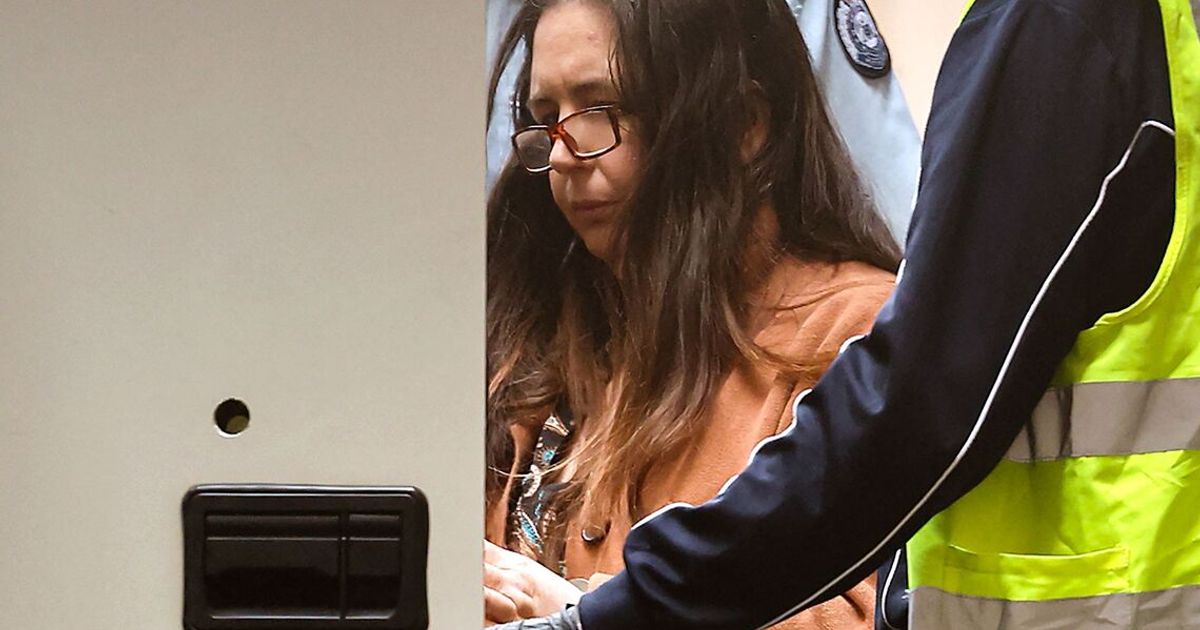
The application relies on grounds previously argued in the Court of Appeal, including a claim that the jury’s seven-day sequestration at a Traralgon hotel — where prosecutors, police involved in the case, and media were also staying — amounted to a “catastrophic and fundamental failure to comply with the trial rules.”
Director of Public Prosecutions Brendan Kissane KC dismissed those concerns as baseless during the appeal hearing, and the Court of Appeal rejected all grounds. The High Court application argues the lower court “erred in its application of principles that justice must not only be done, but be seen to be done,” according to court documents cited by RTE.
Prospects for the appeal
The High Court grants special leave in only about 7 to 10 per cent of applications, and most are decided “on the papers” without an oral hearing. University of Southern Queensland Associate Professor of Law Andrew Hemming said he believed an appeal would be a “waste of time” given the unanimous dismissal by the Court of Appeal and the substitution of a sentence without parole.
Mushroom cook Erin Patterson will face the Court of Appeal again today as she continues her fight to overturn her murder convictions. > https://t.co/SEhPUNPJKM pic.twitter.com/Dbs1C8WNko
RMIT Associate Professor of Criminology and Justice Brianna Chesser said the High Court would only grant leave if the case involves a question of law of public importance, resolves conflicting court decisions, or if the interests of justice require it.
The High Court of Australia acts as the nation’s apex court and exercises appellate jurisdiction over state supreme courts, including Victoria’s Court of Appeal, under section 73 of the Constitution.

As the Wikipedia entry on the High Court of Australia establishes, the Judiciary Act limits this appellate power by requiring special leave, which is granted only where a question of law of public importance arises, where courts conflict, or where the interests of the administration of justice demand it.
Since November 2023, the High Court of Australia has decided the majority of special leave applications on the papers without oral hearings, publishing those decisions on its public website rather than in open court.
If special leave is refused, the litigation ends and the Court of Appeal’s orders stand. Patterson remains in custody while the application is considered, a process that could take months.

Eagles Stun Cowboys 39-38 on Elliott’s 59-Yard FG After Milton-Led 21-Point Comeback
The Philadelphia Eagles overcame a 21-point deficit to defeat the Dallas Cowboys 39-38 on Thursday, winning on Jake...

NFL Week 12: Rams Debut Alternates, Cowboys Throwbacks, Plus Steelers, Chargers, Saints, Browns Uniforms
The Rams debuted their "Fearsome White" alternates while the Chargers and Saints wore Color Rush uniforms for Week...

Whole Foods Plans $7 Million Expansion of Cedar Park Store
Whole Foods Market plans a $7 million expansion of its Cedar Park store, the largest grocery project among...

Gainesville Elementary Ranks 15th in Missouri for Rural ELA Growth
Gainesville Elementary School ranked 15th among 251 rural Missouri elementary schools for three-year growth in English language arts,...