
The Detroit Lions are being positioned as the ideal landing spot for four different players as the NFL trade deadline approaches on Tuesday, November 10. According to an analysis by ESPN insiders Jeremy Fowler and Matt Bowen, the Lions are a “best fit” for multiple candidates, primarily to address struggles at cornerback this year.
This isn’t just about filling holes; it’s about the specific chemistry of Dan Campbell’s roster. For a team with Super Bowl aspirations, the trade deadline is the final opportunity to patch vulnerabilities before the playoff race tightens. While some of these pairings make immediate sense, others feel like a mismatch of needs and assets.
The High-Upside Cornerback Options
The Lions’ struggle at cornerback is no secret, and ESPN’s analysis suggests two veteran options who could stabilize the perimeter. The first is Pierre Woolen from the Seattle Seahawks. The Eagles, currently 2-5 and without starting quarterback Jalen Hurts for the remainder of the year, are viewed as likely sellers. Fowler and Bowen place a 35% likelihood on Woolen being moved.
From a financial standpoint, Woolen is a low-risk acquisition. The Lions would only be responsible for a prorated portion of his $6 million base salary. At 6-foot-4, he provides the length and speed necessary for a defense that leans heavily on man coverage and two-deep zones.
However, Woolen isn’t the same player he was during his breakout years. PFF data shows he has allowed 20 catches on 36 targets for 282 yards and four touchdowns this season. He remains a disruptor—evidenced by six passes defended and a forced fumble—but his tackling and eye discipline have lagged.

The second option is Donte Jackson of the Los Angeles Chargers. With the Chargers remaining the only winless team in the league, their season is effectively over. Jackson, who turns 31 next month, brings a veteran pedigree that the Lions’ young secondary lacks. Over nine years and 109 starts, he has recorded 23 interceptions and 68 passes defended.
Like Woolen, Jackson’s contract is manageable, requiring only a prorated share of a $6 million salary. Matt Bowen notes that Jackson’s “backfield vision and short-area closing speed” make him an ideal zone corner who can create on-the-ball production.
The Defensive Line Wildcard
While the cornerback needs are glaring, the Lions were also paired with Bengals EDGE Shemar Stewart. This is a far more complex scenario.
The lack of playing time isn’t necessarily a reflection of talent, but of health. Stewart missed the majority of training camp with a leg injury, and Bengals coach Zac Taylor has noted that the team’s depth at defensive line has made it difficult to fit everyone into the active roster.
Taylor explained that Stewart has been doing all the right things and is getting better every week, but added that the team is currently in a really tough spot with their inactives.
It is unlikely Cincinnati would trade a former first-round talent this early in his career, but if they did, Stewart’s physical profile—long, strong, and aggressive—would fit the Lions’ defensive identity perfectly.
Detroit Lacks a Reason to Pursue Ruiz
Not every “best fit” suggestion holds water. ESPN also linked the Lions to Saints guard Ruiz, a move that defies the current logic of Detroit’s offensive line construction. The Saints are struggling at 2-5, making Ruiz a candidate for the trade block, but the Lions have little reason to pursue him.
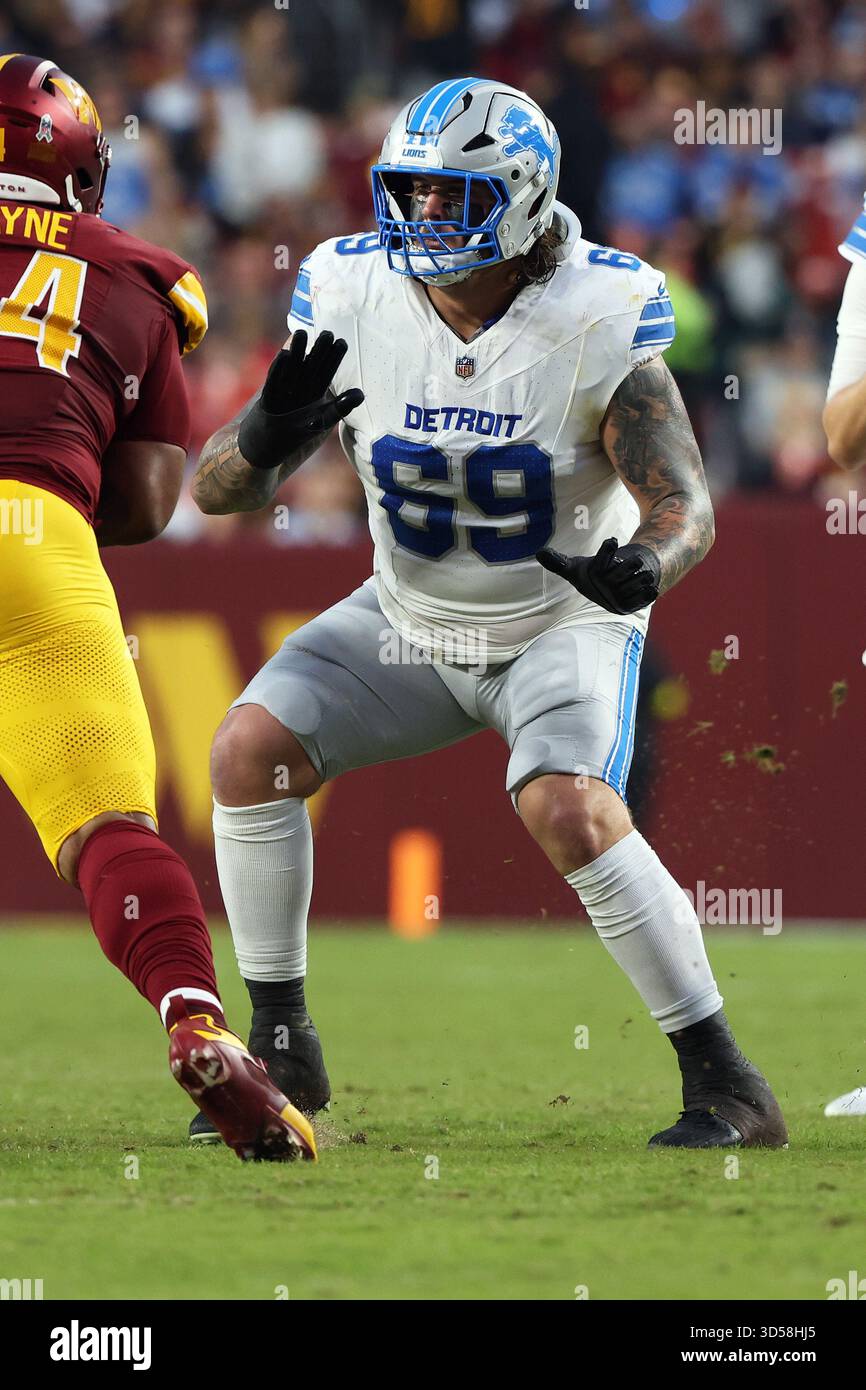
The Lions’ interior line is currently stable. Second-year player Tate Ratledge has handled right guard duties effectively, while Christian Mahogany has provided solid play at left guard. With Juice Scruggs available as a reliable backup, adding another guard—especially one who has played right guard for most of his career—doesn’t address a pressing need.
This creates a divide in the analysis: while the cornerback and edge rusher suggestions align with Detroit’s tactical gaps, the guard suggestion ignores the actual state of the Lions’ trenches.
Deadline Moves Could Define Lions Championship Hopes
For the Lions, these potential moves represent the difference between a “good” defense and a “championship” defense. The cost of inaction is high; continuing to rely on a rotating cast of corners against elite wide receivers in the postseason is a recipe for early exit. Conversely, the risk is spending draft capital or cap space on veterans like Jackson or Woolen who may be past their absolute peak.
The Eagles and Chargers are franchises that could be sellers at the trade deadline to offload salary and recoup assets. For Detroit, the clock is ticking toward November 10. They have the appetite for a move, but the execution must be precise to avoid compromising their long-term window for a short-term fix.
Keep reading
Kentucky Early Voting Begins Thursday for 2026 Midterm Elections
Kentucky voters head to the polls starting this Thursday for no-excuse, in-person early voting, marking the final sprint...

Minnesota Faces Indiana Defending Champions in Bloomington Showdown
Minnesota travels to Bloomington to face defending national champion Indiana on Saturday afternoon in a Big Ten matchup...

FDIC Hosts Disaster Recovery and CRA Webinar for Kansas City Region
When natural disasters strike the American heartland, the immediate emergency response grabs the headlines, but the slow, grinding...

James Rouse thought of nearly everything for Columbia, except death – The Banner
When the Architect of a Planned City Forgot Death When James Rouse set out to build Columbia, Maryland,...