
When the Architect of a Planned City Forgot Death
When James Rouse set out to build Columbia, Maryland, in 1967, he drew up blueprints for nearly every facet of human existence. He envisioned a suburban utopia—what he famously called “a garden for the growing of people”—designed entirely around community, commerce, and daily life. Yet, as reported by The Banner, his meticulous master plan omitted one fundamental certainty: where people would go when they died.
That accidental oversight sparked an 11-year community effort that ultimately transformed how the planned city approached mortality. Long before Columbia Memorial Park finally opened its gates off Clarksville Road in 1989, early residents faced a striking realization. Their new hometown offered spaces for everything from schooling to shopping, but not a single plot for eternal rest.
The Discovery That Started an 11-Year Quest
The omission came to light through Suzanne Waller, a member of the Columbia Cooperative Ministry and a friend of Rouse’s. In an essay for the book Creative Tension: Memories of Early Interfaith Experiences in Columbia, Maryland—preserved by the Columbia Maryland Archives—Waller recounted the moment she informed the visionary developer that nobody had planned for burials. Rouse was startled, she recalled, and admitted simply, “You’re right!”
Investigators are on the scene of a murder in the 9900 block of 51st Terrace.At approximately 4:15 a.m., officers responded to the location for a report of a stabbing. Upon arrival, officers located an adult male inside a residence suffering from trauma to the body. The victim… pic.twitter.com/dzRcoIrJyR
That realization led the interfaith organization to establish the Howard County Memorial Foundation in the early 1970s. The nonprofit set out to secure affordable funeral and burial options that could accommodate the burgeoning community’s diverse religious practices. What followed was a protracted search for suitable land.
By March 1978, the Howard Research and Development Corp., a subsidiary of The Rouse Company, identified a potential 10-acre site off Clarksville Pike. Michael D. Spear, executive vice president for the corporate subsidiary, wrote in a March 8, 1978, letter to the community cemetery group that the land could preserve natural features and enhance local wildlife habitats. “Columbia is in real need of a cemetery, and we look forward to continuing our work with you in the months ahead,” Spear wrote.
Those months stretched into years. It wasn’t until 1988 that the Howard Hughes Corp. sold the site next to Clarksville Elementary School to the organization for $200,000. Harvey Geller, a Bethesda resident who owned and operated cemeteries in Virginia and Pennsylvania, was brought in by The Rouse Company to build the project from scratch.
A Complete Concept Grounded in Inclusivity
When Columbia Memorial Park finally welcomed its first families in 1989, it spanned 38 garden-like acres designed to mirror the community’s progressive ethos. Gerald Brock, the late vice president and senior development director for The Rouse Co., told The Washington Post in December 1988 that “a cemetery completes the concept of the total city.”
Today, the grounds feature flat grave markers rather than upright tombstones, lawn crypts, a scattering garden for ashes, a children’s burial garden, and a chapel in the woods. Designated sections serve Jewish and Muslim community members—with Muslim residents buried facing Mecca—while visitors continue traditions like placing rocks on Jewish headstones or leaving toys on children’s graves.
Over the decades, ownership shifted. Geller sold the property in 1999 to Cornerstone Family Services, which later became StoneMor Partners L.P., a publicly traded operator as detailed in SEC filings. That firm eventually became Everstory Partners in 2023 after a New York-based hedge fund, Axar Capital Management, took the company private.
Even James Rouse rests there now. He was buried under a shady tree following his death in 1996 alongside his second wife, Patricia, beneath a low-slung bench bearing the family name. Erin Berry, archivist for the Columbia Maryland Archives, noted that the cemetery’s creation captures the essence of the city’s original spirit. “It really speaks to how diverse it was here, how inclusive, and how they found that need,” Berry said. “They needed an inclusive place to bury their dead because they weren’t going to find that anywhere else.”
Related reading

FDIC Hosts Disaster Recovery and CRA Webinar for Kansas City Region
When natural disasters strike the American heartland, the immediate emergency response grabs the headlines, but the slow, grinding...

Providence investment policy should be based on fiduciary principles, not politics
Providence investment policy should remain anchored in strict fiduciary principles rather than shifting political agendas, according to a...
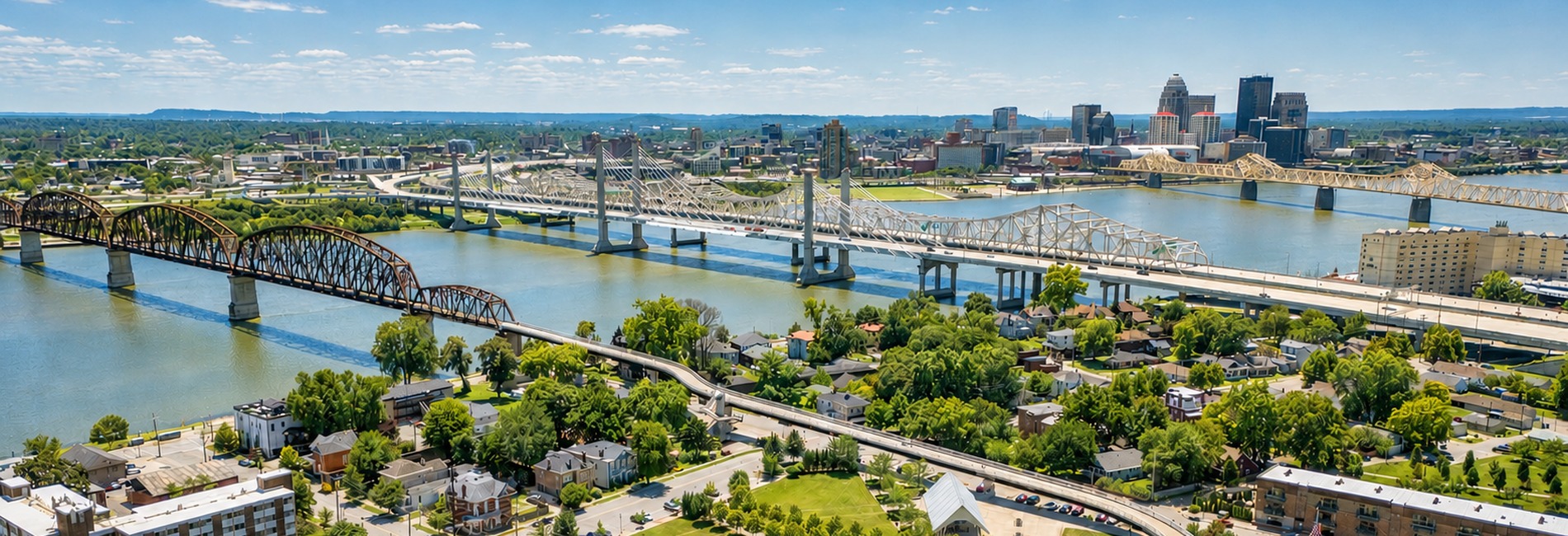
New Albany, IN Condos for Sale – Green Tree Real Estate Services
New Albany's condo market offers distinct choices for buyers seeking Floyd County living without the upkeep of a...

Cass County family seeks annexation into West Fargo Public Schools district – InForum
A Cass County family is pushing to redraw district boundaries so their children can permanently attend West Fargo...