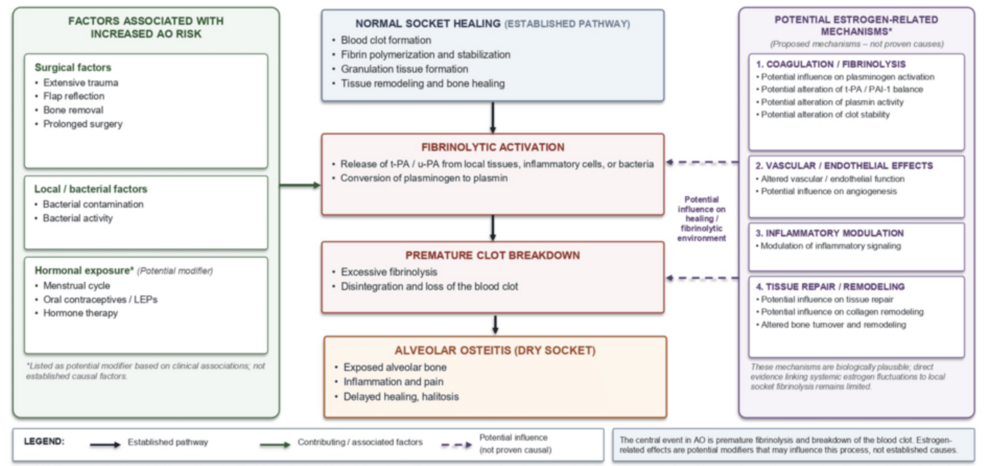
Dry socket strikes up to 30% of patients after complex lower wisdom-tooth removal, compared with 1% to 5% for routine extractions.
- A narrative review in Cureus synthesizes 15 studies on estrogen dynamics and alveolitis risk.
- Combined oral contraceptive users showed a pooled relative risk of 1.98 for dry socket.
- Mid-cycle extractions were associated with a higher incidence than those performed during menstruation.
- Temporary contraceptive discontinuation before surgery was linked to lower rates in one 2026 cohort.
Researchers searched PubMed, Scopus, Web of Science, Google Scholar and the Cochrane Library in May 2026, covering literature from January 1971 onward, and selected 15 primary publications for qualitative synthesis. The review distinguishes intra-socket events from systemic mechanisms and highlights methodological gaps across eras of contraceptive formulations.
Combined oral contraceptives were associated with nearly twice the risk of alveolar osteitis in a meta-analysis of 4,285 patients across 15 studies, though the authors noted high clinical heterogeneity. A 2023 prospective trial found significantly higher incidence at mid-cycle than during menstruation, hypothesizing that peak estradiol may accelerate local fibrinolysis. A 2026 retrospective cohort of 274 extracted third molars reported lower dry-socket rates after preoperative contraceptive discontinuation, but acknowledged retrospective allocation bias.
Estrogen receptors are expressed in oral tissues including osteoblasts, periodontal ligament fibroblasts and immune cells, and the hormone modulates RANKL-OPG signaling, inflammatory mediators and angiogenesis. However, the review emphasizes that these findings come from systemic, periodontal or animal models — not direct biochemical assessments within human extraction sockets.
“Elevated estrogen levels around the midcycle period may influence local fibrinolytic activity,” the authors of the 2023 trial wrote, while cautioning that clinical cycle-dependent associations do not independently prove direct clot lysis in fresh sockets.
The review concludes that hormonal history assessment and menstrual-cycle timing deserve consideration in preoperative planning, but evidence for routine temporary contraceptive discontinuation remains limited.

Netanyahu Lawyers Accept Herzog’s Mediation Offer After Judges’ Remarks
“In light of the judges’ remarks, there is no doubt that the trial must be concluded as soon...
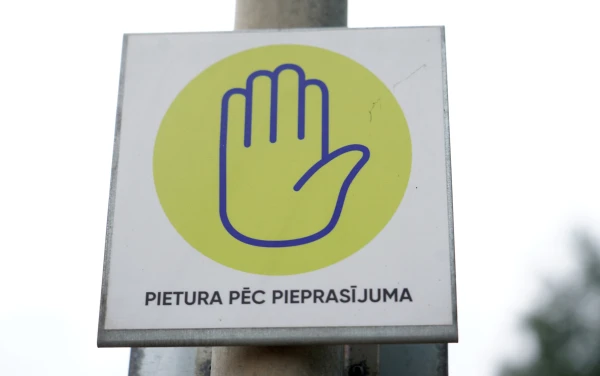
Riga Passengers Must Signal at Green-Hand Stops or Risk Missed Buses
Riga passengers must raise a hand at green-hand marked stops to board buses and press the exit button...

Camilla and Marc Freeman Raise $2.5M for Ovarian Cancer Blood Test
Australian fashion designers Camilla Freeman-Topper and Marc Freeman have raised more than $2.5 million to fund development of...

Man Arrested in West Cork Over Suspected Real IRA Arms Cache Discovery
A 44-year-old man has been arrested in west Cork following a search for suspected Real IRA arms. The...