
“The UK remains by far the most important market for agri-food exports for Ireland,” Taoiseach Micheál Martin said Friday after the EU-UK summit in Brussels.
Britain and the European Union signed three agreements Friday that rewrite key terms of the Brexit divorce. The most consequential for Ireland creates a common veterinary area that would erase sanitary and phytosanitary (SPS) checks on animal and plant products crossing the Irish Sea, with a target implementation date of early 2028, RTÉ reported.
The deal would require the UK to align its food standards with the EU single market, effectively removing the regulatory border that has burdened trade since 2021. Ireland currently processes roughly 150,000 import and export certificates annually for SPS checks; the Department of Agriculture alone issues up to 80,000 export health certificates each year for shipments to Britain, according to the Irish Farmers Journal.
Ht @ChrisMasonBBC The UK has announced that “the deal is done” with the European Union and the “negotiations have concluded." Downing Street says that "both sides will work towards implementation of the youth mobility scheme, the SPS deal and the emissions trading scheme.” SPS…
“The establishment of a common SPS area between the EU and UK is, therefore, very significant for the agri-food sector, particularly in reducing the administrative burden on agri-food businesses exporting to our largest trading partner,” Minister for Agriculture Martin Heydon told the Irish Farmers Journal.
The Swiss model for the Irish Sea
Since the 2019 Brexit deal — revised in 2023 as the Windsor Framework — Northern Ireland has remained in the EU’s regulatory orbit for agri-food goods while Great Britain has not. That arrangement created the “Irish Sea border”: paperwork and physical checks on products moving from Great Britain to Northern Ireland to protect the EU single market.

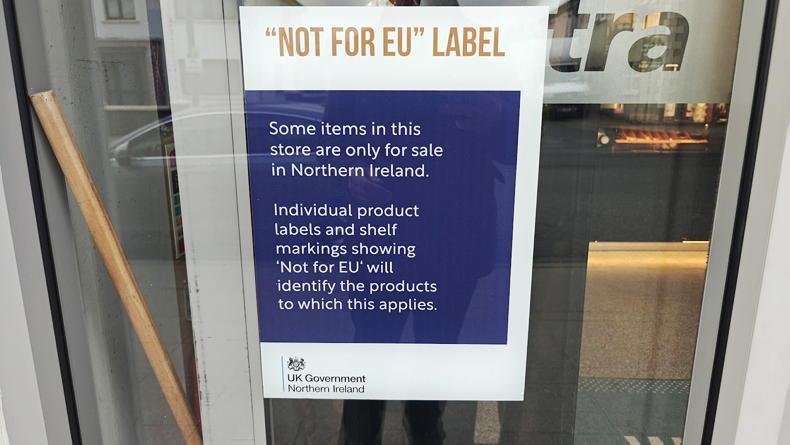
The new agreement mirrors the veterinary arrangement Switzerland has with the EU. Border control posts at Northern Ireland ports would become largely redundant for agri-food, and the “Not for EU” labels on British supermarket goods sold in the North would disappear, the BBC reported. Pre-Brexit livestock checks would continue.
Customs declarations would remain. “An agri-food deal would go a long way to removing the standards border but it would leave the customs border untouched,” the BBC noted. British businesses would still file customs paperwork for goods entering Northern Ireland, with delays possible if filings are inaccurate.
The EU-UK agreement reached today is good news for people and businesses on both sides. More young people will be able to work and study across the Channel. They must have the same tuition fees as domestic students. This is just a beginning. The UK and the EU should work closer…
Irish exporters gain certainty; farmers fear third-country imports
Bord Bia figures show Irish food and drink exports to the UK surged 14 percent last year to €6.7 billion. The UK accounts for 35 percent of Ireland’s agri-food exports — nearly matching the 37 percent share destined for the entire EU bloc, RTÉ reported.
Food Drink Ireland said the agreement would aid smoother movement of goods across the island of Ireland and with Great Britain. But farming groups warn that regulatory alignment does not prevent the UK from striking separate trade deals.
Consumer benefits cited in Dublin and Belfast
UK Northern Ireland Secretary Chris Bryant offered a domestic lens Friday at the British-Irish Intergovernmental Conference in Dublin. “There are amateur gardeners in Northern Ireland who would love to be able to get seeds sent through the post to them, which isn’t possible at the moment,” he told The Irish Times.
Bryant noted that 85 percent of flowers sold in the UK come from or through the Netherlands. “Mother’s Day could be a bit cheaper next year,” he said. He also highlighted faster supply chains: “I’d quite like food to be able to arrive a bit quicker, so that your bell pepper doesn’t completely disintegrate between you buying it in the shop and getting it to your home.”
DAERA Minister @AndrewMuirNI has welcomed the UK-EU Agri-Food SPS and Emissions Trading agreements announced at the UK–EU Summit today. More info: https://t.co/k7j3FdgeU4 pic.twitter.com/SEVT6L8jdU
Minister for Foreign Affairs Helen McEntee said an SPS deal would be “really important for business, for trade on an all-island basis, but of course in the east-west [between the islands of Ireland and Britain] as well,” according to The Irish Times.
Economic lift modest but symbolic
The Treasury forecasts the full package — food, emissions trading linkage, and a youth mobility scheme — will boost UK GDP by 0.5 percent, or £17 billion annually. That matches the combined expected impact of all post-Brexit trade deals struck with Australia, India, Japan, the Gulf states, and the CPTPP bloc, BBC Economics Editor Faisal Islam reported.
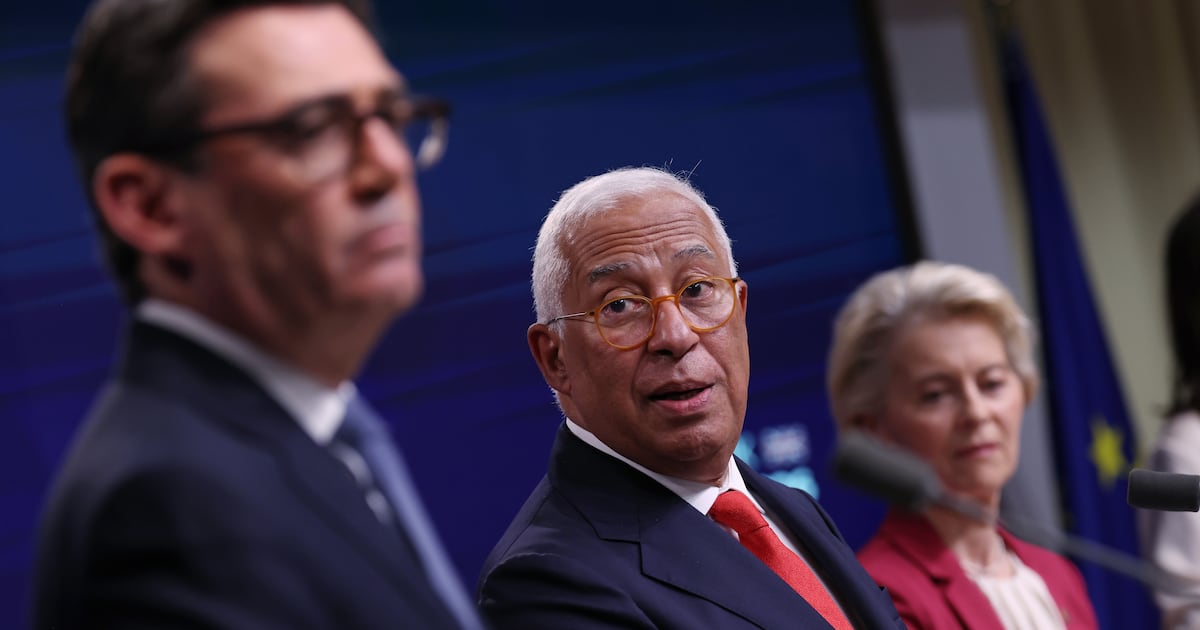
“Is food now a blueprint for future negotiations?” The previous UK government had aimed to extend the model to cars and chemicals.
Implementation hurdles remain
Minister Heydon stressed changes take effect only upon implementation in 2028. The legal texts have not been published. The electricity market coupling mentioned by Prime Minister Andy Burnham — “a deal to link our electricity market with the EU that will cut bills for both households and businesses, and strengthen our energy security” — requires a UK contribution to the EU budget for poorer regions and remains unfinished, the BBC reported.
Today's agreement between the EU and the UK is a positive step. The UK is our biggest export outlet so stronger alignment of standards is important. The UK should now ban Brazilian meat.https://t.co/rcg8kM8Ydb
“It is important for businesses to note that changes will only come into effect upon implementation of the agreement in 2028,” Heydon told the Irish Farmers Journal.
Related reading
Japan’s Takaichi Proposes ‘Asian IEA’ at AZEC Meeting; Analysts Warn of Bureaucracy
MANILA — Japanese Prime Minister Sanae Takaichi proposed an Asian version of the International Energy Agency on Tuesday...
COP31 Antalya Extends Into Saturday After Fossil Fuel Language Dropped
Negotiations resume Saturday at 9 a.m. local time The Turkish presidency plans to present a third draft agreement...
COP31 Talks Miss Friday Deadline, Resume Saturday as Panama Threatens Consensus Block
Climate talks in Antalya blew past their Friday deadline after a second draft agreement stripped out all references...

Trump Announces $17B in Deals, First US-China-Russia Summit
President Donald Trump declared his four-day swing through the Philippines and China a diplomatic breakthrough on Friday, unveiling...