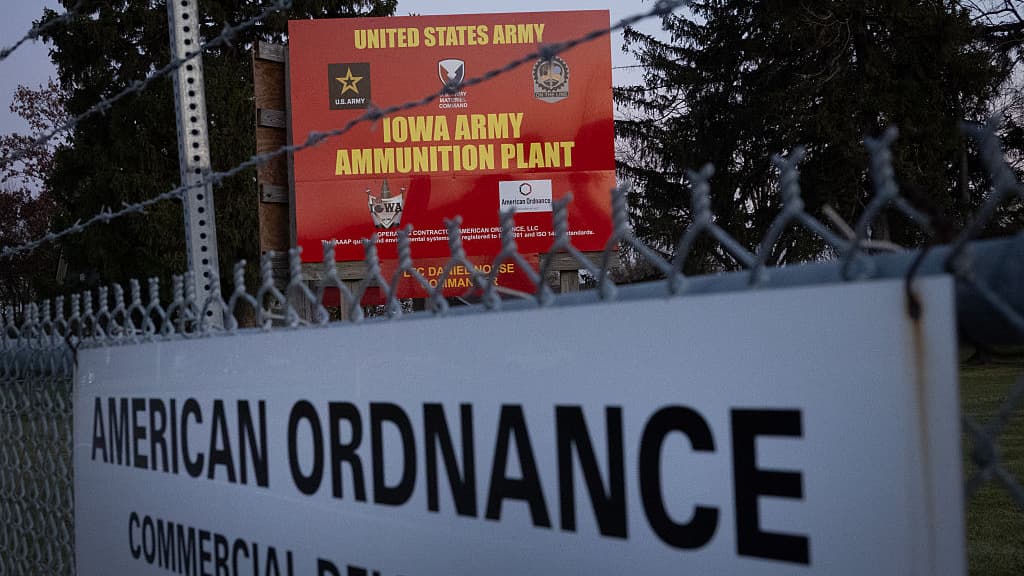
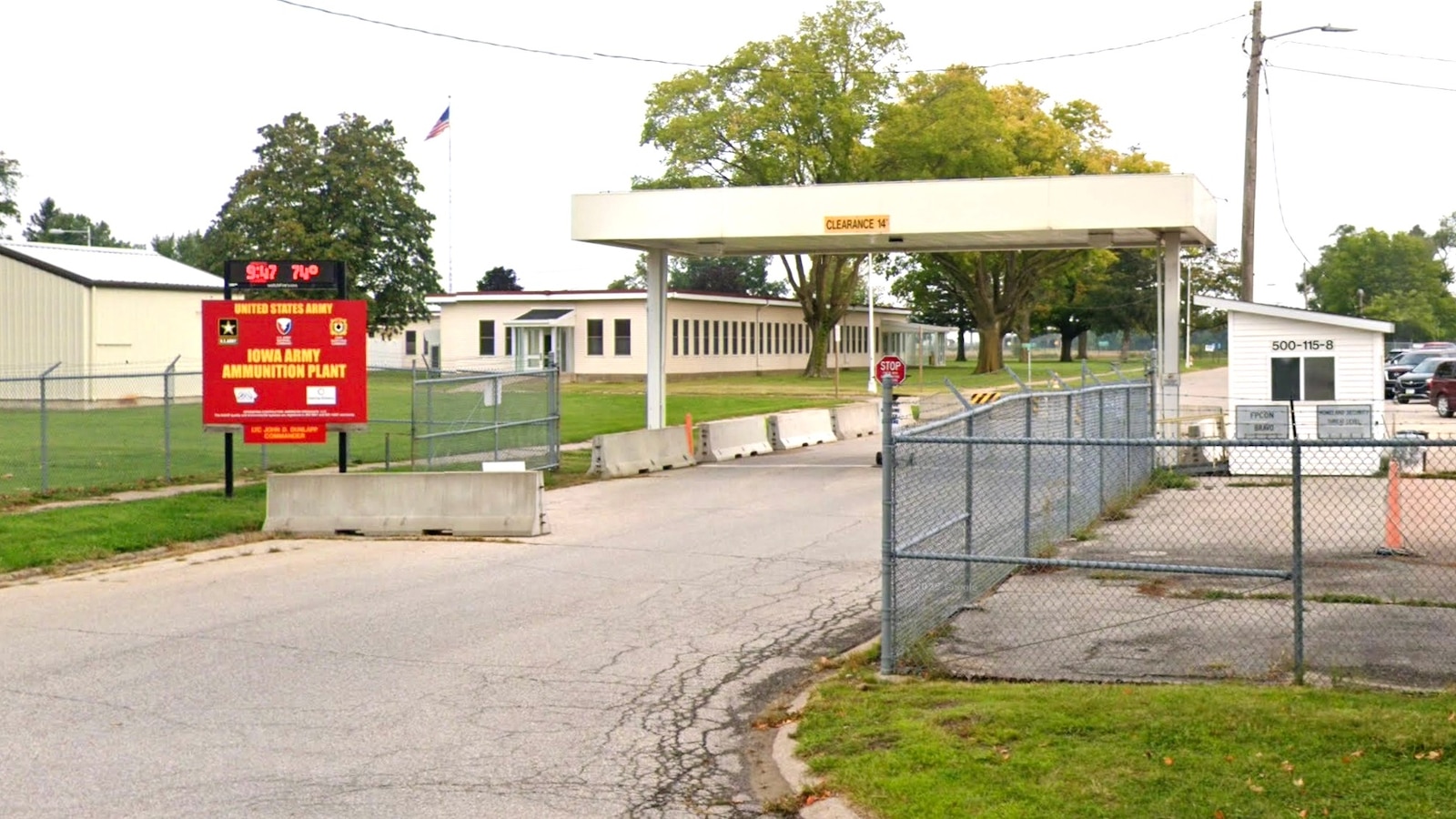
A federal judge halted the U.S. Army’s plan to detonate nearly 10,000 pounds of lead azide at the Iowa Army Ammunition Plant in Middletown on Monday, November 23, after environmental groups sued to stop the operation. The order came after the Army had already postponed the blast from Friday to Monday, citing a forecasted temperature drop that risked further destabilizing the degraded explosive material.
Judge pauses detonation hours before scheduled blast
U.S. District Court intervention stopped the controlled detonation of 68 drums containing approximately 9,700 pounds of lead azide, a primary explosive used in munitions, CNN reported. The order did not specify when the court would take further action, though the EPA indicated in a court filing it planned to respond by November 22.
Army postpones Friday blast under pressure
Acting Army Secretary Adam Telle directed Army Materiel Command to postpone the Friday detonation on Thursday, November 19, ABC News reported. Telle said Monday was the “latest possible moment prior to a forecasted temperature drop, which would risk further destabilization of the material.” Republican Sen. Chuck Grassley said he raised concerns with the Army and “emphasized the need for increased communication,” calling the delay a chance “to further educate the public.”
I remain concerned about the potential health risks resulting from the U. S. Army’s planned detonation in Middletown and the lack of clear communication and transparency from the U. S. Army. While I continue pushing for answers, including specifics of when the detonation is taking…
Planned safety measures and expected plume
The Army planned to detonate the barrels inside concrete, earth-covered magazines surrounded by two-story sand barriers, with soil saturated by water and misters spraying to reduce airborne lead migration, “according to Army Sustainment Command spokesperson Justine Barati”.
The Army’s public notice anticipated ground vibration and a dust plume carrying “some lead-containing particles” expected to linger for up to an hour depending on wind speed. Residents were advised to evacuate or shelter indoors with windows closed and HVAC systems off, and to wet-clean surfaces afterward.
Residents and advocates criticize communication and transparency
Lucy Giehl, who lives four miles north of the plant, told The Associated Press: “What are they going to do during those three days to help people be better prepared? There’s just so many details that I feel like haven’t been addressed with the public.”
Sue Dyer, an 18-mile distant farm owner, told CNN she only learned of the detonation days prior: “If this stuff deposits lead all over everything, what the heck are we supposed to do? We’re just going to be poisoned every day.”
Earthjustice accuses Army of sidestepping judicial process
Thien Chau, an attorney for Earthjustice, told TIME: “despite claiming public safety is its top priority and public communication is essential to trust, the Army seemed more concerned over the weekend with finding a way to sidestep the judicial process than on meeting the public’s demands for greater transparency, notice to affected communities, and far stronger protection of people, property, and the environment from serious harm.”
State activates emergency operations; interagency pledges extreme mitigation
Gov. Kim Reynolds’ office launched the State Emergency Operations Center Friday to coordinate state agencies with the Army and EPA, CNN reported.
A joint statement from the Department of Health and Human Services, EPA, and Army said officials had been “meticulously planning for this event since March” and were “prepared to take the most extreme mitigation measures available to ensure there is no risk to the public and any disruptions are minimized.”
Public safety is the Army’s top priority, and I have directed Army Materiel Command to postpone tomorrow’s controlled detonation at the Iowa Army Ammunition Plant in Middletown, Iowa until Monday, November 23. This will delay the detonation until the latest possible moment prior…
Lead exposure levels remain uncertain
“Extensive modeling efforts predict that the potential level of lead particles in the air may be elevated,” the Army said in its advisory. Lead is heavier than air, limiting travel distance, Patrick O’Shaughnessy, a University of Iowa professor and environmental health expert, told CNN, but CNN noted: “it’s unclear how much lead might be released into the environment after the detonation.” No amount of lead exposure is considered safe.
More on Iowa Army Ammunition Plant
Tonight I spoke with representatives from the U. S. Army, EPA, FEMA, and CDC regarding the planned detonation in Iowa. State agencies are on alert, and I am continuing to press for the release of more public information to help keep Illinoisans safe. I expect updates tomorrow.
Because of the decisions that have already been made over the course of months, if not years, no good options exist and the situation is more dangerous and unpredictable than it ever should have been. Most clearly, since a contract to remove explosive risk was signed this…
Worth a look
Los Lunas I-25 Interchange Phase 1 On Track for Summer 2029, Official Says
The first phase of the Los Lunas I-25 second interchange and east-west corridor project remains on track for...

Visit Rhode Island Lists Twelve 21, NARA with Mixed OpenTable Reviews
Visit Rhode Island promotes Twelve 21 Restaurant & Lounge as a modern American restaurant, bar, and hookah lounge...
Zillow: Engaged Home Shoppers Per Listing Fall to Record Low
Zillow said Monday that engaged home shoppers per listing fell to 3.5 nationally in the third quarter, the...

Inspire Change Clinic Served 2,500 Patients in First Year After Opening
Inspire Change Clinic served more than 2,500 patients in its first year, shattering an initial target of 100....