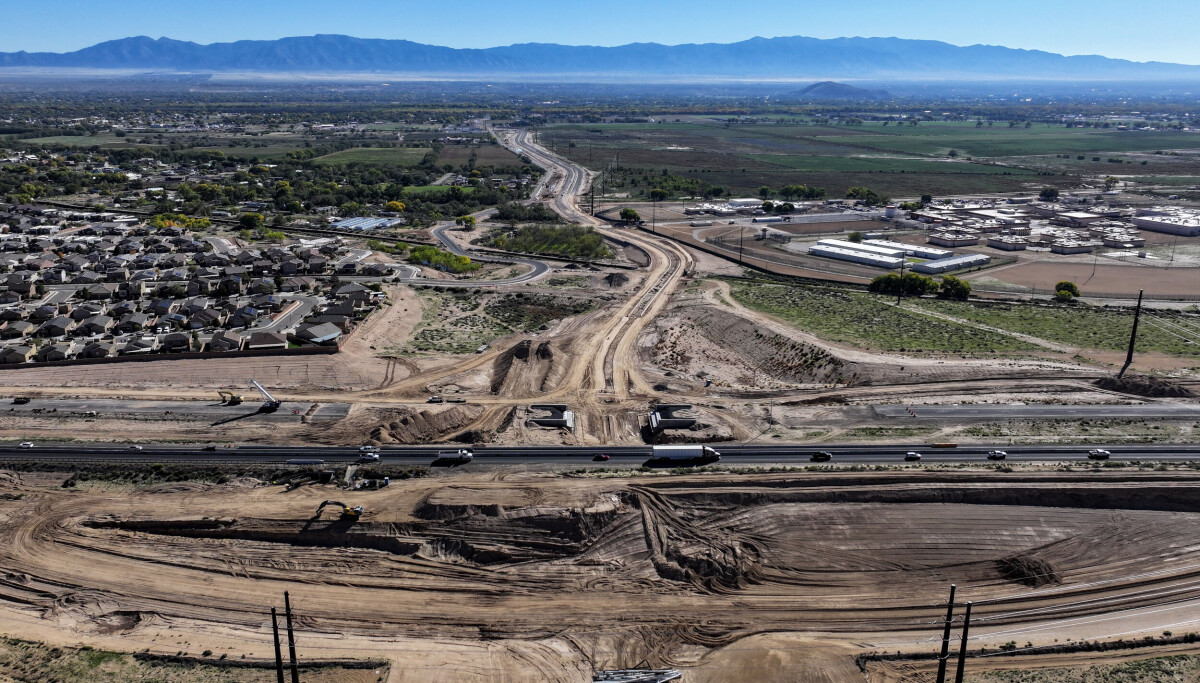
The first phase of the Los Lunas I-25 second interchange and east-west corridor project remains on track for completion by summer 2029, Village Deputy Administrator Nancy Jo Gonzales said, though bridge girder delivery delays have slowed work since spring.
Why was construction ahead of schedule?
Village of Los Lunas official says Phase 1 I-25 Interchange with full-width interchange, river bridge, and bike path is on track for Summer 2029.
Crews made rapid progress early on because the Rio Grande had been dry for months, allowing extensive work in the riverbed, Gonzales told abqjournal.
What caused the slowdown?
Work has since slowed because the project is waiting on bridge girders that will not arrive until spring, Gonzales said.
What does Phase 1 include?
Phase 1 covers a full-width interchange, river bridge, and intersections with one travel lane each direction plus a multi-use pedestrian and bicycle path, according to the Village of Los Lunas. Phase 2 will add a second lane each way.
How is the project funded?
The Village secured a $25 million federal INFRA Grant in 2021, which the Federal Highway Administration obligated for construction in late August 2024, the Village reported. State and local funds cover the remainder.
When did dirt moving begin?
El Terrero Construction started moving dirt on August 11, 2025, the Village announced.
Federal funds obligated after certification process
Required certifications covered Right-of-Way acquisition, railroad crossing approval, and environmental impact compliance.
On August 29, 2024, the Village announced that federal funds had been obligated for construction, adding that state and local funds were already available. At that time, the Village anticipated going out to bid and beginning construction in early 2025.
Why is a second interchange needed?
Currently, N.M. 6 (Main Street) is the only Interstate exit and Rio Grande crossing for Los Lunas, and approximately 40% of vehicles on N.M. 6 do not stop in the Village, the Village said. The new corridor aims to improve traffic flow, access high-growth areas, and increase emergency response efficiency.
Worth a look

Downtown Fargo Window Wonderland Returns Nov. 20 With Voting Through Dec. 13; Holiday Lights Parade Set Dec. 5
Downtown Fargo's Window Wonderland returns Thursday, Nov. 20, with holiday storefront displays and public voting running through Dec....

Tiangong Ultra Robot Sprints 100m in 8.64 Seconds, Crashes at Finish
A robot called Tiangong Ultra ran 100 meters in 8.64 seconds at Beijing's World Humanoid Robot Games in...

Turkey Trails Returns to Wichita Nov 22 With Half Marathon, 10K, 5K, More
Turkey Trails returns to Wichita on Sunday, November 22, with a half marathon, 10K, 5K, one-mile run, and...

Nvidia Reinstates Jensen Huang as CEO After 11 Days, Shares Surge Over 30%
Nvidia reinstated Jensen Huang as CEO effective Monday and shares surged more than 30% at the open. "I...