A federal judge in Honolulu invalidated the environmental review for the nation’s first deep-sea mining lease sale on Monday, ruling the government broke the law by ignoring what comes after the auction.
U.S. District Judge Jill Otake vacated the National Marine Fisheries Service’s February finding that the sale “is not likely to adversely affect” protected species.
The agency had examined only the preliminary surveys a lease allows — mapping and limited sampling — and did not even attempt to assess the exploration, testing, and commercial mining that would follow, the court found. The court found that the “failure to consider the entire action violates the Endangered Species Act.”
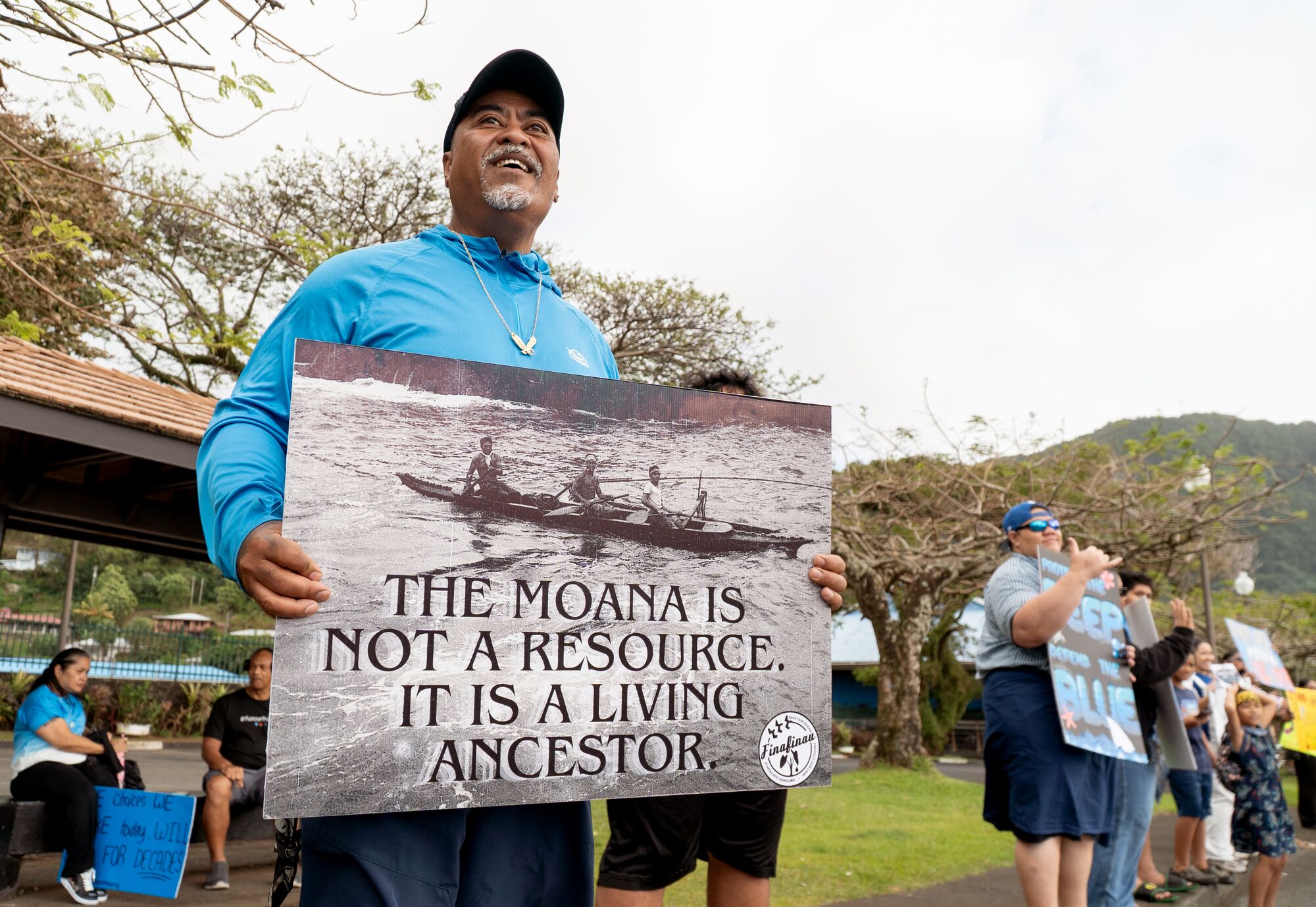
The ruling is the first to strike down the Trump administration’s push to open U.S. waters to deep-sea mining, an industry that does not yet exist beyond small exploratory projects. Faʻasao Amerika Samoa and the Conservation Council for Hawaiʻi, represented by Earthjustice, filed the challenge on August 18.

“American Samoans share a profound cultural and spiritual bond with the ocean, which Samoans have stewarded for thousands of years. We are relieved by this ruling. Plans for deep seabed mining must assess and prevent harm to endangered species, many of which are sacred to the Samoan people,”
The Marine Minerals Administration — the Interior Department agency that replaced the Bureau of Ocean Energy Management this year — plans to auction two tracts totaling roughly 31 million acres off American Samoa on Thursday. The blocks measure about 16.3 million and 15.2 million acres, each carrying a $3 million minimum bid for polymetallic nodules and ferromanganese crusts.
The process began in June 2025 after an unsolicited request from Impossible Metals Inc., an American mining company, less than two months after President Trump signed Executive Order 14285 on offshore critical minerals. A lease permits only surveys and limited sampling at first. Exploration, testing, and commercial mining each require a separate plan, environmental review, and approval — stages the Fisheries Service never analyzed.
Otake described the agency’s “cramped, expedited, informal consultation” as apparently unprecedented for leasing on the outer continental shelf. The government asked her to leave the biological opinion in place while it fixed the error, but she refused, writing that the Fisheries Service “needs to do the bulk of its consultation duty for the first time.”
As of Monday, the Marine Minerals Administration’s website still listed the sale for November 19. Bloomberg Law reported the administration may not legally proceed with auctioning the acreage without a valid Endangered Species Act consultation.
“This ruling is a win for communities in American Samoa, as well as the whales, sharks, and sea turtles who call the waters surrounding these islands home,”
Secretary of the Interior Doug Burgum told G20 energy ministers on September 14 that seabed mining permits could be issued “within months.” Federal attorneys had argued the risk to protected species at the lease stage was “virtually nonexistent.” The court disagreed, finding the law requires analyzing the full scope of the action — through commercial mining — before the first lease is sold.
The sale is scheduled for Thursday, November 19.

Proper Hospitality to Convert Historic Yamasaki Tower into Minneapolis Proper Hotel
"This is one of the most iconic buildings in the entire Midwest. It's irreplaceable," said Chad Tepley, founder...

Bruins Host Kings Tuesday Night; Kuraly and Lohrei Return to Lineup
The Boston Bruins host the Los Angeles Kings on Tuesday night at 7 p.m., closing a four-game homestand...

Episcopal Priest and MSU Officer Marks 28 Years on Force, East Lansing Info Reports
Melissa Congleton marked her 28th year as a police officer with the Michigan State University Department of Public...

Ravens Lose 23-20 to Winless Chargers; Hamilton Calls It Disgrace to Standards
Baltimore expected a lifeline against the NFL's only winless team; instead the Ravens absorbed a 23-20 loss on...