
“We put out the first incarnation of the scorecard showing each state’s performance on those measures, and perhaps not surprisingly, Idaho is currently in the pole position,” said Alex Adams, assistant secretary for the Administration for Children and Families, during a visit to Boise on Monday.
Adams unveiled a federal child welfare scorecard ranking Idaho first among 27 reporting states with 116 foster homes for every 100 children in care, according to the Idaho Capital Sun. The Administration for Children and Families plans to add data from all 50 states by the end of December.
The scorecard tracks five metrics: foster-home-to-child ratios, kin placement rates, congregate care use, recent maltreatment percentages and disrupted placement rates. Idaho’s ratio improved from 74 homes per 100 children two years ago, Adams told Idaho News. “So, Idaho’s demonstrating that regardless of circumstances, rural or urban, progress is achievable with leadership, with community partnerships, with support.”

Regional gaps persist
County-level data reveals wide disparities. Boise County reports more than seven homes per child and Latah County about three, while Nez Perce County shows 71 homes per 100 children and Bonneville County 88, the Idaho Capital Sun reported. Several rural counties still have fewer homes than children.
Federal competition offers $3M prize
From Oct. 1, 2027, through Sept. 30, 2027, the agency will award $3 million to the state with the highest ratio, $2 million to the runner-up, and $1 million each to the two states showing the greatest improvement. “When we announced this competition, it was really that we wanted healthy competition across state lines for the betterment of child welfare outcomes,” Adams said.
Prevention focus drives gains
Idaho’s 2025 legislative session approved $23 million for child welfare initiatives targeting prevention, recruitment and retention of foster parents. Jean Fisher, administrator of the Division of Youth Safety and Permanency, said 25% of referred children are now served through prevention case plans. “Not everything is abuse and neglect,” Fisher said. “It could be mental illness. We’ve got a family struggling for food. They’ve got families trying to find shelter. That doesn’t mean that they don’t love and support their children. They need support in a different way, and they don’t belong in the system.”

Congregate care declining
Adams noted Idaho’s congregate care rate has fallen monthly from 21% to 16.5% over four reporting periods, according to Idaho News. The state has also doubled kin placements from 24% to 50% in two years. “Each month, new data gets reported. Idaho has reported four months. Their congregate care score has declined each month. It was 21%, then 20%, then 17%, then 16.5%. So, it shows that they’re making constant iterative improvements.”
Advocates warn of severity
Court-appointed special advocates have previously told the Idaho Capital Sun that while abuse rates are not increasing, the severity of abuse appears to be worsening. They cited an increased focus on prevention and a court decision limiting law enforcement’s role in warrantless removals as potential factors.
The agency has implemented a new system to share case information with courts, identifying families with “poor performance” or “early reunification” indicators to expedite decisions. “The courts make those decisions,” Fisher said. “And so what I think really is helpful, especially with this new tool, is that it’s giving the court the information. It’s giving us the information, and we do our job by giving it to them and then letting them decide what to do.”
Related reading

Missouri Prepares for Possible Fallout From Iowa Army Lead Azide Detonation Amid Court Rulings
Missouri officials are preparing for possible fallout from a U.S. Army plan to detonate 9,773.5 pounds of lead...

Caitlin Clark Eyes Augusta Debut as Offseason Golf Goal
"I want to play Augusta for the first time," Caitlin Clark said on the "New Heights" podcast with...
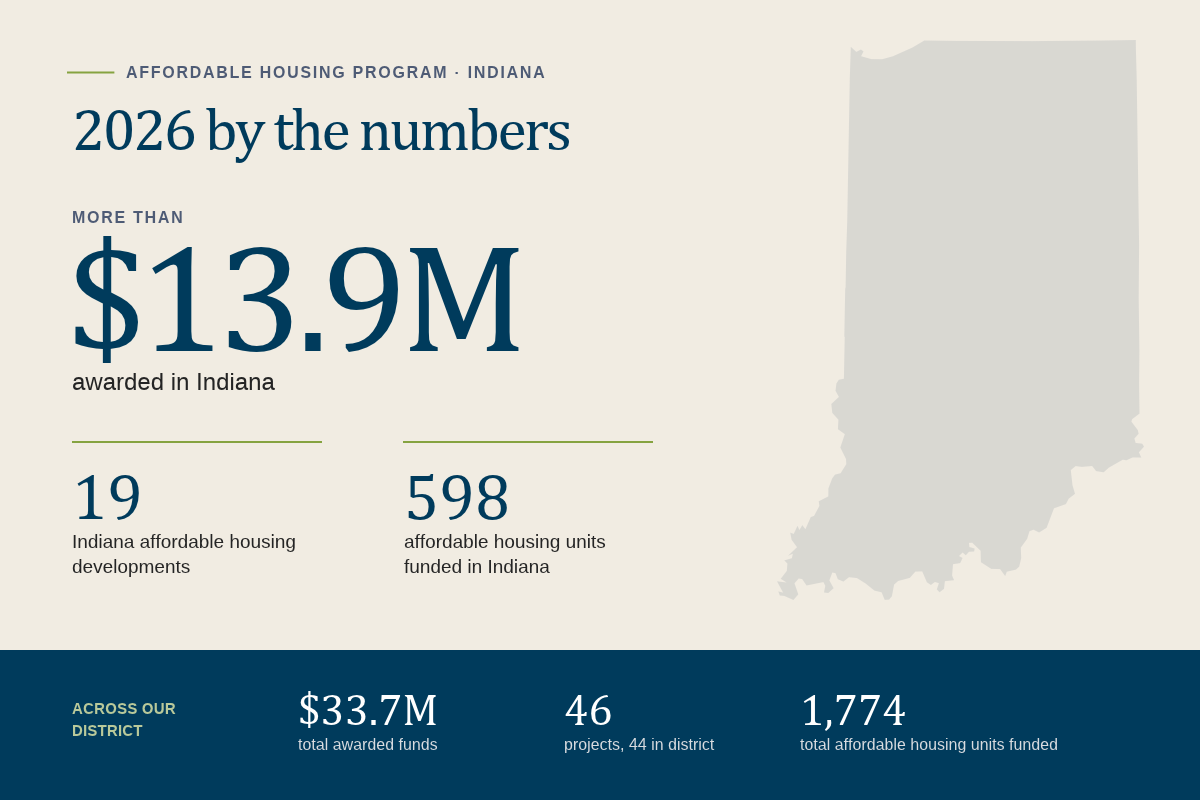
FHLBank Indianapolis Awards Over $33.7M in 2026 Housing Grants, $13.9M for Indiana
The Federal Home Loan Bank of Indianapolis announced Monday it will award more than $33.7 million through its...

Albuquerque Man Sentenced to Five Years for Using AI to Create Child Sexual Abuse Images
Albuquerque resident Richard Gallagher, 69, was sentenced to five years in a New Mexico prison after pleading guilty...