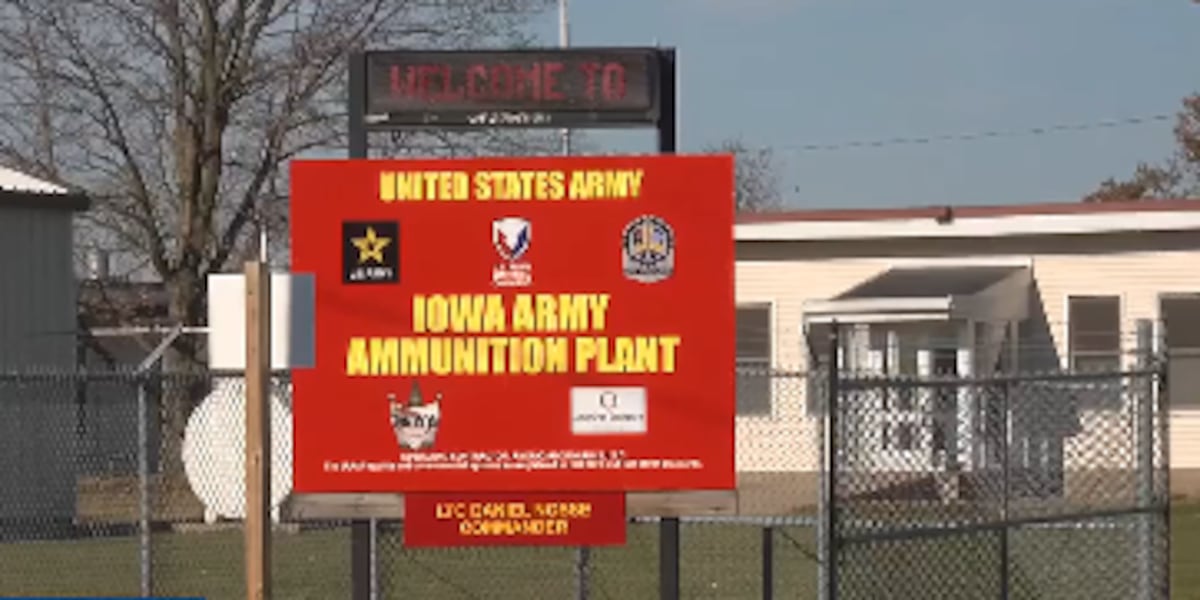
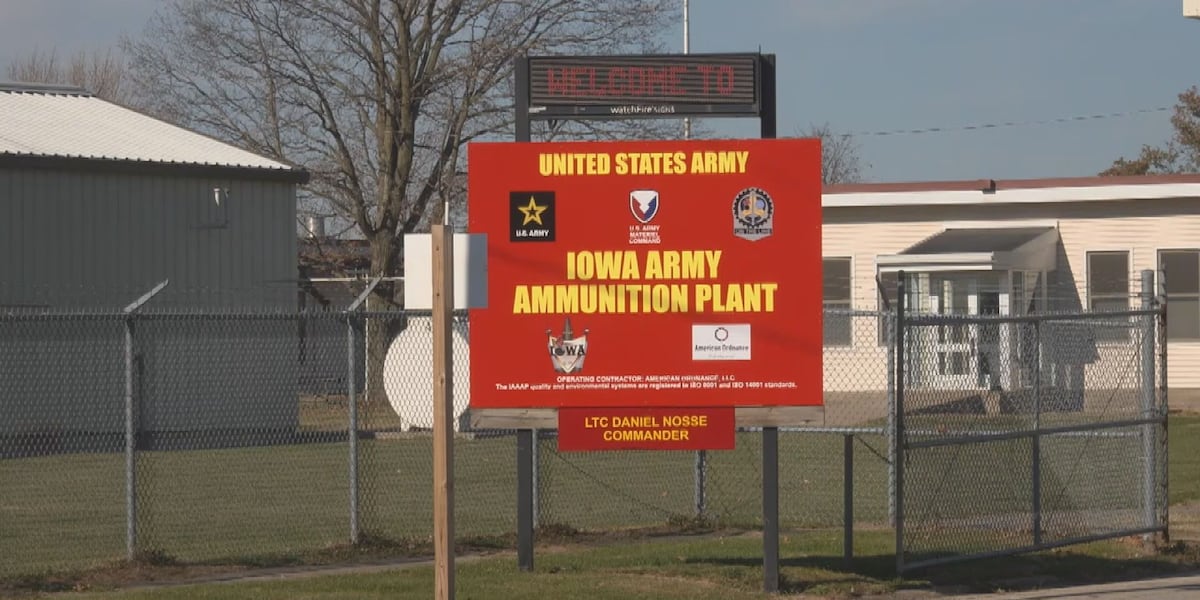
Missouri officials are preparing for possible fallout from a U.S. Army plan to detonate 9,773.5 pounds of lead azide at the Iowa Army Ammunition Plant in Middletown, even as court rulings and a presidential directive leave the timing uncertain.
The Army intends to invoke emergency provisions of the Resource Conservation and Recovery Act to destroy the deteriorating explosive without a permit from the U.S. Environmental Protection Agency, according to a Justice Department court filing Saturday. The 8th Circuit Court of Appeals put the original permit on hold Nov. 20 after a request from Earthjustice.
President Donald Trump directed the Army on Monday to wait for the court and Iowa’s incoming governor to agree on timing, KCTV5 reported. The Justice Department filing indicated the Army intended to detonate no later than Nov. 24. As of Monday evening, it was unclear if or when a detonation could happen.
Gov. Mike Kehoe said the risk to Missourians is low and any impact would be short-term. “The majority of Missourians will, again, see no impact or effect. But it’s important to be prepared,” Kehoe said. “This is not a time for panic,” Kehoe said during a briefing at the state Capitol. “We do not anticipate significant impacts, but we will not allow Missouri to be unprepared.” His administration launched a centralized information page at dnr.mo.gov/iowa-lead-azide-detonation and activated a multiagency response team.
James said the National Guard is monitoring and modeling the plume. “There’s a lot of misinformation that can create panic in any situation, whether a forecast is coming through or there are tornadoes coming up through Missouri, which we’ve seen, or floods,” Kehoe said.
“Missourians deserve to know what we know.” Environmental Protection Agency and other federal officials. He said the state still has limited information and does not control when the operation takes place. “Based on the information we do have, we anticipate minimal impacts to Missouri,” he said.
Drinking water systems monitored
The EPA is collecting baseline samples of untreated surface water and plans to test both untreated and treated water after any detonation. Buxton said earlier projections showed potential contamination reaching the Mississippi River north of Missouri, and he does not expect intakes at Hannibal or Louisiana to be affected. Buxton said no long-term monitoring is planned. “We expect this to be a short-term event.”
Health and agriculture officials downplay immediate risks
Sarah Wilson, director of the Department of Health and Senior Services, said she does not anticipate a public health emergency and that negative effects typically come from chronic exposure, not a single event. Wilson said the anticipated risk to individual health is low. Agriculture Director Chris Chinn said the livestock and food supply will be safe and pushed back on online recommendations to move animals indoors.
“At our family farm, we could not bring all of our cows into a barn or a shed. It just is not feasible,” Chinn said. She advised producers to consult veterinarians and noted University of Missouri Extension can test hay for lead. If a layer of dust appears after the detonation, Chinn said equipment should be washed and wiped down. Missourians can also call or text 988.
Advocates criticize transparency
Carolyn Niswonger of the Missouri Sierra Club said the Army has done a poor job communicating its plans. “We believe the public deserves to have maximum transparency given the widespread impact this could cause, not a rushed and rash decision,” she told KCTV5.
Cristen Commuso of the Missouri Council on the Environment said residents are left to “prepare for the worst and act accordingly afterwards.” Kehoe acknowledged frustration with the federal handling. “I do join my fellow governors and agency officials in neighboring states in their frustration with how this has been handled,” he said.
The State Emergency Operations Center will open once a firm detonation time is set or if an accidental detonation occurs. The National Guard is modeling the plume with National Weather Service data. The extent of any fallout will depend heavily on weather conditions.
More on Iowa Army Ammunition Plant
Worth a look

NFC North First With All Four Teams 2+ Games Over .500; Lions, Bears Meet Thanksgiving for Sole First Place
The NFC North became the first division in NFL history to have all four teams at least two...

Gilliam, Holmes, Pieper Named 2026 Outland Trophy Finalists
The three were chosen from a field of seven semifinalists by the FWAA All-America Committee. Iowa placed two...

Charleston RiverDogs Hiring 2027 Game-Day Entertainment Team
The Charleston RiverDogs are hiring for their 2027 Game-Day Entertainment Team, seeking part-time seasonal workers to perform on-field...

Idaho Tops KÜHL’s 2026 Best States for Hiking Ranking, Edging Utah and California
Idaho took the top spot in KÜHL's 2026 Best States for Hiking ranking with 58.39 points, edging Utah...