
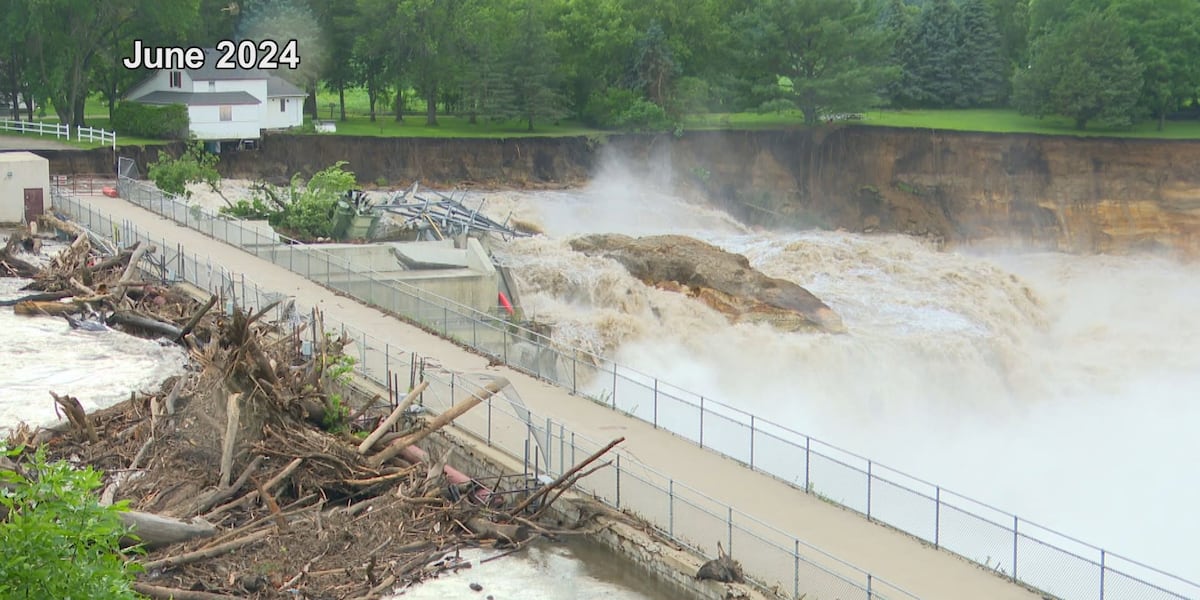
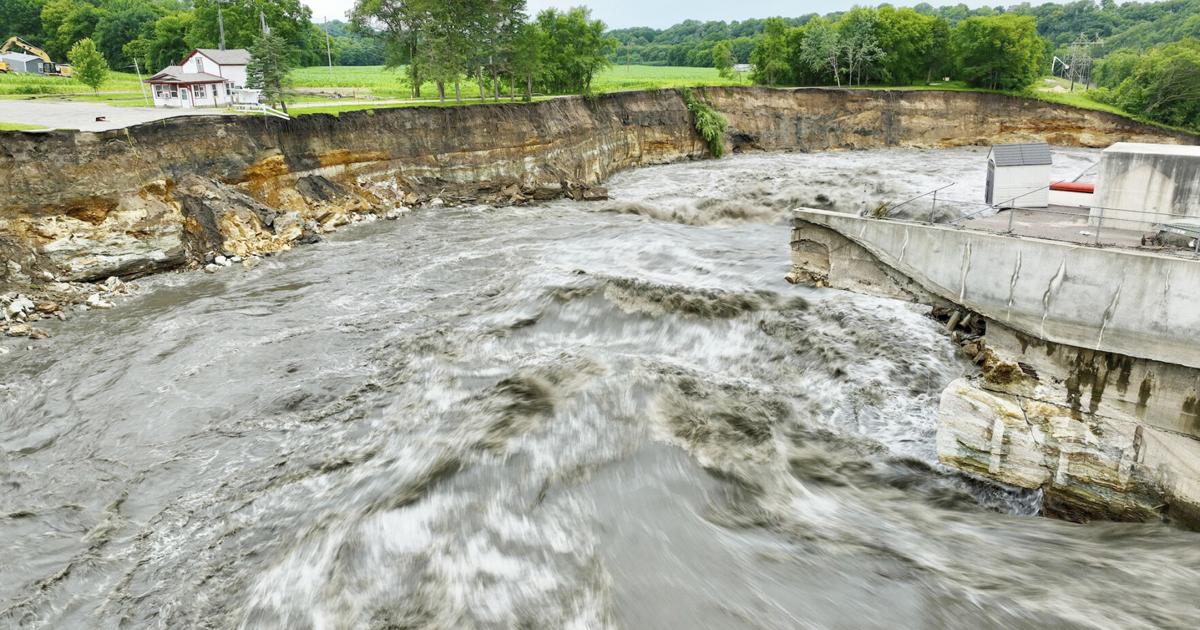
FEMA approved more than $21 million on Monday to remove the failed Rapidan Dam and restore the Blue Earth River banks, nearly two and a half years after June 2024 floods carved a new channel around the structure.
The award covers about 75 percent of the estimated $28 million project cost, Blue Earth County Administrator Josh Milow told the Mankato Free Press. The county expects the state to cover the remaining $7 million. FEMA’s Public Assistance program will fund the demolition, restoration of both riverbanks, and a new parking area for canoe and kayak access, KEYC reported.
“It’s been almost two and a half years since this event occurred,” Milow said.
“This is one of the things we’ve been working for, and to actually get the notice that the funding has been obligated, that is a significant milestone knowing that that funding is now there.”
Heavy rainfall in late June 2024 overtopped the 116-year-old hydroelectric dam, about 14 miles southwest of Mankato.
Floodwaters cut a path around the west abutment through a sandstone bluff, destroying the Hruska family home and forcing the county to buy and demolish the Rapidan Dam Store to protect downstream properties, MPR News reported. The failure also released more than a century of accumulated sediment, phosphorus and nitrogen downstream.
Work began last month to replace the adjacent County Road 9 bridge, also severely damaged in the 2024 flooding. That project, funded separately by the Federal Highway Administration, aims to finish by fall 2028, Milow told the Mankato Free Press.
Depending on river flows, demolition could take up to two years. Public Works Director Ryan Thilges told MPR News the county is monitoring logistics for running both projects in the confined river valley.
“Real estate’s at a premium, especially in that valley,” Thilges said.
Public Works Director Ryan Thilges told MPR News the complicated process took more than two years and meant navigating through “an unknown territory.” He said the county builds bridges and roads as its “bread and butter,” but taking out a hydroelectric dam is much less of a known process. Thilges said they had to discover who had authority, who was in charge, and learn what role different agencies played.
Thilges said the cooperation among federal, state and county agencies “really helped this move along the way it has.” He thanked those agencies along with county employees for helping move the project forward.
Thilges said the episode has reshaped how the county approaches infrastructure resilience.
“We’ve got aging infrastructure, but we’re also facing more severe and more frequent events that are leading to more significant damages,” he told MPR News. “So, we really need to put an emphasis on adequate funding and programs to ensure that our infrastructure, whether it’s dams, roads, bridges to really bolster the resiliency of our infrastructure.”

Milwaukee Panthers Preview Oregon State Matchup on USA Network Sunday
Tip-off is 1 p.m. CT Sunday on USA Network; audio on 101.7 FM The Truth and Varsity Network....

Connecticut Retailers Must Display Consistent Unit Prices Starting Jan. 1, 2027
Connecticut retailers must display unit prices in consistent measurements starting Jan. 1, 2027, under regulations approved Tuesday by...

Celtics Host Hawks Friday, Visit Spurs Sunday to Evaluate Progress
The Boston Celtics return from their Thanksgiving break Friday evening to host the Atlanta Hawks before traveling to...
Wilmington-Area Restaurants Are Rolling Out New Dishes and Expanded Menus This Year
Wilmington-area restaurants are rolling out new dishes and expanded menus this year, from a halal chopped-cheese sandwich to...