Filmmaker Tim O’Donnell argues in a WBUR Cognoscenti essay that American culture mistakes caregiver self-destruction for selflessness, drawing on 15 years caring for his father after a traumatic brain injury.
The piece, also published by VPM, centers on a 16-terabyte hard drive O’Donnell purchased on Dec. 8, 2017. It held thousands of hours of footage — his father in a coma at 60, his mother becoming a full-time caregiver, his father relearning to eat and walk — that became the documentary The House We Lived In.
O’Donnell writes that filming began one month after he left a teaching job in Springfield, Mass., to pursue filmmaking in Boston. His father fell; the camera gave O’Donnell “something to focus on, some small sense of control in a situation where I had none.” He later played footage back to his father, Tod O’Donnell, to prove progress when his father felt discouraged.
He loved the work and the students, but was required to earn a master’s degree and got into MassArt. There, professor Helen Miranda Wilson told him he was a filmmaker and just didn’t know it yet — the first time an artist saw his videos as art.
After graduating, he left teaching, moved to Boston with the woman who would become his wife, and decided to try making films for a living.
The project consumed him. At his worst, O’Donnell worked 14 hours a day, seven days a week. He considered destroying the hard drive. His therapist halted work for a month, then permitted 15 minutes a day, slowly rebuilding tolerance.
Filmmaker quits teaching after professor recognizes his art
Tim O’Donnell taught art and coached wrestling at a Springfield, Massachusetts high school. He enrolled at MassArt to satisfy a master’s degree requirement, where professor Helen Miranda Wilson told him he was a filmmaker who did not yet know it. O’Donnell said this was the first time an artist treated his videos as art.
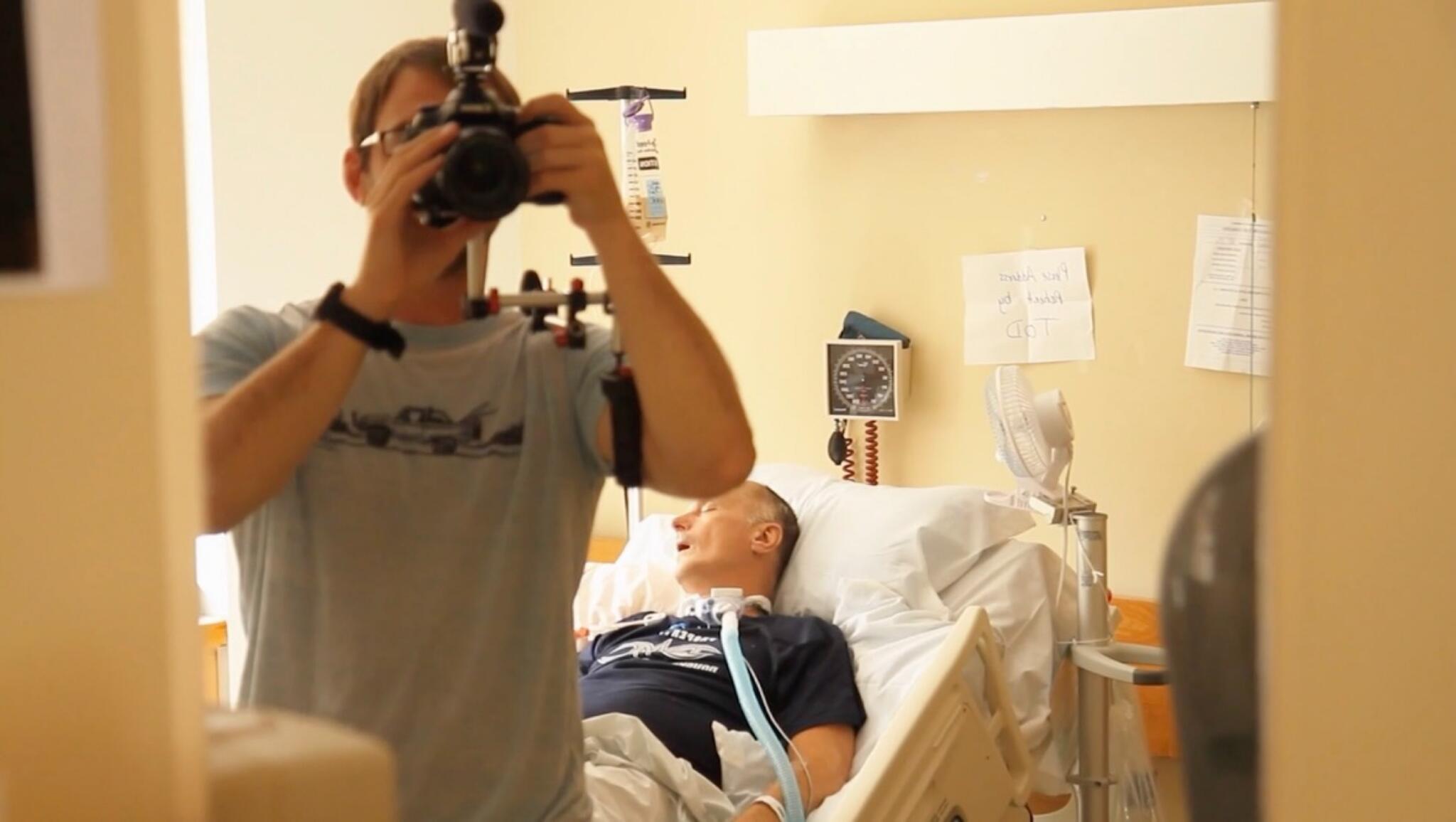
One month later, his father fell and sustained a traumatic brain injury.
Caregivers nationwide report chronic sleep loss
Over six years, O’Donnell documented other family caregivers across the country through his work with Careforth. He found a consistent pattern: caregivers meticulously track medications and appointments for the people they support, yet struggle to recall when they last slept through the night.
O’Donnell writes that when a loved one needs care, their needs become urgent while the caregiver’s own needs become negotiable. He quotes his therapist, who taught him that taking care of himself was not the same as abandoning his father.
Caregiving’s hidden costs
That experience reshaped his view of family caregiving. “We expect these people with no medical training to care for loved ones and to manage doctors, nurses, pharmacists and insurance companies while grieving so many losses,” O’Donnell writes. “We have mistaken self-destruction for selflessness.”
His mother carried the greatest burden, camping at the hospital during his father’s 70-day ICU and rehab stay, then retrofitting a home and managing outpatient providers. Siblings helped — shaving, showering, emotional support — but were unprepared.
Over six years, O’Donnell documented other caregivers nationwide with Careforth. He found the same pattern: caregivers track every medication and appointment for the person they support, but struggle to answer when they last slept through the night. “When someone you love needs you, their needs become urgent. Yours become negotiable,” he writes.
He acknowledges joy and intimacy — his children, now 9 and 6, instinctively steady their grandfather — but insists purpose does not prevent burnout. “The most important thing my therapist taught me wasn’t how to finish my film. It was that taking care of myself wasn’t abandoning my dad.”
Fifteen years after the injury, O’Donnell still helps care for his father. The hard drive remains intact. “And so am I.”
Worth a look

New York Court of Appeals Revives Bias Case, Rejects Facial Challenge to Source-of-Income Law
The New York Court of Appeals on Monday revived the state attorney general’s enforcement action against Tompkins County...

Michigan Drops ‘Beat Ohio’ Drill Label, Keeps Daily Rivalry Focus, Whittingham Says
Michigan coach Kyle Whittingham confirmed Monday the program has dropped the "Beat Ohio" practice period label, though he...
Shirley Jean “Mommal” Franz Dies at 82; Visitation Monday at Ball Funeral Chapel
Shirley Jean "Mommal" Franz died Saturday at 82 in her daughter's Whitsett home, the family announced through Ball...

Gov. Ferguson Calls for Abolishing ICE After SeaTac Incident
Washington Gov. Bob Ferguson called for the abolition of Immigration and Customs Enforcement on Saturday after masked agents...