“If we understand what the genetic basis for better control of gammaherpesvirus infection is, then we would have potential drug targets,” said Dimitry Krementsov, an immunologist at the University of Vermont.
A study published in the Proceedings of the National Academy of Sciences shows that genetically determined differences in how mice control a herpesvirus similar to Epstein–Barr virus dictate whether virus‑specific T cells infiltrate the brain — offering a possible explanation for why only a fraction of people infected with EBV develop multiple sclerosis.
Researchers led by Krementsov used diverse mouse strains to model human genetic variation. In strains that controlled murine gammaherpesvirus 68 poorly, chronic infection drove accumulation of virus‑specific CD8 T cells in the brain before any autoimmune disease was triggered, the paper shows.
Mice that controlled the virus effectively — wild‑derived PWD/PhJ animals — showed minimal T‑cell infiltration, while susceptible 129S1/SvImJ mice behaved like the standard C57BL/6 strain, the study found.
The work builds on a 2022 longitudinal study of more than 10 million U.S. military personnel that found EBV seropositivity raised MS risk 32‑fold. Over 90% of the population will test positive for EBV at some point in their lives, yet MS remains rare. Krementsov’s team argues that poor viral control — shaped by host genetics — seeds the brain with T cells that can later trigger disease.
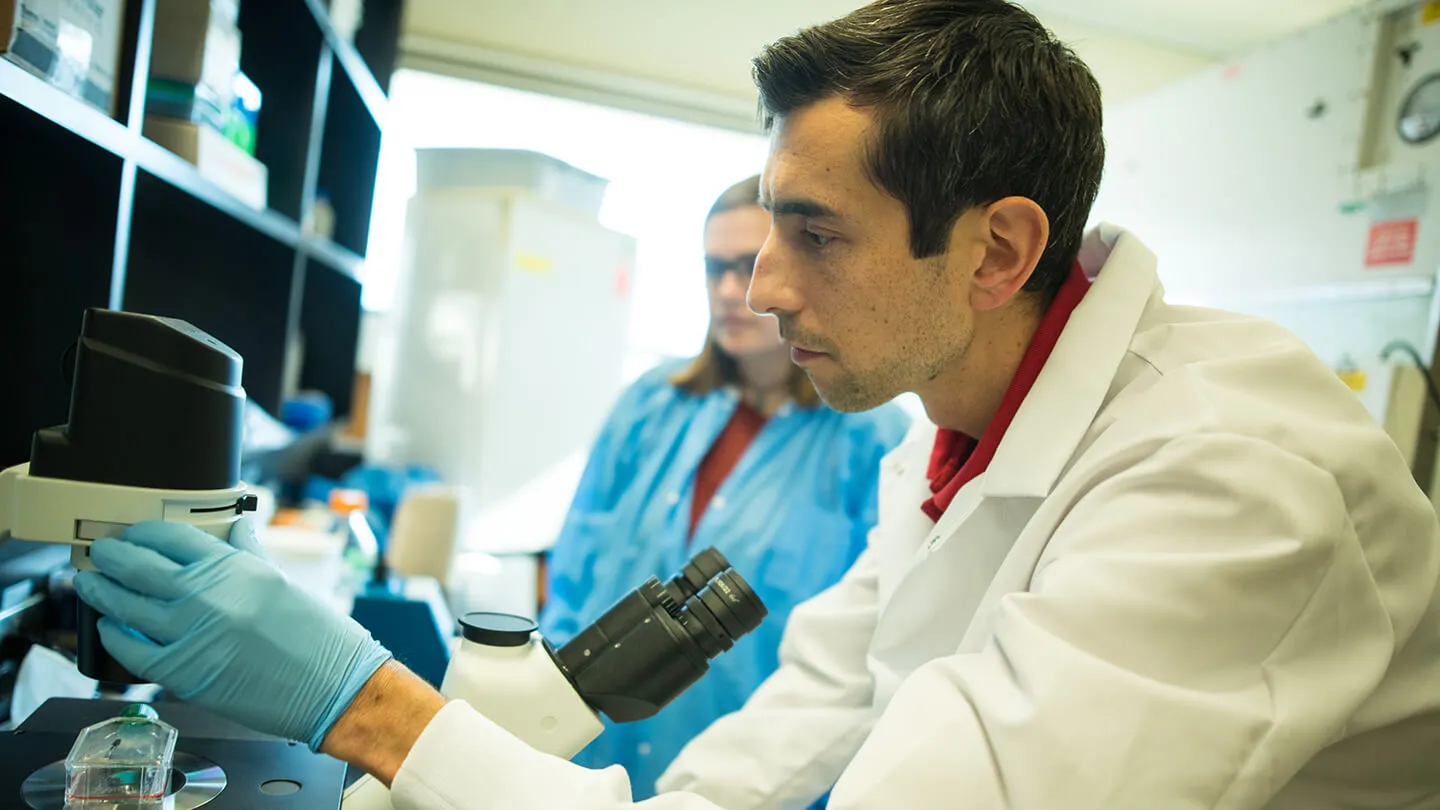
“The other interesting thing that we found is the mice that were genetically better at controlling this viral infection had minimal T cells going into the brain,” Krementsov said.
Krementsov said the new data show virus‑specific killer T cells enter the brain during chronic infection, well before any MS‑like disease is triggered. While these cells may be attacking the virus, they could also be slowing down helper T cells that coordinate the broader immune response.
Chronic infection alone drove marked accumulation of CX3CR1+KLRG1+ effector CD8 T cells and cytotoxic‑like T helper cells in susceptible animals.
Krementsov said his lab uses innovative animal models to analyze environmental exposures that raise or lower MS risk as well as genetic differences that steer some populations toward autoimmunity while protecting others.
The lab is now working to pinpoint the genes and immune mechanisms that confer resistance to gammaherpesvirus in the protected mouse strains, with the aim of creating a road map for human studies.
Dimitry Krementsov, an immunologist at the University of Vermont since 2017 and previously assistant professor of medicine at the Larner College of Medicine, leads a laboratory focused on the molecular mechanisms of immune-mediated and infectious diseases. His team combines unique mouse genetics with immunologic, cellular, molecular, and genomic approaches to dissect how genes and environment shape susceptibility to autoimmunity and viral infection.
Krementsov’s expertise in host–pathogen genetics is established through studies such as the 2020 PNAS paper on host genetics and gut microbiota interactions in CNS autoimmunity and the 2022 Journal of Immunology report showing divergent genetic regulation of nitric oxide production and mitochondrial metabolism in dendritic cells between C57BL/6J and wild-derived PWD/PhJ mice that controls bacterial resistance.
“If we can stimulate the kind of immune response that keeps EBV in check, then we can potentially prevent the onset of MS,” Krementsov said. “You could envision this as an immune booster for people that are high risk of MS, and that is relatively easy to predict nowadays with genetics or familial history.”
Keep reading
- Oireachtas Defence Committee Adds Extra Sitting to Process 224 Amendments to Triple Lock Bill
- Study Links Unintentional Injuries to PTSD, Depression, Impaired Quality of Life in Ghanaian Youth
- Manchester study finds nine per cent of volunteers had silent heart attacks (newsarchyuk.com)
- WHO: Fighting Traps Ebola Workers in Ituri Hospital as UNICEF Finds Violence Against Women Rising (world-today-news.com)

Oireachtas Defence Committee Adds Extra Sitting to Process 224 Amendments to Triple Lock Bill
The Oireachtas Committee on Defence will sit for an extra evening this week to process some 224 amendments...

Study Links Unintentional Injuries to PTSD, Depression, Impaired Quality of Life in Ghanaian Youth
A study of hospitalized children and adolescents in Ghana found unintentional injuries significantly associated with post-traumatic stress symptoms,...

Take-Two DMCA Removes GTA 6 PC Port Project
Take-Two Interactive, the parent company of Rockstar Games, has shut down the most prominent unauthorized effort to port...

Four Weather Systems Bring Rains, Flood Risks to Parts of Philippines
Large parts of the country will experience rains due to the combined effects of four weather systems on...