Georgia Democrats have a historic opportunity to repeal some of the country’s most restrictive voting laws following a decisive electoral sweep that flipped key statewide offices and the state House.
After a historic blue wave in Georgia flipped statewide offices up and down the ballot, Democrats are now in position to repeal the state’s many voter suppression laws, which are among the most draconian in the country, Democracy Docket reported.
Among the laws targeted for repeal is S.B. 202, known as the Election Integrity Act, which tightened mail-in voting rules, instituted stricter voter ID requirements, and controversially banned the distribution of food and water to voters waiting in line, Newzly reported.
Gov.-elect Keisha Lance Bottoms, who will make history as the first Black woman to govern a state, will lead the effort alongside other Democratic statewide officials, including Lieutenant Gov. Josh McLaurin, Attorney General Tanya Miller and Secretary of State Penny Brown.
A ‘Central Quest’
Voting rights advocates are urging Democrats to prioritize voting rights reform, calling it a “central quest,” not a “side quest.” Fair Fight Action CEO Lauren Groh-Wargo told Democracy Docket that the new Democratic power in states like Georgia must address the “structural democracy reform” needed after what she described as the “evisceration” of fair representation principles.
“There’s a lot of work to do in Georgia, from looking at how we do redistricting to looking at what we do with the mini-MAGA Georgia State Election Board (SEB) members, along with S.B. 202 and other bills that have been brutally racially targeted and suppressive,” Groh-Wargo said.
The centerpiece of the reform effort is the Henry McNeal Turner Voting Rights Act, a state-level bill introduced earlier this year. Named after a Reconstruction-era legislator, the act is designed to counteract Georgia’s recent voting laws, Democracy Docket reported.

“It’s a comprehensive state-level framework,” Brian Nunez, a senior policy associate at the Southern Poverty Law Center, told Democracy Docket. “It’s pretty much designed to counteract both the historical and recent efforts that we’ve seen in Georgia, with legislation like S.B. 202 and S.B. 189 to suppress the vote — especially for Black and Brown Georgians.”
Despite Republicans retaining a slim majority in the state Senate, Nunez believes the voting rights act has a good chance of passing. The SPLC is already in talks with lawmakers, including some Republicans, to introduce a new version of the bill next year.
Bottoms vows to fight abortion ban
The Republican-majority state Senate stands in the way of repealing the law, known as the LIFE Act.
Republican Senate to set priorities
Despite Democratic victories in other races, Republicans will keep control of the state Senate, letting them steer the legislative agenda. State Sen. Josh McLaurin, who will become lieutenant governor, acknowledged the Republican majority but argued it was gerrymandered. “Those 29 seats are gerrymandered,” McLaurin told the Georgia Recorder. “If we had fair maps, Democrats would already have a majority.”
Republicans are expected to resist Democratic priorities like repealing restrictive voting laws or the abortion ban. Anavitarte emphasized that the GOP would stand by its beliefs on issues like abortion and gun rights, setting the stage for a divided legislature.
The State Election Board
Another target for reform is the Georgia State Election Board, which has been a vehicle for partisan interference and election conspiracy theories, Nunez said.

Lance Bottoms has the opportunity to reform the controversial board, something she proposed on the campaign trail.
“In a perfect world, I would want the state election board to once again become boring,” Nunez added.
However, Democrats face a major obstacle in the state Senate, where Republicans will hold a slim majority. This means Democratic leaders will need to find Republican support to pass major legislation, including repealing S.B. 202 or reforming the election board.
“Georgia elected a majority state Senate of Republicans,” State Senate Majority Leader Jason Anavitarte told the Atlanta Journal-Constitution’s “Politically Georgia” podcast, as reported by the Georgia Recorder. “Those are the electoral results, whether it was 29 or 31 or 32, they elected 29. So we’re gonna have a deliberative conversation, and then we’ll make decisions.”
Worth a look
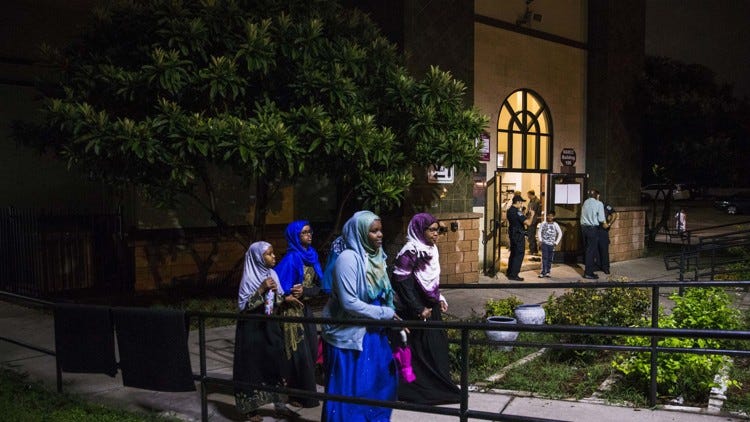
North Austin Muslim Community Center Increases Security After Viral Sermon Clip Fuels Threats
The North Austin Muslim Community Center increased security after a viral sermon clip fueled threats. The North Austin...

Man in 20s Shot, Killed in Fight at Chelsea High School Football Game
A man in his late 20s was shot and killed after a fight broke out among fans at...

Author Recounts Thanksgiving Trip to Carlsbad Caverns and Guadalupe Mountains
In a column on Substack titled "Exploring New Territory in New Mexico and Texas," an author recounts a...

Lincoln Used Thanksgiving Proclamation to Heal Nation and Advance Unity
In a column for The Cap Times, emeritus professor Arthur I. Cyr argues that President Abraham Lincoln established...