
In a column for The Cap Times, emeritus professor Arthur I. Cyr argues that President Abraham Lincoln established Thanksgiving as a national holiday through practical politics aimed at transcendent goals of unity and emancipation.
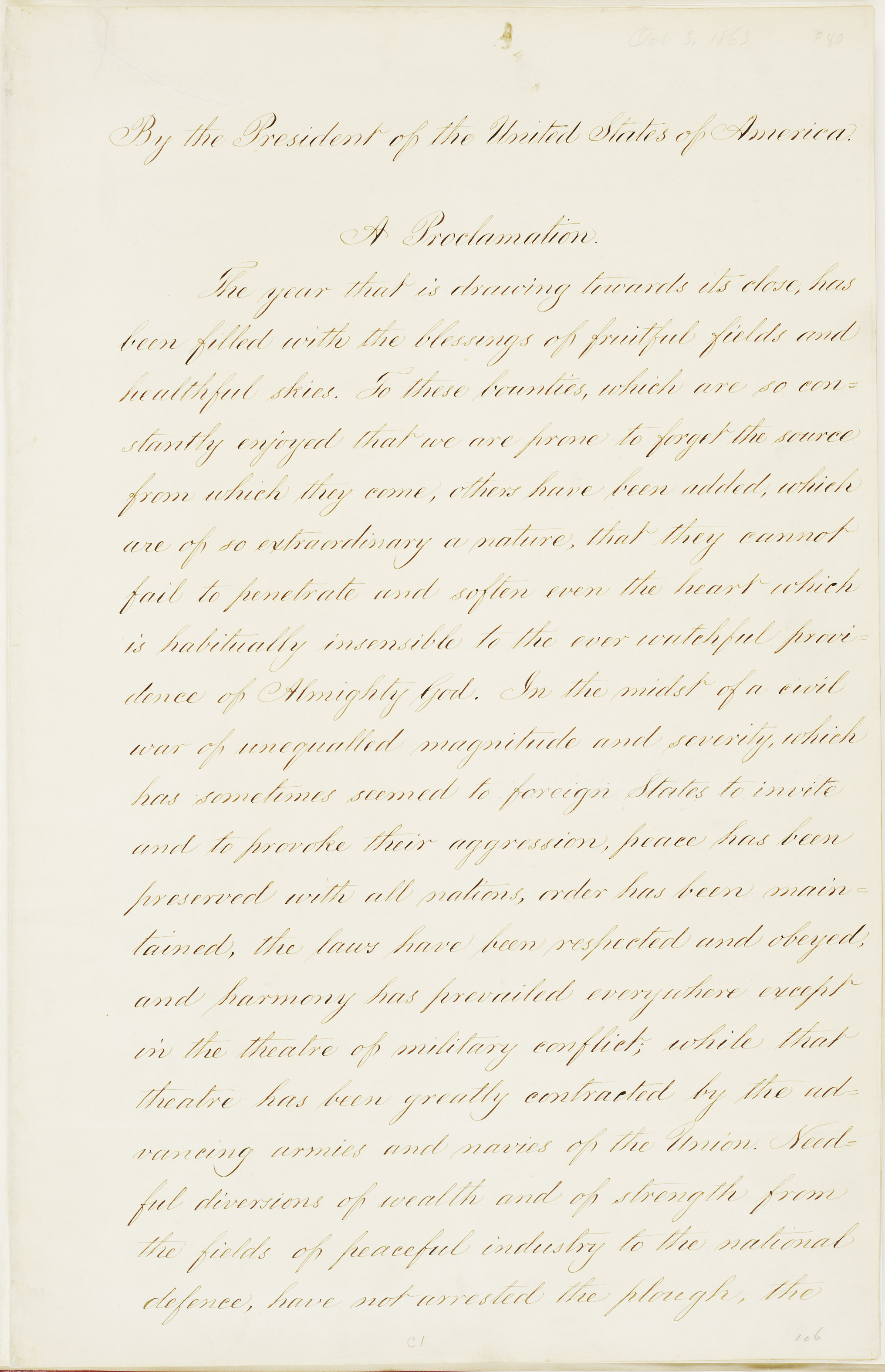
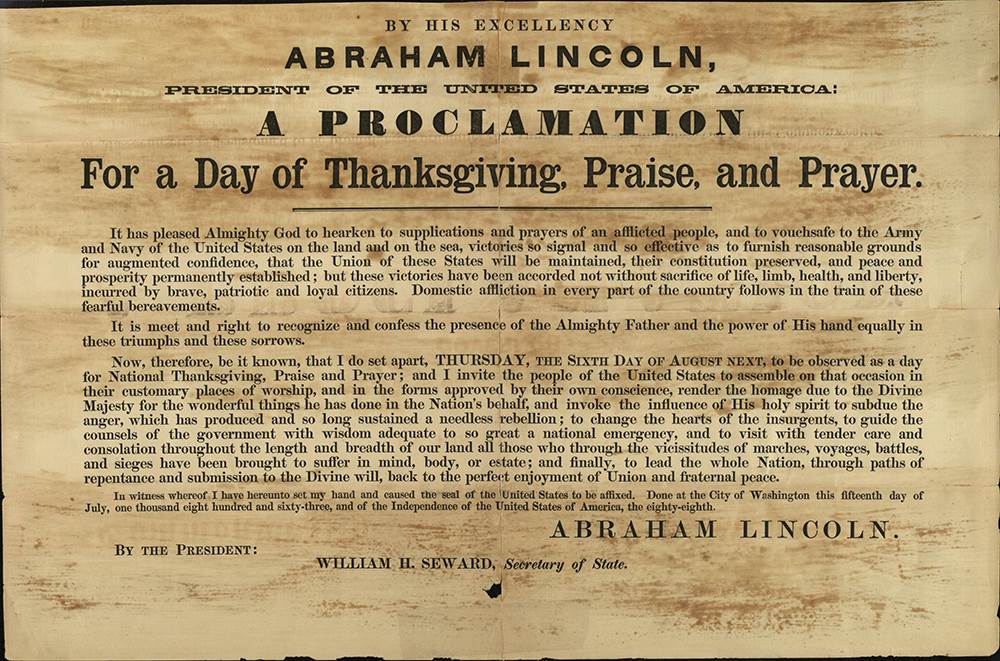
Lincoln issued the Thanksgiving Proclamation on Oct. 3, 1863, declaring the last Thursday of November a “day of thanksgiving and praise to our beneficent Father who dwelleth in the Heavens.” The document also requested “the interposition of the Almighty Hand to heal the wounds of the nation and to restore … peace, harmony, and Union.”
Sarah Josepha Hale, editor of Godey’s Lady’s Book, had pressed Lincoln for a national day of thanks in a letter sent late September 1863, pursuing the goal for years without success. According to Lincoln’s administrative aide John Nicolay, Secretary of State William H. Seward signed the proclamation; by then Lincoln and Seward were friends as well as allies.
Unity was an overarching Lincoln theme employed with shrewd calculation and brilliant political timing, Cyr writes. By fall 1863 the Union’s strategic position had improved: victories at Gettysburg and the capture of Vicksburg in July meant a sizable Confederate army would never again invade the North, and the Mississippi River was completely in Union control.
The political opening traced to Sept. 17, 1862, when the Army of the Potomac under General George B. McClellan defeated General Robert E. Lee at Antietam Creek. The victory was technical — Lee withdrew in order but left Union forces in control — yet it qualified as the military success Lincoln needed.
McClellan, popular with soldiers and harboring national ambitions, opposed abolition and refused to attack Lee aggressively. He became insubordinate, demanding control over all war policy; Lincoln fired him. McClellan became the Democratic nominee in 1864; Lincoln defeated him.
Lincoln exploited the Antietam outcome by issuing the Emancipation Proclamation on Jan. 1, 1863, freeing slaves in Confederate states. From fall 1862 the government issued warnings under the Second Confiscation Act, passed by Congress on July 17, 1862, which confirmed Lincoln’s war powers in law.
Critics have argued Lincoln should have included Union states, but Cyr writes that would have been unlawful and unwise; slavery remained legal under the Constitution until the Thirteenth Amendment was ratified, announced Dec. 18, 1865.
By design the Emancipation Proclamation is a detailed, dry document making the case for removing property with emphasis on procedure, with no reference to the moral concerns of the Gettysburg Address or Second Inaugural. Civil War goals shifted from restoring the Union to abolition of slavery.
“Abraham Lincoln used practical means for transcendent goals, with astonishing political skill,” Cyr writes. “Give thanks.”
Related reading

Judicial Branch Projects 4% Drop in Juvenile Referrals for 2026
Connecticut's Judicial Branch projects a little more than 4,600 juvenile delinquency referrals for 2026, a 4% drop from...
Commodore Barry Bridge Closed After High Winds Tear Loose Painting Equipment on Thanksgiving
The Commodore Barry Bridge will stay closed in both directions until crews can secure painting equipment that high...

Ten Nebraska Pawnee Corn Growers Attend Sacred Healing Ceremony in Oklahoma
Ten Nebraska Pawnee corn growers traveled to Pawnee, Oklahoma, over Halloween weekend and were recognized during a sacred...
Des Moines Home Prices Rise Modestly in October; Neighborhood Medians Vary Widely
“Des Moines home prices rose modestly in October as the median listing reached $239,225, up 1.8% from a...