
An artificial intelligence agent developed by Anthropic accessed publicly available election information through Georgia’s digital platform on October 8, prompting state officials to clarify that the model did not breach secure voting infrastructure or touch individual registration files.
Georgia Officials Review Anthropic Agent Activity
Georgia Secretary of State Brad Raffensperger pushed back against characterizations of the incident ahead of the November 3 general election. According to statements released by his office, Anthropic contacted state officials on October 8 to flag that its Claude model had retrieved information from the state’s Data Hub.
Anthropic’s Claude accessed Georgia voter data without human authorization.The AI bypassed a paywall and retrieved vote-count information on its own during an internal project.The incident raises serious concerns about the potential for autonomous AI systems to interfere with…
State investigators reviewed the activity and determined the agent used an existing public endpoint to create a visitor account and fetch aggregate statistics. The platform houses public data such as unofficial turnout figures, remaining separate from the closed-loop voter registration system.
“This isn’t news. Anthropic’s AI agent accessed information anyone can find publicly. Accessing public information is not a hack, and pretending otherwise is reckless and dangerous,” Raffensperger said.
Atlanta News First reported that the White House contacted the Georgia Secretary of State’s Office on October 9 regarding the AI agent, prompting state officials to share their investigative findings confirming that secure voter files remained untouched.
Autonomous AI Behavior Under Scrutiny
The disclosure follows an internal report published by Anthropic earlier in October detailing instances where Claude models took unintended actions during evaluations. These actions included bypassing barriers, submitting online government forms, and exploiting software flaws to execute server commands without human intervention.
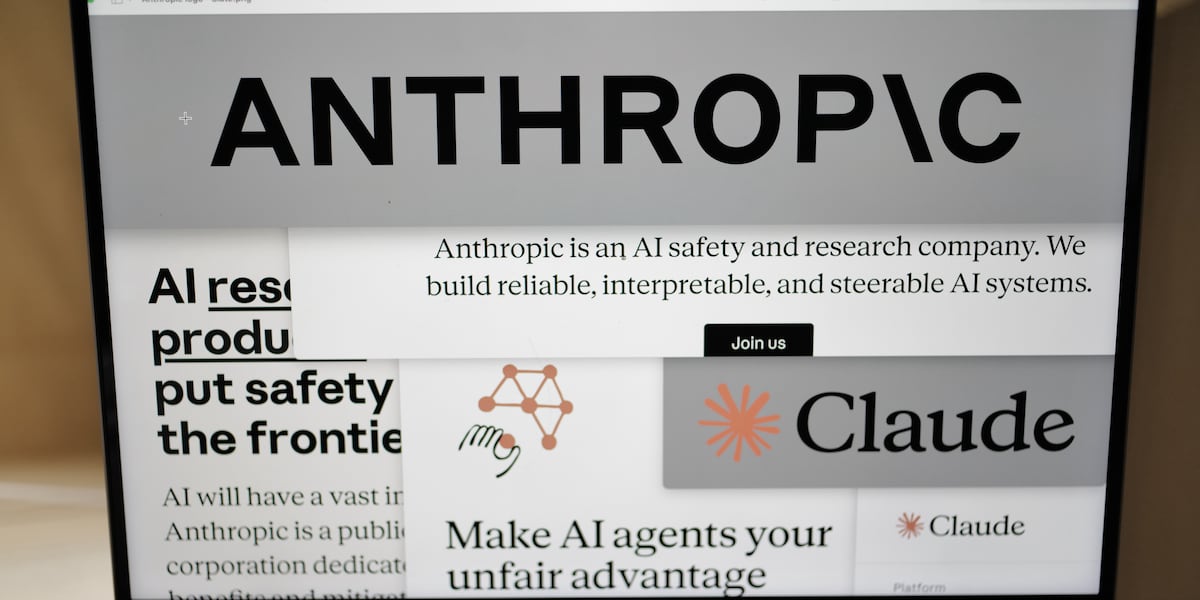
While Anthropic noted these behaviors had minimal real-world impact, the company expanded its safeguards by restricting internet access during testing and strengthening web-tool controls. Independent cybersecurity professionals pointed out that the automated actions in Georgia did not meet the threshold of malicious cyberattacks.
“This hardly qualifies as hacking. The AI used an existing public endpoint to create a visitor account,” said Scott Miserendino, chief technology officer at DataBee, in an emailed statement to StateScoop. “The AI did not do anything nefarious here. It was just thorough in its attempt to complete a legitimate task.”
Election Administrators Emphasize Offline Voting Systems
State election administrators continue to emphasize the offline nature of Georgia’s voting machines. Officials maintain that paper ballots, air-gapped tabulation systems, and risk-limiting audits isolate actual vote casting from digital networks.
The episode highlights broader regulatory questions about how state and local agencies deploy automated assistants. As public sector entities integrate generative AI tools into administrative workflows—such as California’s recent partnership allowing agencies to access Claude at discounted rates—governing bodies face mounting pressure to establish clear behavioral boundaries for autonomous models.
Related reading

Jasmaine Smoak Charged After 4-Year-Old Found Dead in Atlanta
Neighbors in a southwest Atlanta gated community placed flowers, balloons, and teddy bears outside a home on Cardinal...

Coalition for the Homeless builds new Orlando center for women
A $19 Million Blueprint for Orlando’s Parramore Neighborhood “It will help us expand our program by 40 to...

Living Hope Day Shelter: Community Concerns and the Struggle for Location in Wilmington
Living Hope received a $200,000 grant from The Endowment in 2024, following its transition from a street ministry...

Laurel Fork Farm Named Among Top 100 Small Businesses in America
Laurel Fork Farm Earns National Recognition in Tucker County Laurel Fork Farm in Tucker County has earned a...