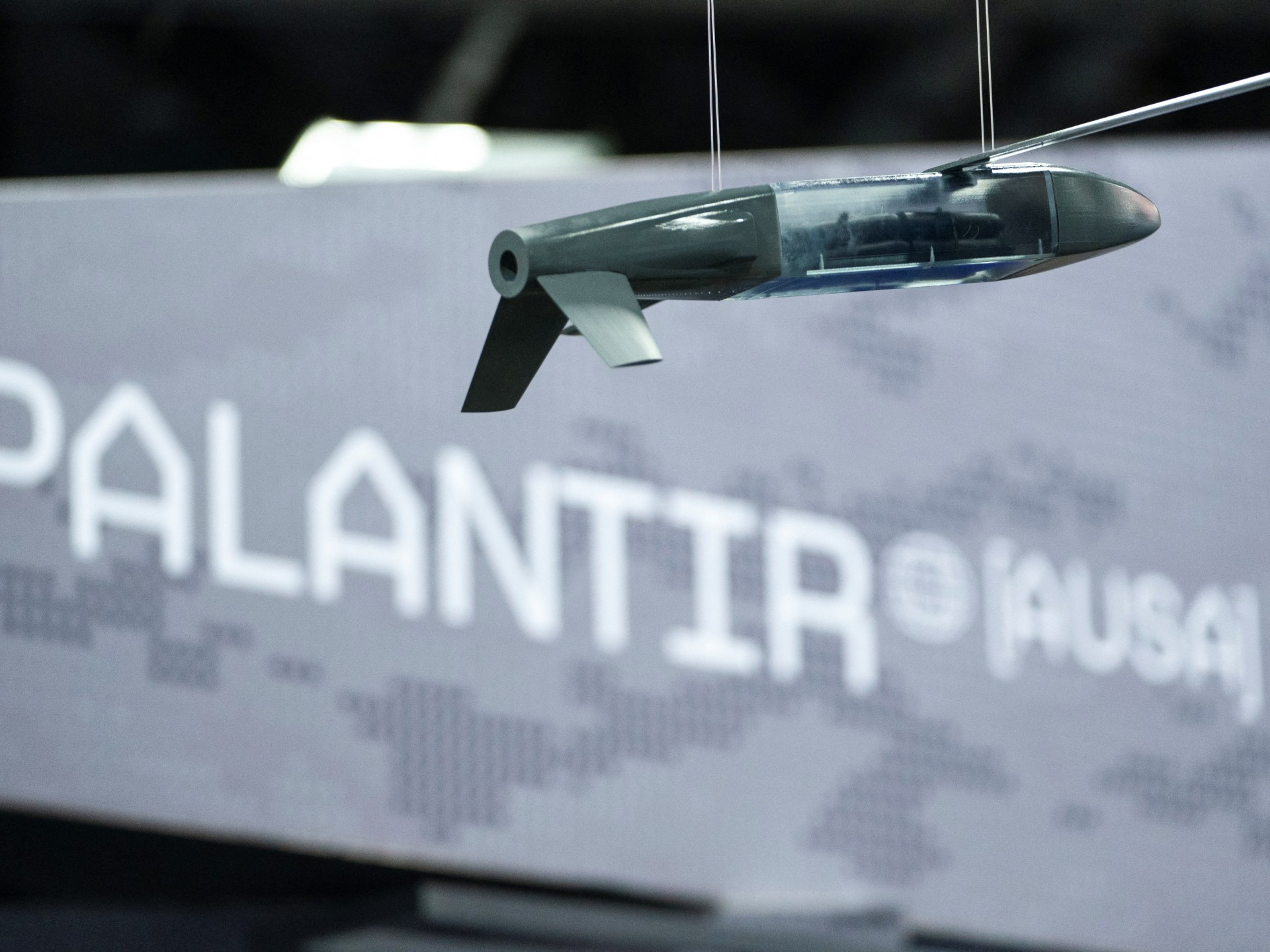
Global military expenditure climbed to $2.88 trillion as defense agencies rapidly accelerate software acquisitions. Tech firms and traditional arms manufacturers compete fiercely for billions in contracts, reshaping defense budgets around advanced artificial intelligence, autonomous systems, and real-time battlefield data integration across international operations.
For centuries, building national defense meant procuring heavy hardware like tanks, aircraft, artillery, and firearms from a select group of prime contractors under long-term government programs. While traditional manufacturing remains active, modern conflict increasingly relies on software deployed through screens by soldiers operating remotely. Billions of dollars are currently flowing into a shifting defense marketplace, transforming the historic military-industrial complex into a software-driven technology sector, Al Jazeera reported.
Pentagon Shifts and Market Projections Through 2035
This financial expansion is powered by escalating adoption of artificial intelligence in defense applications, rising investments in autonomous military hardware, and modernization demands across global command-and-control capabilities. North America anchors the dominant region due to substantial U.S. defense AI investments and established technology vendors, while Europe experiences rapid growth driven by NATO modernization priorities and operational lessons from recent conflicts.
Defense procurements centered on software are not entirely new. The Pentagon explicitly backed artificial intelligence to define next-generation warfare through its 2014 Third Offset Strategy. However, the pace of integration has quickened substantially as global military spending reached $2.88 trillion. Recent procurement initiatives feature contracts signed with leading technology firms to deploy artificial intelligence across classified networks in an effort to establish an artificial-intelligence-first military.
Bridging the Great Schism Between Silicon Valley and the Pentagon
The relationship between the defense establishment and Silicon Valley has experienced severe strain over preceding decades.
That warning triggered aggressive industry consolidation. More than 75 defense firms merged into the dominant Big Five prime contractors—Lockheed Martin, Boeing, Northrop Grumman, General Dynamics, and Raytheon (now RTX)—which currently capture approximately one-third of annual Department of Defense contract obligations. Palantir Chief Technology Officer Shyam Sankar famously dubbed the resulting cultural and operational estrangement between technology companies and the military the Great Schism,
noting that the Pentagon entrenched itself within a ponderous bureaucracy while Silicon Valley raced ahead with consumer-focused innovations.
Geopolitical pressures, particularly technological advancements in China, ultimately forced a reconciliation. Netscape founder-turned-venture-capitalist Marc Andreessen observed on a 2025 podcast that There’s plenty of people in Washington in the last 20 years who’ve made a point of how much, you know, they hate us,
highlighting past animosities that tech investors and defense leaders are actively working to overcome.
Defense Primes and Software Neoprimes Vie for Multi-Billion Contracts
Researchers at the Stockholm International Peace Research Institute divide the military artificial intelligence ecosystem into four primary tiers: traditional defense primes, software-focused neoprimes or startups, big tech cloud providers, and foundational model laboratories. Traditional defense giants including Lockheed Martin, RTX, Northrop Grumman, BAE Systems, and General Dynamics are actively layering artificial intelligence onto legacy hardware. Lockheed Martin flight-tested an artificial intelligence tool for F-35 fighter jets to accelerate hostile aircraft identification, while L3Harris integrated intelligence software directly into camera systems for real-time targeting.
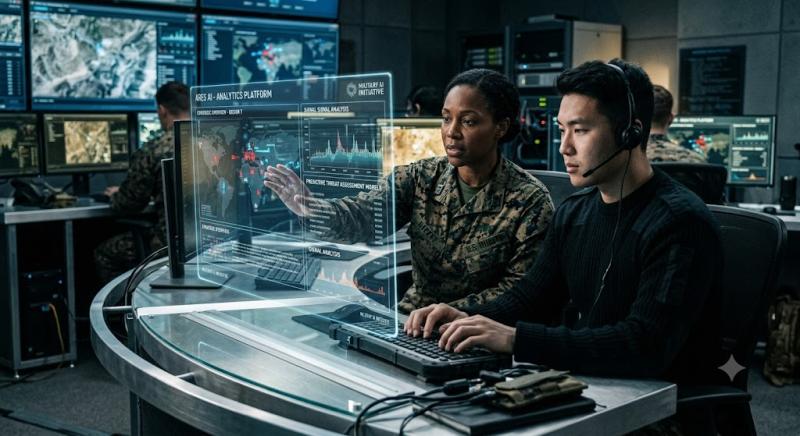
Meanwhile, software-first neoprimes secure major international agreements. The UK Ministry of Defence signed a £2bn ($2.7bn), 15-year contract with Omnia Training—a consortium led by Raytheon UK—to train 60,000 soldiers annually in utilizing artificial intelligence for combat readiness. Concurrently, NATO awarded contracts for its Enhanced Air Command and Control Data Platform to Anduril for its Lattice software, alongside Palantir and French joint venture Athea SAS. Palantir’s data-mining software, prominent in flagship military programs like Project Maven, processes satellite feeds and signals intelligence to accelerate battle-management decisions across active conflicts.
Worth a look

Trump Says US Should Have World’s Lowest Interest Rate Ahead of Fed Meeting
President Donald Trump declared on September 13, 2026, at the Irish Open in Doonbeg, Ireland, that the United...

Central Banks Face Rate Decisions Amid Surging Inflation and Oil Pressures
Central banks across the US, UK, and Japan face pivotal interest rate decisions this week amid turbulent global...

German Firms View China Expansion as Opportunity Amid Narrowing Window
German companies in China increasingly view the international expansion of local businesses as a major business opportunity, though...

UK Government to Update Student Loan Guidance Following Mis-Selling Findings
University applicants in England are set to receive clearer information regarding student loans before committing to borrowing, following...