Researchers analyzing data from over 200,000 adults in the UK and US have identified hundreds of gut bacteria changes associated with type 2 diabetes. The findings, presented at the annual meeting of the European Association for the Study of Diabetes (EASD) in Milan, Italy (Sept 28 – Oct 2), reveal microbial shifts before blood sugar levels rise.
Microbial Signatures and Blood Sugar
Changes in the composition of bacteria living in the gastrointestinal tract could provide early warning of type 2 diabetes (T2D). The analysis examined metagenomic data—the DNA sequences of bacteria residing in the gut—alongside health information from 229,025 individuals. Participants had an average age of 50 years, and 73.8% of the cohort were female.
Within this population, investigators found 3,627 individuals with type 2 diabetes and 14,022 with prediabetes. Another 211,376 participants were normoglycaemic, meaning they maintained normal blood glucose levels. When researchers factored in age, sex, and body mass index, they identified 789 bacterial species associated with type 2 diabetes.
Among those species, 168 appeared at higher levels in individuals with the condition, while 621 were less abundant. For instance, Enterocloster bolteae showed higher abundance in participants with type 2 diabetes. This spore-forming species has prior links to poorer cardiovascular and metabolic health. Conversely, Romboutsia timonensis appeared less frequently in those with the condition. This bacterium was only described in the last decade. Other identified species remained uncharacterized, meaning scientists have never isolated or cultivated them in a laboratory setting.
The changes were particularly pronounced in the individuals who were taking medication for T2D. However, they also occurred in those with T2D not taking medication. The team also found that 587 of the 789 species were associated with unmedicated prediabetes.
Detecting Risk Before Glucose Rises
Standard diagnostic tests for diabetes and prediabetes—such as HbA1c, fasting plasma glucose, and oral tolerance test—look for higher levels of sugar in the blood. However, these traditional measures aren’t used to flag up people with normal levels of blood sugar who are at risk of developing T2D in the future. Instead, risk is currently assessed by looking at factors like age, sex, BMI, and family history.
To test whether microbial patterns emerge before blood glucose rises, researchers examined metagenomic data from 135,093 of the normoglycaemic individuals alongside blood sugar readings taken in the two hours after eating a meal. Blood sugar temporarily rises after eating. If it remains high, this is usually a sign that the muscles are not responding well to insulin—insulin resistance—an early step on the path to T2D.
They found that individuals whose blood sugar remained elevated longer than usual were more likely to carry the gut bacteria pattern seen in type 2 diabetes.
Research Leadership and Clinical Context
To provide some clarity on previous studies that failed to consistently agree on key bacteria across large populations, the research was conducted by Dr Gabriel Baldanzi, of the Laboratory of Computational Metagenomics, and Professor Nicola Segata, who leads the lab at the CIBIO Department, University of Trento, Trento, Italy, and colleagues in the UK. The findings were presented at the annual meeting of the European Association for the Study of Diabetes (EASD) in Milan, Italy (Sept 28 – Oct 2).
“These latest findings represent a major step forward in understanding how our gut microbiome is linked directly with metabolic disease. Identifying these clear microbial changes before blood sugar levels worsen could lead to earlier intervention with food and lifestyle choices, as well as treatment options, to prevent T2D.” Professor Tim Spector, one of the study’s authors, Scientific Co-Founder, ZOE
This raises the possibility of using gut microbiome composition to help detect those at risk of type 2 diabetes and who may benefit the most from lifestyle changes, contributing to preventative approaches to support public health goals of reducing T2D diagnoses, say the study’s authors from Italy and the UK.
Broader Genomic Data and Long-Term Cohorts
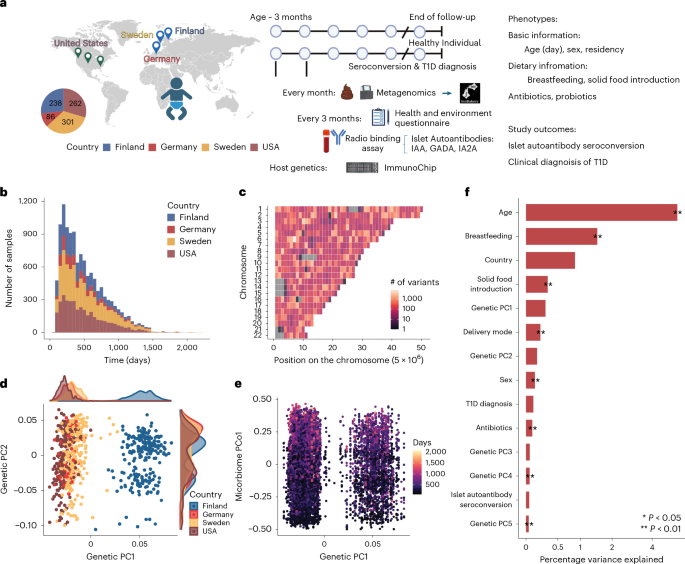
For example, the TEDDY study is a prospective cohort study funded by the National Institutes of Health (NIH) aimed at identifying environmental causes of T1D. Between September 2004 and February 2010, the study screened 424,788 newborns who were younger than 4 months, involving six clinical research centres—three in the United States (Colorado, Georgia/Florida and Washington) and three in Europe (Finland, Germany and Sweden)—following participants over extended periods to map early childhood gut maturation and host genetics.
Related reading

Pennsylvania Measles Outbreak Reaches 890 Cases Amid Federal Dispute
Pennsylvania health officials reported 55 new measles cases since Wednesday, bringing the state's total to 890 confirmed infections...

WHO Recommends Influenza Vaccine Composition for 2027 Southern Hemisphere
The World Health Organization announced its influenza vaccine composition recommendations for the 2027 southern hemisphere season following an...

LEAD Consortium Launches First Nationwide Study on Paradoxical Lucidity
An international consortium called LEAD is launching a nationwide study dedicated to investigating paradoxical lucidity in dementia patients,...
CHOP Researchers Find Dietary Changes Triple Survival in Hirschsprung Model
Researchers at the Children's Hospital of Philadelphia and international partners discovered that altering standard diets in a preclinical...