
Haiti’s national soccer team qualified for the World Cup in November 2025 for the first time in 52 years while unable to play a single home match on its own soil, Columbia Political Review reported.
The team defeated Nicaragua 2-0 in qualifying but played its “home” games at Stadion Ergilio Hato in Curaçao, roughly 500 miles from Port-au-Prince, because the national stadium sits inside gang-controlled territory. Armed groups control an estimated 90 percent of Port-au-Prince and surrounding areas. At least 1.4 million people have been displaced internally, a figure the UN’s Designated Expert William O’Neill called an “unprecedented level of internal displacement.” Amnesty International reported that gang violence has worsened food scarcity and homelessness in a country already strained by natural disasters and resource shortages. Around half of gang members are children, often trafficked or coerced with promises of housing, food and medical assistance. “No sitting president and no functioning parliament,” the review noted of Haiti’s government. The Transitional Presidential Council, tasked with governing until elections, has failed to gain effective control. Both the police force and court system have been critically weakened by under-resourcing, mass resignations and gang infiltration. The power vacuum has allowed gang coalitions to consolidate power. The most notable, Viv Ansanm (“Living Together”), is led by former police officer Jimmy “Barbecue” Chérizier. In interviews and social media broadcasts, several gang leaders have cast themselves as revolutionaries rising against a corrupt political and economic elite. Human rights groups document mass displacement, rampant sexual violence and extortion of civilians and officials. The crisis traces back centuries. Haiti won independence from France on January 1, 1804, after the only successful large-scale slave revolt in history. In 1825, under threat of a French invasion, Haiti agreed to pay 150 million francs to former slaveholders as compensation for “lost property.” The “double debt” — principal plus interest on loans from French banks to make payments — was not retired until 1947.
The New York Times estimated Haiti paid the equivalent of $560 million in today’s dollars, costing $21 billion to $115 billion in lost economic power over time. For much of that period, a majority of the national budget went to debt service rather than schools, hospitals or roads. Foreign intervention has deepened distrust. The UN Stabilization Mission in Haiti (MINUSTAH) ran from June 2004 to October 2017. Nepalese peacekeepers introduced a cholera outbreak that killed an estimated 9,000 people; the UN denied responsibility until 2016. Sri Lankan personnel faced sexual abuse claims involving children spanning three years. Accountability was lacking. In October 2023, the UN Security Council authorized a Kenya-led Multinational Security Support (MSS) mission rather than a formal peacekeeping force. Funded by voluntary contributions, MSS suffered chronic underfunding and understaffing. The “Core Group” of international diplomats — including the US, Canada, France, the EU, the UN and the Organization of American States — has directed political affairs since 2004.
US immigration policy has deported thousands of Haitians while issuing travel advisories warning of a “kill zone” in Port-au-Prince. The Duvalier family dictatorships from 1957 to 1986 normalized armed non-state violence through the Tonton Macoute paramilitary. Since 1986, Haiti has cycled through coups, disputed elections and foreign-brokered transitions that undermined stable democratic governance. The current gang war is the latest, most extreme development of that pattern. Assassination of President Jovenel Moïse on July 7, 2021 accelerated the collapse.
Moïse had ruled by decree for over a year after fraudulent elections. Ariel Henry, selected as Acting Prime Minister two days before the killing, took power with foreign backing but was never formally sworn in. His government failed to control armed groups. In early 2024, gangs surrounded the main airport as Henry sought international support abroad; he resigned in April 2024. Haiti has since cycled through numerous acting prime ministers.
Keep reading
Timbers Rally From Two Goals Down, Fall to FC Dallas in Penalty Shootout in Playoff Sweep
FC Dallas eliminated the Portland Timbers from the MLS Cup playoffs on Saturday with a 5-3 penalty shootout...

ASU Basketball Returns Home to Face Montana After Two SEC Losses
Arizona State has lost two straight to SEC opponents and returns home Monday to face Montana, a team...

Tommy Lee Jones Returns to San Saba, Texas, on 6,000-Acre Ranch
Tommy Lee Jones, 80, returned to his San Saba, Texas, birthplace with his wife, Dawn Laurel-Jones, 62, to...
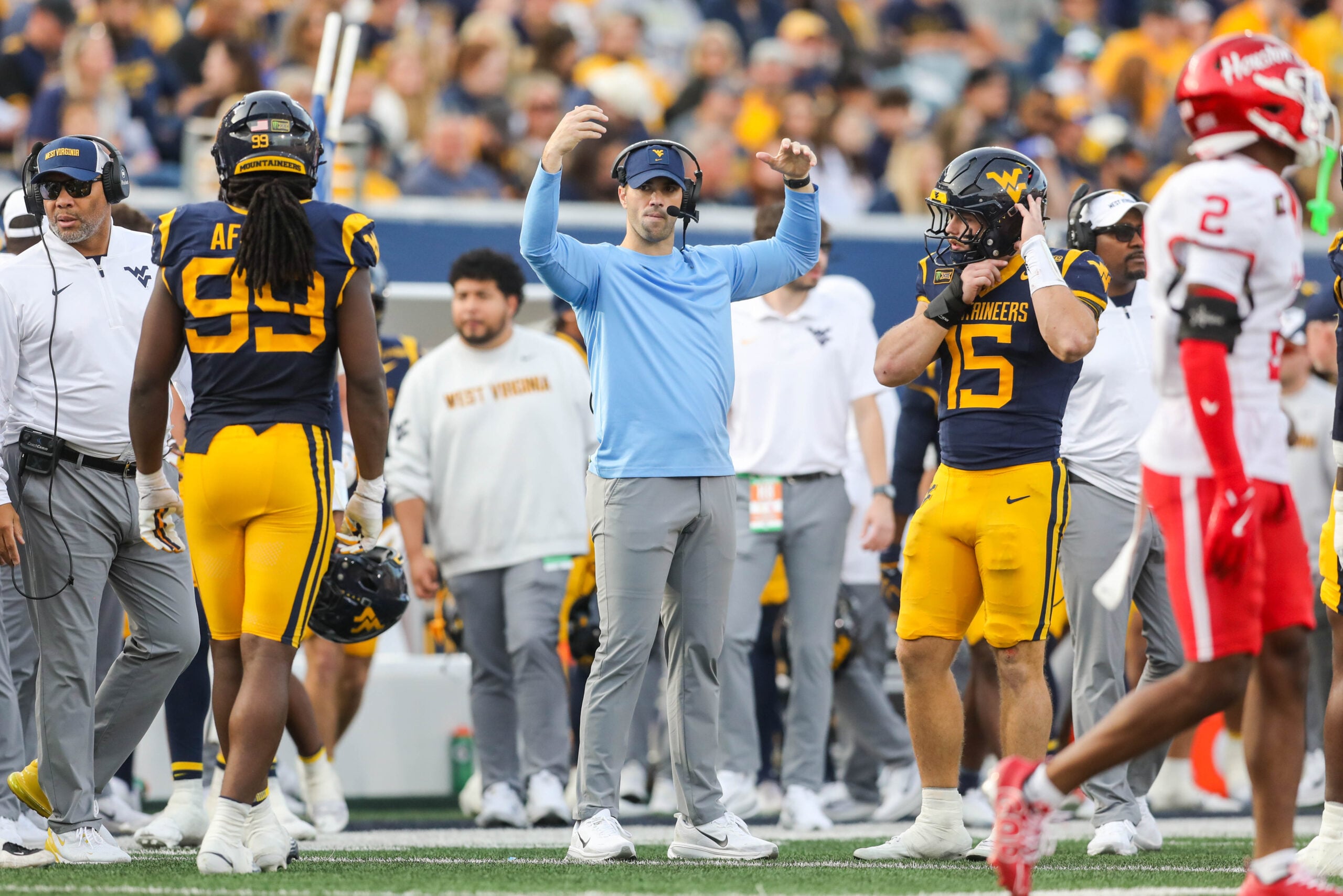
WV MetroNews: West Virginia Fires Defensive Coordinator Zac Alley, Entire Staff
West Virginia fired defensive coordinator Zac Alley and his entire staff Sunday after a 5-7 season that ended...