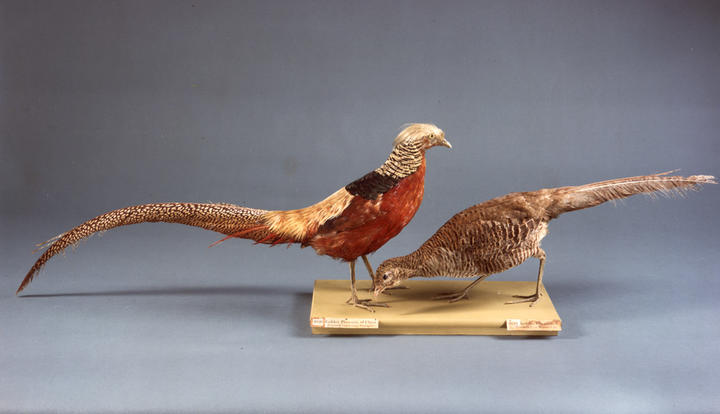
Historic avian specimens sent by the Marquis de Lafayette to George Washington are on display as the Harvard Museum of Natural History opens its new exhibition on June 27, 2026.
While visitors typically picture cases of artifacts when imagining a museum, the objects currently on display represent only a tiny percentage of the institution’s total holdings. Behind the scenes, experts care for 26 million specimens spanning billions of years from every continent, ocean, and beyond.
These objects form the basis for studying life on Earth as physical records of the planet from different times and places, consisting of stone, bone, plant, animal, feather, fish, and fossil.
Scheduled from June 27, 2026, to April 2027, the display highlights exceptional teaching and research items from the university, frequently showing them to the public for the very first time. Visitors can view objects ranging from a massive polar bear to tiny jewel-like beetles.
Produced jointly by the Harvard Museums of Science & Culture alongside the institution’s trio of natural history research repositories—namely the Museum of Comparative Zoology, the Harvard University Herbaria, and the Mineralogical and Geological Museum—the exhibition offers a wide-ranging view.
Among the rare objects drawn from the collection vaults are historic specimens presented to mark the 250th Anniversary of the United States Declaration of Independence. These include George Washington’s Golden Pheasants.
The golden birds lived in the aviary of French King Louis XVI before the Marquis de Lafayette sent them to George Washington in November 1786. When the birds died, Washington gave them to Charles Wilson Peale, who ran a museum in Philadelphia, with labels on the wooden base that may be original to Peale’s display.
Related reading

NSU Demons Host UL Lafayette Friday in Rivalry Renewal
Northwestern State's women's basketball team will renew its in-state rivalry with UL Lafayette on Friday at 2 p.m....

Georgia State Patrol Launches 102-Hour Thanksgiving Enforcement After 12 Deaths Last Year
Georgia troopers begin a 102-hour Thanksgiving patrol window Wednesday evening after 12 people died in 11 fatal crashes...

Tiny Guilford Pizzeria Bufalina Is a Finalist for New Haven Restaurant of the Year
At 300 square feet, a Guilford pizzeria is a finalist for New Haven restaurant of the year in...

Pittsburgh Man Charged After 21-Mile Chase Through I-70 Construction Zones
A 23-year-old Pittsburgh, Pennsylvania man is in custody following a 21-mile high-speed pursuit through active Interstate 70 construction...