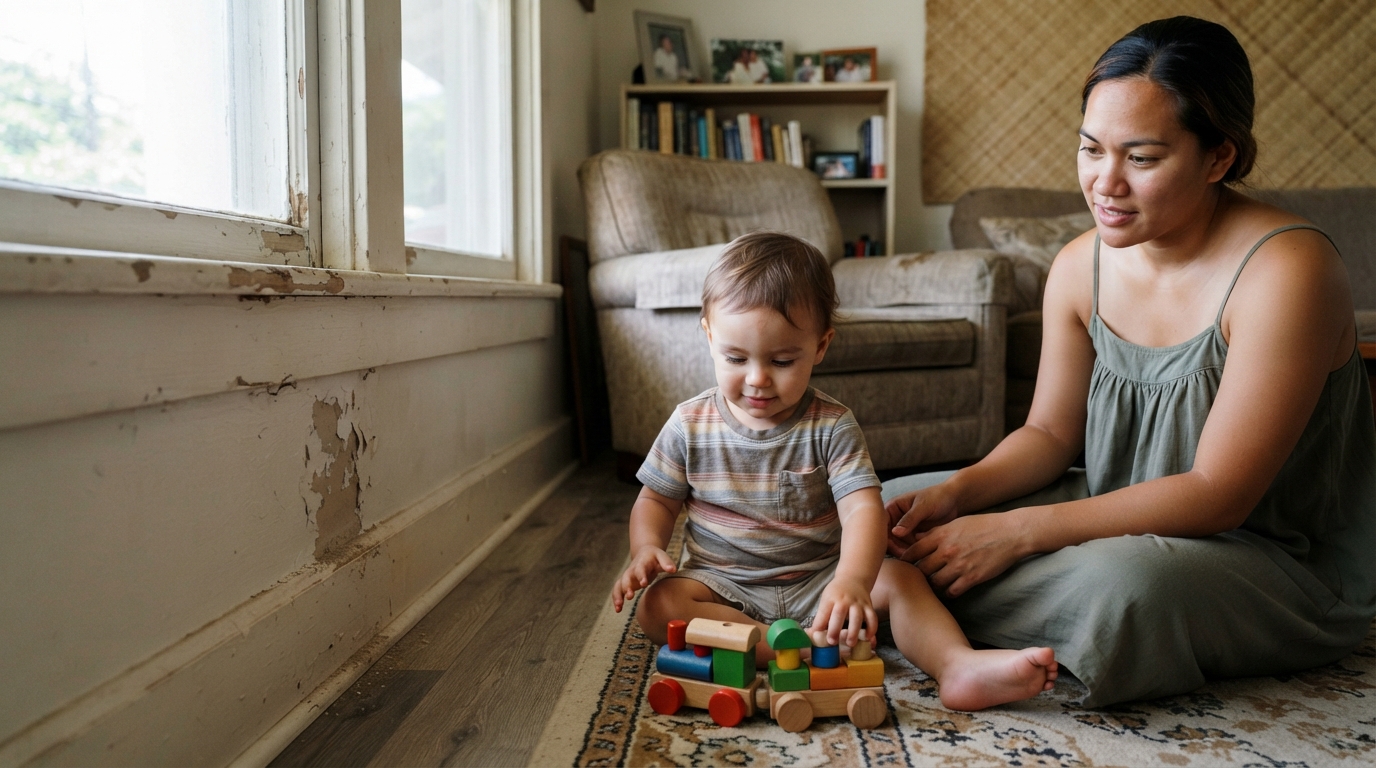
A routine blood test for a 1-year-old girl triggered the relocation of 19 Kalihi residents, including six children, after state health officials found lead hazards at four rental properties on Maʻo and Palamea lanes.
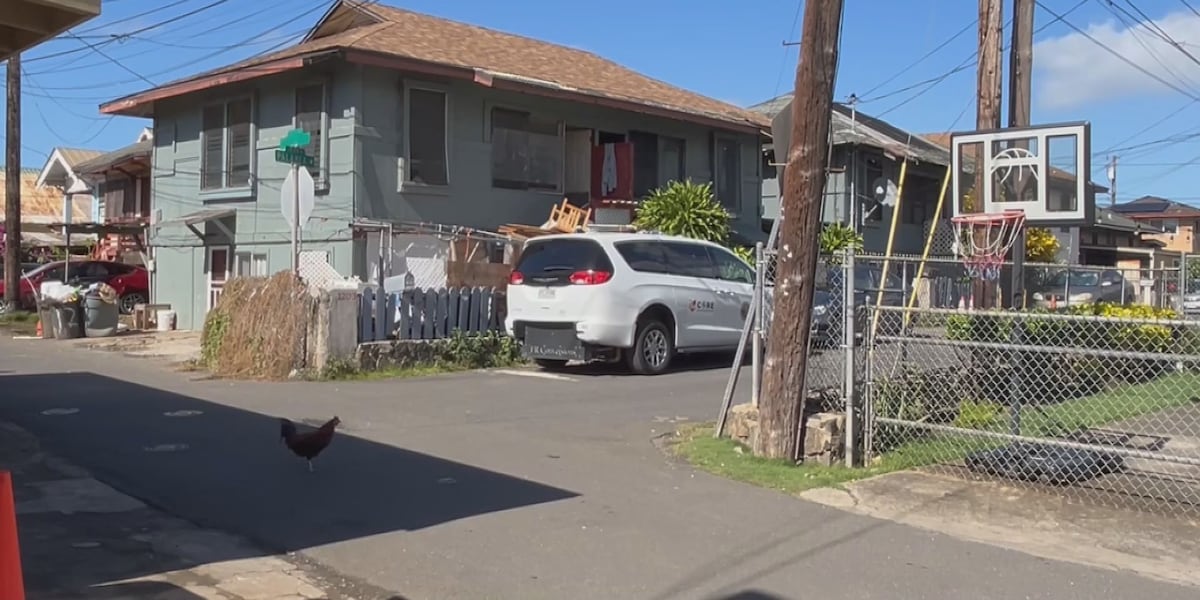
The Hawaii Childhood Lead Poisoning Prevention Program reviewed the child’s elevated blood lead level on Oct. 12 and launched an investigation, the state Department of Health said. Inspectors identified lead in soil, peeling paint and interior dust at 1026 Maʻo Lane and 1203, 1203 B, and 1209 Palamea Lane, each containing multiple units, according to a department news release issued Nov. 25.
All 15 tap water samples tested below the laboratory detection limit of 2.5 parts per billion, though the department said that because samples were taken during normal use without stagnation, lead in drinking water cannot be entirely ruled out, Medical Daily reported.
Displacement and shelter
Starting Nov. 13, the city’s Community Outreach Response and Engagement (CORE) teams — community health workers and EMTs — moved 19 people to temporary housing over a 10-day operation, Medical Daily reported. Three families remain in shelters run by HONU or Catholic Charities, Hawaii News Now reported. The nonprofit Partners in Care is assisting with relocation and rapid rehousing, including for residents facing eviction.
Enforcement and disclosure
The Department of Health issued the property owner a Notice of Interest regarding potential liability for releasing a hazardous substance. The city Department of Planning and Permitting issued a Notice of Violation for housing code deficiencies found during inspections last month, Hawaii News Now reported.
Before a lease or sale, federal law mandates disclosure of known lead-based paint hazards in most housing built before 1978; the department has not said whether that occurred here.
A man who identified himself as Lorenzo, the landlord, told Hawaii News Now the girl had scratched paint off the walls and that he is waiting for state officials to tell him what steps to take. “We have to cooperate with the state,” Lorenzo said.
Neighborhood history and testing gaps
Kalihi has faced lead contamination before. Contaminated soil under Factory Street, linked to a former lead fishing weight factory, was found in 1993 and paved over; the pavement later deteriorated, and federal removal did not begin until January 2020 after about a two-year delay in identifying an owner for the abandoned road, Medical Daily reported. State data from 2011 to 2017 ranked Kalihi among Hawaii’s highest-risk areas for lead exposure.
According to a 2020 Civil Beat report, only about a quarter of Hawaii children ages 1 to 2 were being tested for lead, Medical Daily reported. The department recommends blood lead tests at ages 1 and 2, with a catch-up test for children 3 to 6 who missed one. Thirty-three residents have had blood tests since the investigation began; results have not been released.
The Hawaii Childhood Lead Poisoning Prevention Program (HI-CLPPP) has the authority to investigate potential lead hazards, as seen when it reviewed an elevated blood lead level on Oct. 12 and launched an inspection of rental properties, identifying lead in soil, peeling paint and interior dust.
HI-CLPPP also connects families to services like the Hi‘ilei Developmental Screening Program, a free resource for children from birth to 5 years old, providing developmental screenings and information after lead exposure is identified.
Health stakes
“Lead is a toxin. And so for children, the main effects that we see are on the brain,” said Dr. Brooke Hallett, a pediatrician at Kapiʻolani Medical Center for Women & Children, told Hawaii News Now. “Their brains are developing their foundation. And so at that age, if they’re incorporating toxins into their body and they’re getting exposed to those, it can lead to poor outcomes later on as far as IQ, attention, behavior.”
Most children with elevated levels show no obvious symptoms, which is why testing matters.
“No family should pay rent to live in conditions that put their children’s health and future at risk,” said Sunny Chen, executive director of Healthy Mothers Healthy Babies Hawaiʻi.
Related reading

Geraldine “Geri” Capen, 97, Dies; Former Waverly Schools Employee and Volunteer
Geraldine "Geri" Annette (Keast) Capen died Wednesday at age 97, the Palmer Bush & Jensen Family Funeral Homes...

Can Texans End 12 Year Ravens Home Losing Streak At Reliant Stadium
The Texans have not beaten the Ravens at Reliant Stadium in 12 years, a streak dating back to...
Supreme Court to Hear Alaska Plane Confiscation Case Tuesday
The U.S. Supreme Court will hear arguments Tuesday in a case testing whether Alaska can seize a bush...

LSU’s Dilin Jones 112 Yards From 1,000-Yard Milestone vs. Arkansas
LSU running back Dilin Jones needs 112 rushing yards against Arkansas on Saturday to become the first Tigers...