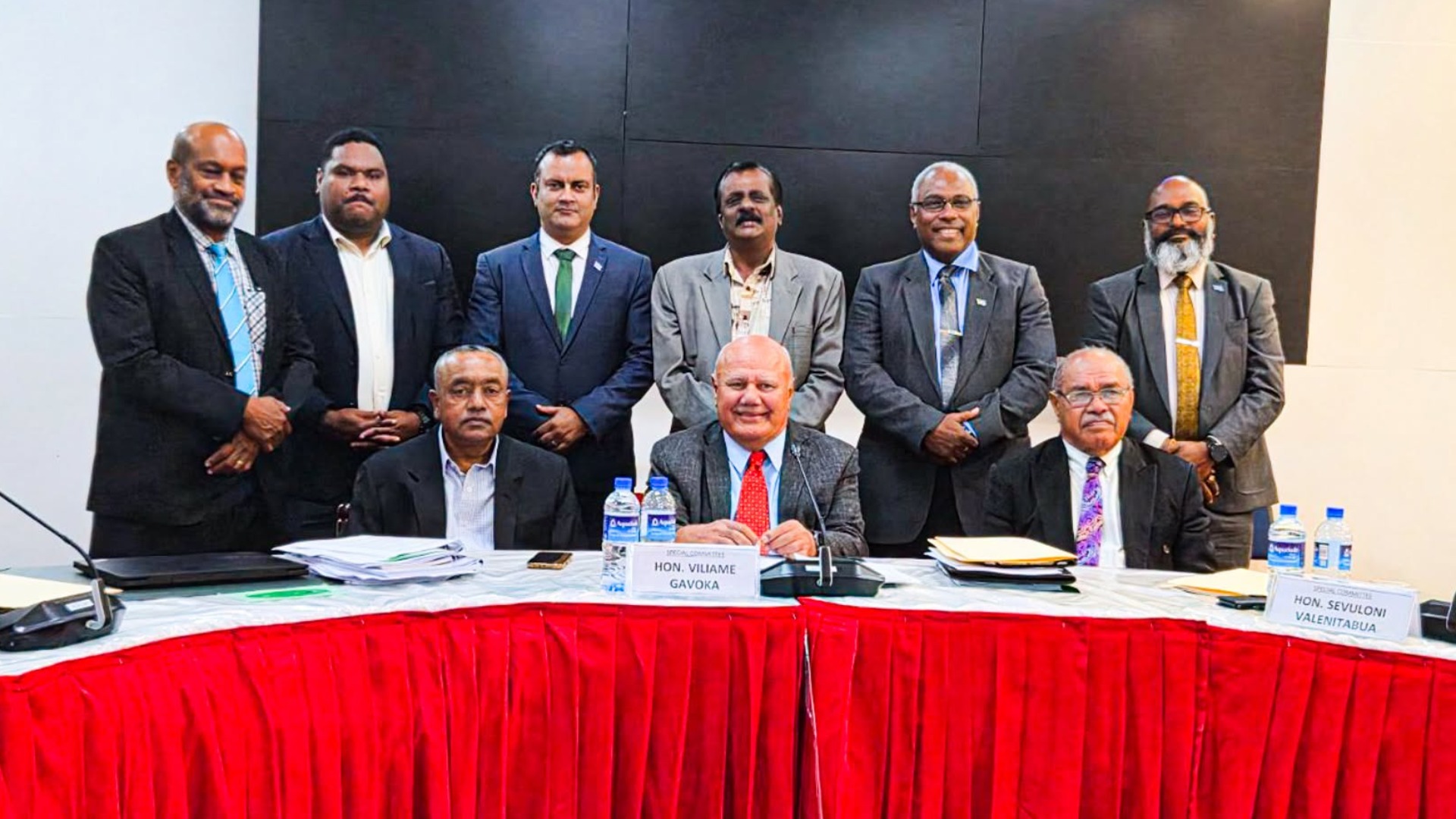
A heated parliamentary consultation descended into a dispute over demographic representation as National Federation Party General Secretary Kamal Iyer claimed that the majority of Indo-Fijians submitting to the Constitution Review Commission were party supporters, an assertion ruled out by committee leadership.
The confrontation during the Special Committee hearings on the Constitution (Amendment) Bill highlights divisions over public engagement and minority participation in Fiji’s ongoing legal reforms. While opposition figures pointed to low turnout in northern districts, committee members countered that attendance logs contained no metrics to substantiate partisan claims.
The Disputed Demographics of Public Submissions
The friction began when Committee member and People’s Alliance MP Siromi Turaga raised concerns regarding a lack of participation from the Indo-Fijian community throughout the Constitution Review Commission’s nationwide travels. According to Turaga, sparse attendance became apparent as the Constitution Review journeyed across the nation—including to select areas within the Northern Division where targeted invitations yielded zero attendees.
Responding to Turaga, Iyer argued that an overwhelming majority of Indo-Fijians participating across multiple districts were active NFP members mobilized by local party branches rather than affiliates of the deregistered FijiFirst party. He maintained that submitters in Nadi, Ba, and Rakiraki had directly consulted the party, tying the volume of submissions to past general election support.

“The NFP knew most of the Indo-Fijian members who attended the consultations and could identify them, although there was no requirement for people to declare their political affiliations when making submissions,” Iyer said.
Opposition MP Alvick Maharaj disputed those claims, noting an absence of proof that any individuals testifying before the panel formally identified themselves as NFP members or backers.
Attorney General Sevuloni Valenitabua said that attendance sheets lacked any designated field or section allowing participants to declare their political party affiliation or representation.
Special Committee on the Constitution (Amendment) Bill Acting Chair Viliame Gavoka ruled out Iyer’s claim, stating there was no evidence to quantify the number of people he was referring to. Gavoka emphasized that members wanted to see greater Indo-Fijian participation in the next round of consultations.
Timeline Constraints and Unread Provisions
As the debate shifted to the mechanics of the review, Turaga questioned whether more people had made submissions to the special committee than to the CRC. Iyer argued that most participants had neither read the Bill nor comprehended its provisions, criticizing authorities for failing to translate the text or adequately broadcast explanations across all three languages.
Describing the legislative path as an imposed process, Iyer pointed to the 13-day timeline for the first round of public consultations. He recounted the panel’s actions on 2nd November to request an extension and head back to Parliament on 30th November, a move made in spite of a conflicting event already scheduled on the parliamentary calendar.
Gavoka asked whether extending the consultation window served as a sign that public grievances were actually being acknowledged and addressed.
Pending Opposition at the Third Reading
Solidifying the party’s stance, NFP Deputy General Secretary Apenisa Vatuniveivuke warned the committee that the party will oppose the Constitution Amendment Bill at its third reading. Vatuniveivuke said that while the NFP backed the second reading in good faith—anticipating that the legislation would face thorough public review and parliamentary debate—such backing remains conditional rather than absolute.
Vatuniveivuke asked the committee to recommend that the Bill does not proceed to its third reading under the present arrangements, arguing that constitutional reform should continue after the next General Election through a more inclusive and deliberate process. He maintained there was no constitutional emergency requiring the Bill to be enacted before the next General Election.
Gavoka questioned whether Iyer had examined the entirety of the Bill and whether it resembled the imposed Constitution.
Garth Brooks Adds Third Belfast Date, Announces 2027 Ireland Tour
Country music superstar Garth Brooks announced a ten-date tour across Ireland and Northern Ireland for May and June...

European Cycling Championships Will Return to Denmark in 2027: ‘An Important Chapter in Our History’
The European Road Cycling Championships are returning to Denmark exactly a decade after the country last staged the...

US Envoys Arrive in Moscow for Talks With Putin
Peace talks in Abu Dhabi have yielded a major prisoner exchange agreement, though core territorial disputes remain deadlocked...
ASEAN Leaders to Meet in Manila to Address Energy and AI Issues
ASEAN leaders will convene in Manila for the 49th ASEAN Summit starting November 15 to address a convergence...