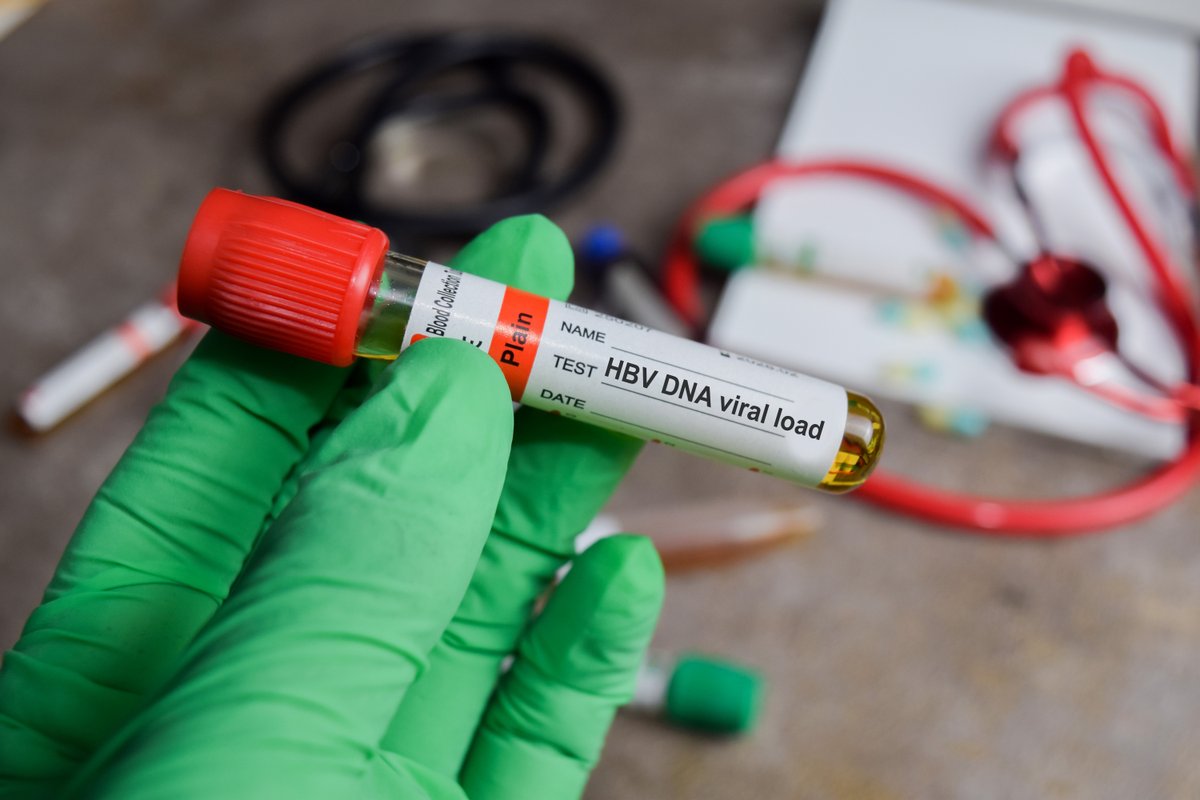
Hepatitis B birth-dose coverage in U.S. newborns has fallen to 65.6 percent in the first half of 2026, down from a steady 80 percent through 2022, according to a study published today in NEJM Evidence.
The drop began in mid-2023, before federal advisers voted in December 2025 to replace the universal birth-dose recommendation with individual decision-making for infants of mothers who test negative for the virus.
Researchers at Truveta and Callen-Lorde Community Health Center analyzed electronic health records from 1.3 million infants born between 2018 and June 2026 and found the decline extended to babies at highest risk: vaccination rates for infants born to hepatitis B–positive mothers slipped from 97–98 percent to 93.9 percent in early 2026.
“The hepatitis B birth dose was designed to protect every newborn, including those whose mothers may not know they're infected,” said Nina Masters, principal research scientist at Truveta and lead author of the study. “No screening system is perfect.”
The study estimates that gaps in prenatal screening leave about 360,000 infants each year born to mothers without a documented hepatitis B test, and more than 640 infants born to mothers who have the virus but were never screened. Children infected at birth face a 90 percent chance of chronic infection and up to a 25 percent lifetime risk of liver cancer.

Policy shift preceded by declining uptake
The CDC’s Advisory Committee on Immunization Practices voted 8–3 in December 2025 to end the universal birth-dose recommendation that had been in place since 1991, urging parents of HBV-negative mothers to engage in “shared clinical decision-making” with providers and delay the first dose until at least two months of age.
A month later, the Department of Health and Human Services issued a revised childhood immunization schedule that reduced recommended routine vaccines from 17 to 11, though a federal judge blocked those changes in March 2026.
Major medical organizations, including the American Academy of Pediatrics, American Academy of Family Physicians, and the American Medical Association, have opposed the CDC’s changes and reaffirmed the birth-dose recommendation. Yet the new data show vaccination rates were already falling before the policy shift, suggesting hesitancy was spreading independent of official guidance.
Modeling projects sharp rise in chronic infections
A separate analysis published in Annals of Internal Medicine modeled the impact of the policy change. Delaying the birth dose until two months of age would increase chronic hepatitis B infections by 19 percent, while the shared decision-making approach — leading more children to never be vaccinated — would raise chronic infections by 83 percent, according to the study led by Amir Mohareb, an infectious disease physician at Mass General Brigham in Boston.
“As they grow into adulthood and they're not immunized, now they have a whole adult life worth of potential exposures,” Mohareb said. He warned that after 20 years, an additional 1.5 million young adults would lack protection, leaving about half that generation susceptible to infection through sexual activity, household contact, or other exposures.
Screening gaps leave a safety net frayed
Although prenatal hepatitis B screening is standard, only about 84 percent of pregnant women receive testing due to gaps in prenatal care. The Truveta study found the proportion of mothers with no documented test fell from 15.6 percent in 2018 to 7.6 percent in 2026, but the remaining gap still translates to hundreds of thousands of unscreened births annually.
Among infants born to HBV-positive mothers, receipt of both the vaccine and hepatitis B immune globulin (HBIG) within 24 hours — the recommended post-exposure prophylaxis — remained above 92 percent across the study period but dipped in early 2026.
“We're talking about a vaccine that has protected generations of children from a potentially devastating infection,” said Demetre Daskalakis, chief medical officer at Callen-Lorde and former director of the CDC’s National Center for Immunization and Respiratory Illness.
“And now we're seeing fewer newborns receive it — even those we know are at greatest risk. These numbers aren't just a trend line. Each data point represents a real child who may be left vulnerable to a preventable disease.”
Researchers at Truveta, an American health data and analytics company owned and governed by 30 U.S. health systems that provides de-identified electronic health record data for more than 120 million U.S. patients, partnered with Callen-Lorde Community Health Center to analyze records from 1.3 million infants born between 2018 and June 2026.
Early childhood hepatitis B infections have fallen from more than 25,000 a year in the 1980s to fewer than 100 reported cases in 2024. Public health experts warn that progress is now at risk of reversal.
- Svitolina Calls Andreeva’s WTA Finals Congratulations a Provocation
- DP World Tour Opens Season at Australian PGA Championship
- 47,000 Women Killed by Partners or Relatives in 2025, UN Report Finds (archyde.com)
- Manchester study finds nine per cent of volunteers had silent heart attacks (newsarchyuk.com)

Svitolina Calls Andreeva’s WTA Finals Congratulations a Provocation
Elina Svitolina called Mirra Andreeva's trophy-ceremony congratulations a provocation on Monday, days after the Russian teenager beat her...

DP World Tour Opens Season at Australian PGA Championship
Season-opening BMW Australian PGA Championship starts Nov. 26 at The Lakes Golf Club, Sydney. Prize fund A$2.5 million...

Crystal Palace Women Deducted Three WSL Points for Using Four Substitution Windows v Everton
Crystal Palace Women have been deducted three points in the Women's Super League for using four substitution windows...

GMT. Ethan Nwaneri, the 19-Year-old Arsenal Academy Graduate on Loan at Dortmund
GMT. Ethan Nwaneri, the 19-year-old Arsenal academy graduate on loan at Dortmund, is eligible to face his parent...