
Utah communities cannot simply zone data centers out of existence, legal experts say, leaving local leaders scrambling to write regulations that might survive a court challenge before the next proposal lands on their desks.
The constraint is not new, but the urgency is. Since Kevin O’Leary’s Stratos project drew hundreds of protesters to a Box Elder County Commission meeting in May, counties across the state have watched proposals multiply on mostly agricultural land. Grand County is weighing an outright ban. Logan is drafting limits on size, water and electricity.
But Francine Romero, a public administration professor at the University of Texas at San Antonio who has studied the issue nationally, told The Salt Lake Tribune that courts have long forbidden municipalities from excluding entire business categories — a principle dating to 1880s California ordinances targeting Chinese laundries.
“You really can’t just zone people out,” Romero said. “You can’t zone out certain kinds of people, certain kinds of businesses.”
That leaves a narrower path: temporary moratoriums to buy time, and specific standards on noise, lighting, setbacks and architecture. Eric Clarke, general counsel for the Utah Association of Counties, warned that an outright ban invites lawsuits the industry is well-funded to win.
“If it’s a big fat unknown against an industry that’s really well-funded, the safer thing to do is to come up with reasonable regulations than to try to do an outright ban and roll the dice and see if it holds up in court,” he told The Salt Lake Tribune.

The stakes are measurable. Utah already hosts 48 operational data centers with more than 920 megawatts of capacity, according to the Kem C. Gardner Policy Institute. Seven more under construction will add 2,600 megawatts — including 1,700 megawatts off-grid — by 2028. A 250-megawatt facility can generate $25 million to nearly $70 million annually in taxes depending on equipment value, Rep. Paul Cutler, R-Centerville, told a legislative interim committee Nov. 18.
“Data centers will happen,” Cutler told reporters after the meeting. “But we can make sure that, in Utah, only the best projects that respect our natural resources, that benefit our local communities, happen.”
Water is the sharpest friction point. Shon Hiatt, director of the Zage Business of Energy Initiative at USC, told a Gardner Institute panel that a 100-megawatt center using evaporative cooling consumes roughly 2 million liters daily — equivalent to 6,500 households.
Forty-three percent of U.S. hyperscale facilities using that method sit in areas of extreme water stress, including the Wasatch Front. Non-evaporative cooling exists but demands 16 to 18 percent more energy, Hiatt said, a tradeoff that tightens the grid. The North American Electric Reliability Corporation projects elevated grid risk for Utah in 2031 unless new generation arrives.
Lawmakers are not considering a statewide pause on permits or construction. Instead, a bill Cutler is drafting would require local governments to have policies on zoning, setbacks, noise, heat, vibration and architecture before approving any project.
It would also pull community consultation earlier in the process — a model Romero pointed to in Chandler, Arizona, where developers must notify neighbors and send a decision-maker to two public meetings. The legislation would bar state entities like the Inland Port Authority from originating projects, reserving that role for cities and counties.
Tax incentives are on the chopping block. Cutler’s working group wants to reduce them, directing more revenue to local coffers, a state environmental mitigation fund, and potentially property-tax relief or Great Salt Lake preservation. “Utahns have legitimate, serious questions about the intent of data centers,” Cutler said, “but the facilities are also valuable industrial projects.”
Public opposition alone cannot legally stop a proposal. Under Utah’s public clamor doctrine, planning commissions must base decisions on land-use standards and evidence of impact on neighboring properties, not crowd size, Clarke told The Salt Lake Tribune. In March, Provo City Council denied a zoning change for an East Bay data center, but that was a legislative act, not a quasi-judicial permit denial — a distinction that matters in court.
Counties retain authority over nuisance impacts like noise and lighting. Water, power, air quality and wastewater remain largely regulated at state and federal levels. “The real input for what people want in terms of data center development in their communities is during the code-writing process,” Logan City Council Chair Mike Johnson told The Salt Lake Tribune, “which for many communities across the state, including Logan, is happening right now.”
Romero recommended giving the public a formal role through citizen commissions to demystify the pressures officials face under state mandates. “People don’t know a lot of the pressures that the elected officials are under with state law and mandates,” she said.
Box Elder County, where the Stratos project sparked the current debate, covers 6,729 square miles at Utah’s northwestern corner, making it the state’s fourth-largest county by area. Its 2020 population was 57,666, centered in Brigham City and Tremonton along the Wasatch Front, while much of the western terrain remains desert.
The county was created in 1856 from Weber County and took its name from the box elder trees once abundant in the region. In 1869, Promontory Summit became the linking point of the first transcontinental railroad, a milestone that shaped the county’s early development.
The working group plans further revisions after public feedback. Sen. Chris Wilson, R-Logan, called the effort a “Herculean effort” that has cleared the “low-hanging fruit.”

NYC Braces for Storm Disrupting Thanksgiving Travel: 1-3 Inches of Rain, Gusty Winds Expected Sunday Evening
New York City Emergency Management issued a weather alert Thursday for a storm expected Sunday into Monday, as...
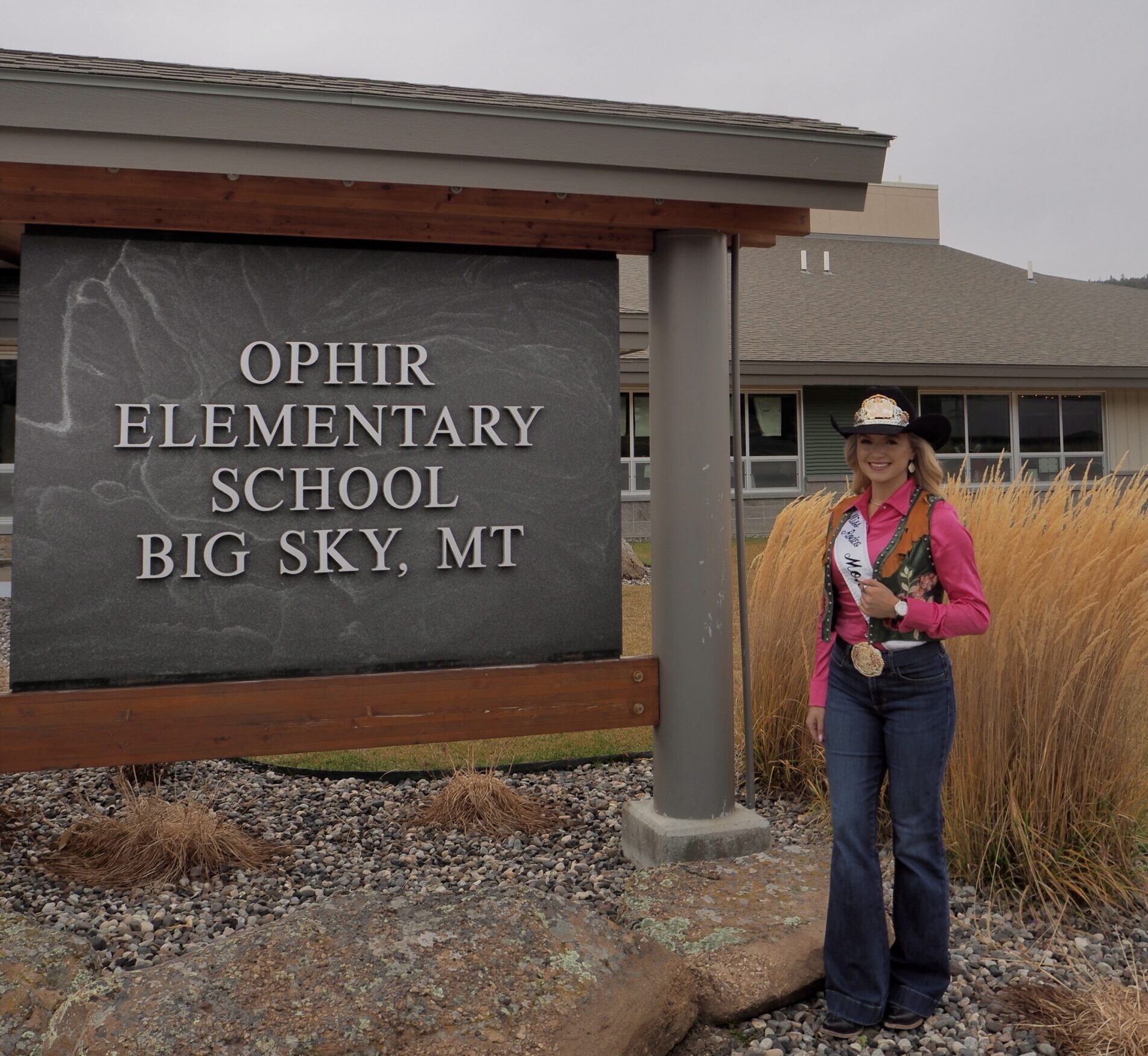
Ophir Elementary ASL Interpreter Competes for Miss Rodeo America Crown
Bentley McCullough left Ophir Elementary on Monday to a gymnasium shaking with handmade posters and students wearing "We...

Disney+ Adds ‘Tim Richmond: To the Limit’ Documentary Chronicling NASCAR Star’s Rise and AIDS Battle
Disney+ has added Tim Richmond: To the Limit to its catalog, giving the streaming service’s subscribers immediate access...

EIU Panthers at No. 10 Illinois: 23.5-Point Underdogs, 9 p.m. ET on Big Ten Network
The Eastern Illinois Panthers walk into State Farm Center on Friday night as 23.5-point underdogs against a No....